
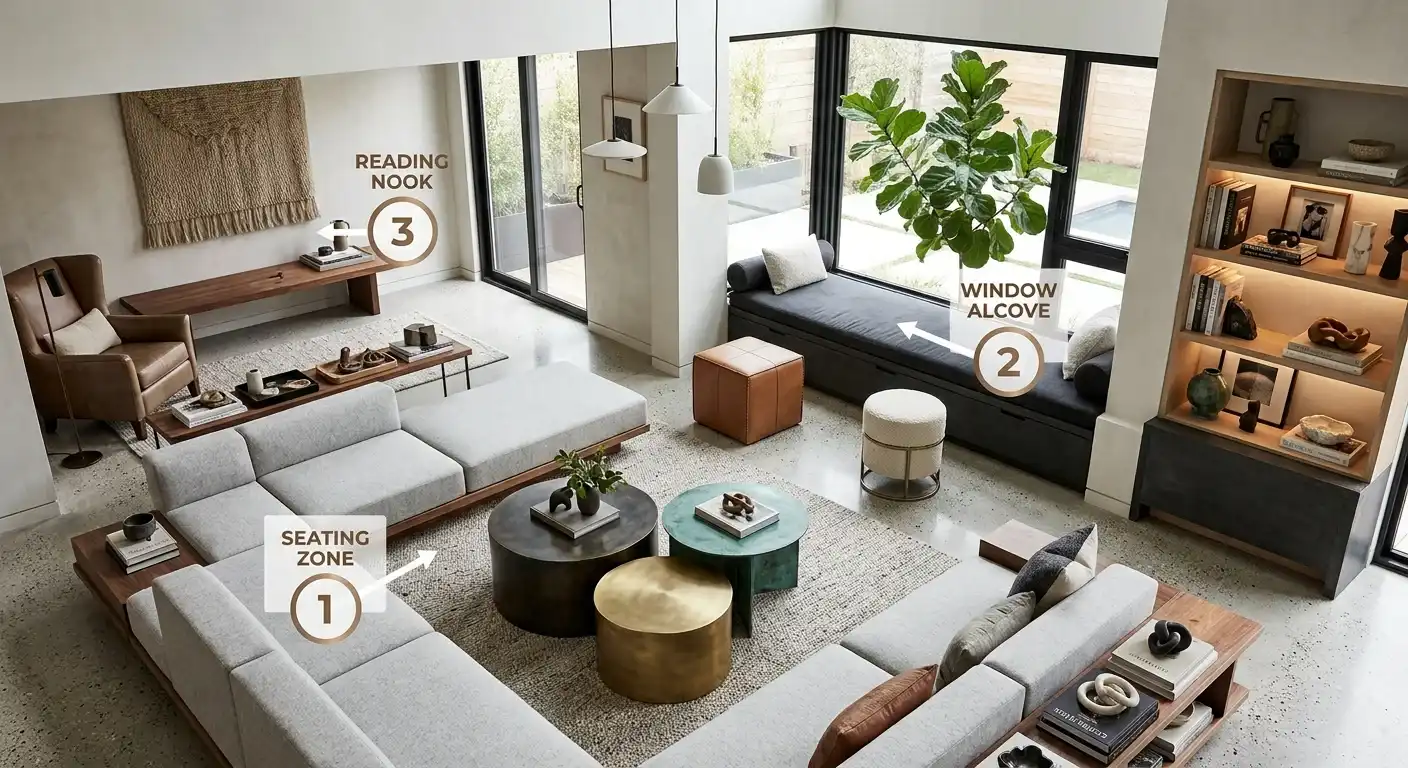
An ottoman or bench can do more work in a living room than almost any other piece of furniture. It’s a coffee table one day, extra seating the next, and hidden storage the rest of the time. But it’s also easy to get wrong: pick the wrong size and it either disappears into the room or blocks the path to the kitchen. Style the top poorly and it looks cluttered instead of curated.
This guide breaks down the ottoman vs. bench debate so you know exactly which one fits your space, how to style the top so it looks intentional, and how to adapt these ideas for small rooms, pets, kids, and renters.
Ottoman or Bench: What’s the Difference, and Which Do You Need?
Both pieces fill the same basic role of soft, low seating or surface space but they behave differently in a room.
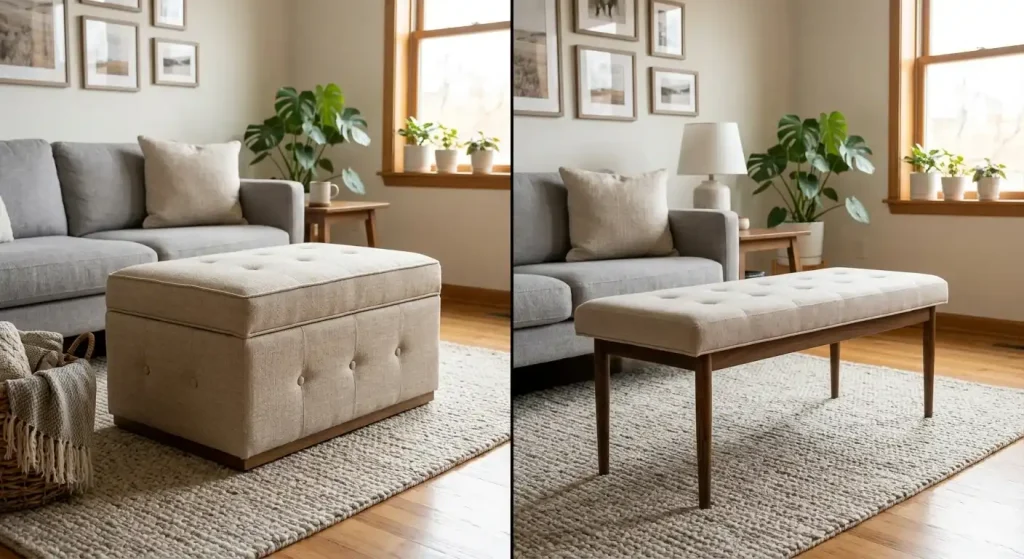
An ottoman is typically a single upholstered box or cushion, often square, round, or rectangular, sized to sit in front of a sofa. Many open up for storage. A bench is longer and narrower, usually has visible legs, and reads more like a piece of furniture than a soft cube. Benches tend to look more tailored and formal; ottomans feel softer and more casual.
| Ottoman | Bench | |
| Shape | Square, round, or rectangular; boxy | Long and narrow |
| Legs | Often hidden or minimal | Usually visible, exposed legs |
| Best used as | Coffee table, footrest, hidden storage | Wall or window seating, bed-end seating |
| Best placement | In front of a sofa or sectional | Along a wall, under a window, at the foot of a bed |
| Style feel | Soft, casual, plush | Tailored, structured, formal |
| Typical storage | Common (lift-top or hinged lid) | Less common (occasional under-seat drawer) |
Use this as a quick decision guide:
- Choose an ottoman if you want a coffee table replacement, a footrest in front of a sofa or recliner, or hidden storage for blankets and toys.
- Choose a bench if you need seating along a wall, at the end of a sectional, under a window, or in a spot too narrow for a coffee table but wide enough for a slim seat.
- Choose either at the foot of a daybed, in an entryway that opens into the living area, or as a plant and lamp stand when your room needs a small surface but not a full table.
Neither is objectively better the right choice depends on your room’s traffic flow and what the piece needs to actually do.
How to Size It Correctly (This Is Where Most Rooms Go Wrong)
Before choosing a style or fabric, get the dimensions right. A too-small ottoman looks like an afterthought; a too-large one blocks movement.
If it’s replacing a coffee table: a common rule of thumb is to size the ottoman to roughly two-thirds the length of your sofa, then leave 14 to 18 inches of clearance between the ottoman and the sofa so people can walk through and get up comfortably.
If it’s a bench along a wall or under a window: match its length to the furniture or window it sits beneath rather than the room itself a bench noticeably shorter or longer than the window above it will look unintentional.
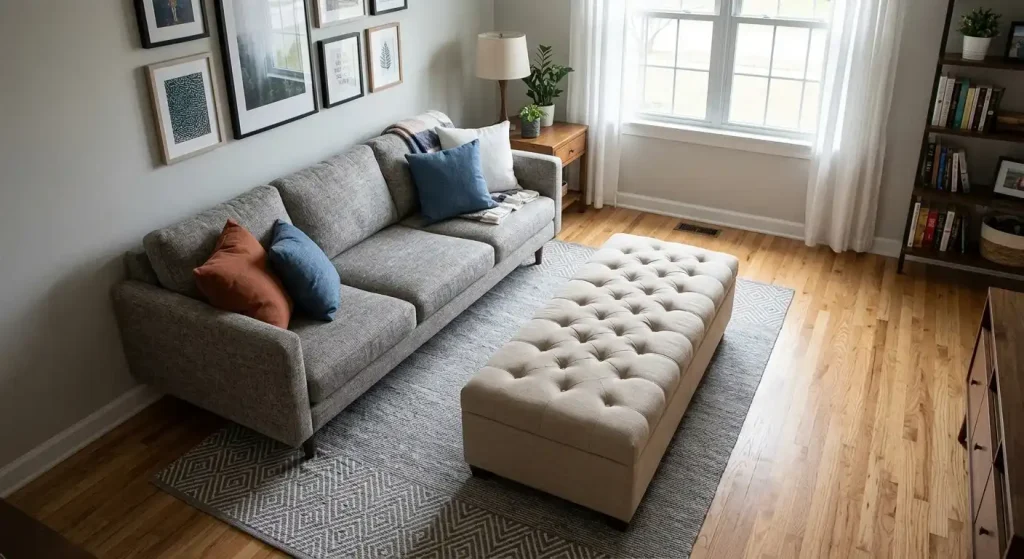
If it’s at the foot of a sofa, daybed, or sectional chaise: keep the bench or ottoman narrower than the piece it’s paired with, and low enough that it doesn’t compete with the seat height.
Measure your actual space with tape before shopping. It takes five minutes and prevents the single most common styling mistake with these pieces: buying based on how it looks online rather than how it fits your room.
Styling Ideas by How You’ll Use It
As a Coffee Table Replacement
This is the most popular use, and it works because an upholstered surface is safer around low tables filled with kids or pets, and it visually softens a room full of hard edges (sofa frame, TV console, media unit).
To style it: add a large tray as the base layer, then build on top of that rather than placing items directly on the fabric. A tray keeps the surface functional for drinks and food while everything above it stays styled. If the ottoman has a tufted or textured top, a hard tray also gives you a flat surface to actually set things on.
For more layering ideas that work on a hard or upholstered surface alike, see our guide on how to style your coffee table like a pro.
As Extra, Flexible Seating
A low ottoman or slim bench earns its keep when it can slide toward a conversation without needing a permanent spot. Keep it light enough to move, and choose a fabric that can take occasional weight-bearing use, not just decorative use.
As a Footrest
If comfort is the priority, choose a softer, more cushioned top and keep the height close to your sofa seat height so your legs rest at a natural angle rather than pointing up or down.
As an Entryway or Media Console Bench
A bench under a window, along an empty wall, or at the base of a media console adds a place to sit without adding bulk. This is where a slimmer, leggier profile works better than a boxy ottoman, it keeps the wall feeling open.
If the bench sits near your TV setup, pair it with our tips on hiding TV wires and cables in the living room for a cleaner overall look.
At the Foot of a Daybed or Sectional Chaise
A bench here should be narrower than the seat and low enough to layer a folded throw across it without blocking the sightline into the room.
How to Style the Top So It Doesn’t Look Cluttered
The difference between a styled ottoman and a messy one usually comes down to layering with purpose instead of placing random objects. A simple, repeatable approach:
- Start with a tray. This anchors everything else and protects upholstery from spills and scratches.
- Add one substantial item. A stack of 2–3 hardcover books, a low bowl, or a small sculptural object gives the surface a visual anchor.
- Add one living or organic element. A small plant, a few stems in a low vase, or a woven basket brings texture without adding height.
- Add one soft or personal touch. A folded throw draped over one corner, a small candle, or a coaster set finishes the look without overcrowding it.
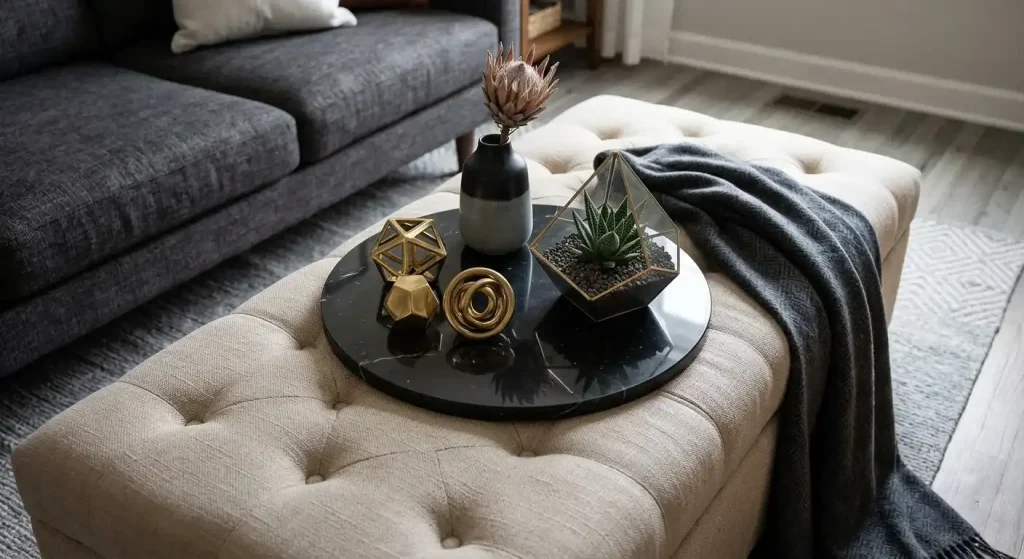
Stop there. Most over-styled ottomans fail because every available inch gets filled leaving visible tray surface and negative space so the eye has somewhere to rest.
For a bench, the formula shifts slightly since people actually sit on it: keep decorative objects to one end (a stack of books, a small lamp, or a plant) and leave the rest of the surface clear for actual use, or drape a throw across a portion if the bench sees more decorative than functional use.
This “anchor plus one soft touch” approach is the same principle behind our bedroom nightstand styling ideas, if you want more examples of it in a smaller space.
Matching (or Intentionally Contrasting) Your Room’s Style
- Traditional or transitional rooms: tufted upholstery, turned or carved wood legs, and richer fabrics like velvet or linen blends read as classic without looking dated.
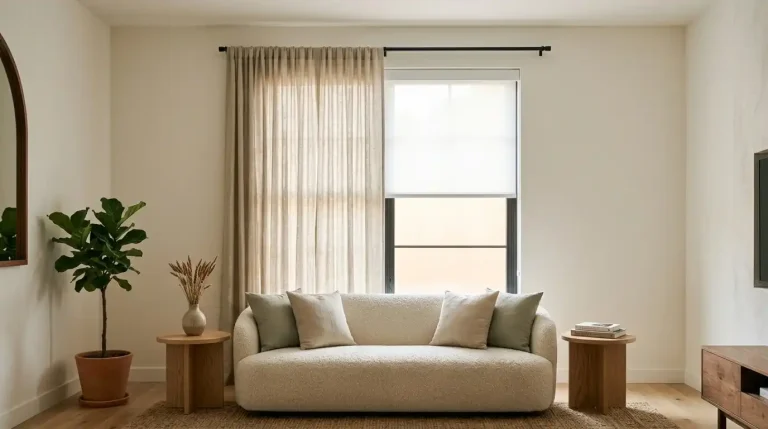
- Modern or minimalist rooms: a low-profile silhouette in a solid, textured fabric like bouclé or performance weave, with a simple wood or metal base, keeps the look clean.
- Farmhouse or transitional-casual rooms: a woven, linen, or slipcovered bench with visible wood legs fits without competing with other textures in the room.
- Eclectic rooms: this is the one place where an ottoman or bench can intentionally contrast — a boldly patterned or colored piece can act as the accent that pulls a mixed room together, as long as one of its colors repeats elsewhere in the space (a pillow, a rug detail, artwork).
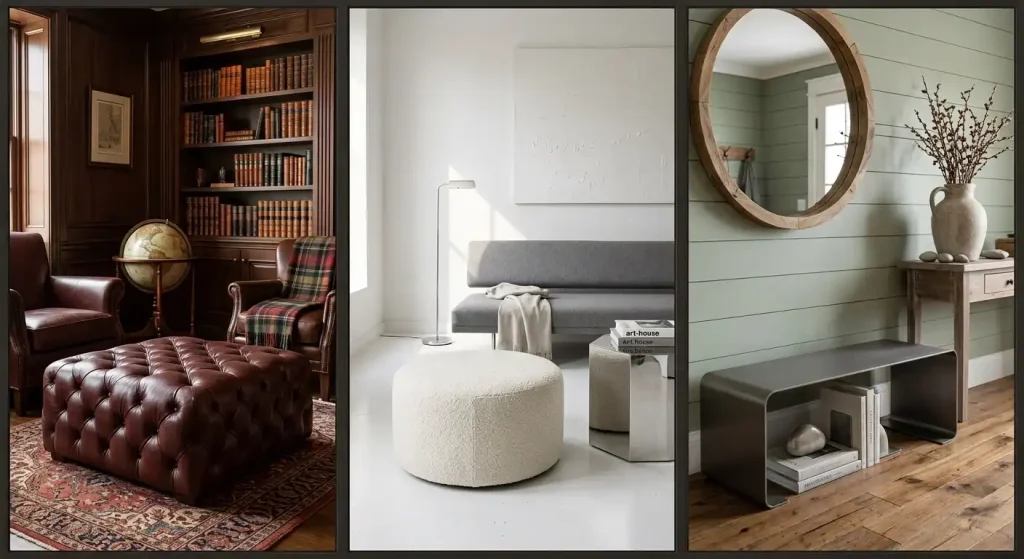
A useful general principle: let the ottoman or bench either blend quietly into your existing palette or stand out as one clear accent pieces that do a bit of both tend to look unintentional rather than eclectic.
If your ottoman or bench is older or a different style than the rest of your furniture, our guide on how to mix and match old and new furniture covers how to make that pairing feel intentional.
Considerations for Small Spaces, Renters, Pets, and Budgets
Small living rooms: prioritize a round or lightweight ottoman over a boxy one — rounded edges reduce visual bulk and are easier to navigate around in tight layouts. A storage ottoman also lets a single piece replace both a coffee table and a hidden storage unit, which matters more in smaller rooms with less space for extra furniture. For more space-saving ideas, see our living room storage ideas for small apartments.
Renters: look for pieces that don’t require wall anchoring or built-in seating, and choose a slipcovered or washable-fabric ottoman if you’ll want to take it with you and it needs to work in a future space with a different color scheme. If you’re furnishing a rental more broadly, our guide on decorating a rental living room without painting the walls covers other lease-friendly swaps.
Homes with pets or young kids: performance fabrics, faux leather, or tightly woven synthetic blends hold up better against scratches and spills than natural linen or velvet. If you’re choosing a storage ottoman or bench, look for a lid with a soft-close or safety hinge — the CPSC has warned that unsupported lids on storage chests and benches can fall suddenly and pose pinch or entrapment hazards to young children.
Budget-conscious rooms: a bench or ottoman is one of the more affordable ways to add a design moment to a room, since even an inexpensive base piece looks intentional once it’s styled with a tray and a couple of textural objects — the styling does more visual work than the price tag. A single ottoman is also one of the easiest ways to decorate an empty living room corner on a budget.
Common Mistakes to Avoid
- Sizing it to the room instead of the sofa or window. The nearby furniture should set the scale, not the empty floor space.
- Skipping the clearance check. A beautiful ottoman that blocks the path to the hallway will get pushed aside within a week.
- Over-styling the top. More objects doesn’t mean more polish, it usually means more visual noise.
- Choosing fabric based on looks alone. A gorgeous velvet ottoman in a high-traffic home with kids and pets will show wear fast; check the fabric’s durability rating or ease of cleaning before buying.
- Placing a bench where people can’t actually sit on it. If it’s meant to be functional seating, leave the surface real enough to use don’t stack it so high with decor that no one ever sits down.
Frequently Asked Questions
What is the difference between an ottoman and a bench?
An ottoman is a boxy, upholstered piece with hidden or minimal legs, used as a footrest, coffee table, or storage box. A bench is longer, narrower, and stands on visible legs, used mainly as seating along a wall, window, or bed.
Can you use an ottoman instead of a coffee table?
Yes. Choose one roughly two-thirds the length of your sofa, at or near sofa-arm height, and top it with a rigid tray so it still works as a surface for drinks, books, or a laptop.
What size ottoman do I need for my living room?
Size it to about two-thirds the length of your sofa, and leave 14 to 18 inches of clearance between the ottoman and the sofa so people can walk through and sit down comfortably.
How do you style an ottoman like a coffee table?
Layer it in this order: a tray as the base, one anchor object like stacked books or a bowl, one organic touch like a small plant, and one soft touch like a folded throw. Stop there to keep it from looking cluttered.
Are storage ottomans safe for kids?
Choose a lid with a soft-close or safety hinge and make sure it can’t latch shut on its own. The U.S. Consumer Product Safety Commission has warned that unsupported lids on storage benches and chests can pose entrapment and pinch hazards for young children.
What ottoman shape works best in a small living room?
Round or oval ottomans generally suit small rooms better than square ones, since they have no sharp corners to navigate around and visually soften a space already filled with rectangular furniture.
Does a bench need to match the sofa fabric?
No. A complementary texture or a shade from the same color family usually looks more intentional than an exact match, which can flatten the room’s overall look.
How tall should a living room ottoman be?
Most living room ottomans sit close to standard sofa-seat height, generally 16 to 18 inches, so they work comfortably as a footrest or a coffee table stand-in without towering over or sinking below the sofa.
Key Takeaways
- Ottomans work best for coffee table replacement, footrests, and hidden storage; benches work best for seating along walls, windows, or at the foot of a bed or sectional.
- Size the piece to the furniture it relates to (roughly two-thirds your sofa’s length, with 14–18 inches of clearance), not to the empty floor space in the room.
- Style the top in layers tray, anchor object, organic touch, personal touch and stop there to avoid clutter.
- Match your room’s style with fabric and leg choice, or use one bold ottoman as an intentional accent in an eclectic space.
- For pets, kids, or rentals, prioritize durable or washable fabrics and hardware over fabric alone.
Related Next Steps
- Browse more Living Room Decor ideas for furniture layout and styling guidance.
- Learn how to style your coffee table like a pro if you’re deciding between a traditional table and an ottoman.
- Check out living room storage ideas for small apartments if square footage is your main constraint.
- Read how to mix and match old and new furniture if your ottoman or bench doesn’t match your existing pieces yet.
- Explore the Seasonal Home Decor Guide for simple ways to refresh your ottoman or bench styling throughout the year.
Sources and References
- U.S. Consumer Product Safety Commission (CPSC), official warning on entrapment and lid-support hazards in storage chests and storage benches: https://www.cpsc.gov/Newsroom/News-Releases/2014/CPSC-Warns-Consumers-of-the-Deadly-Dangers-of-Storage-and-Toy-Chests
- ASTM International, the voluntary lid-support safety standard referenced in the CPSC notice above (ASTM F963, Standard Consumer Safety Specification for Toy Safety): https://store.astm.org/f0963-23.html
- Houzz, living room furniture arrangement guidance confirming the 14–18 inch coffee table clearance convention referenced in this article: https://www.houzz.in/ideabooks/101481209/thumbs/living-room

Join the Conversation
What Do You Think?