
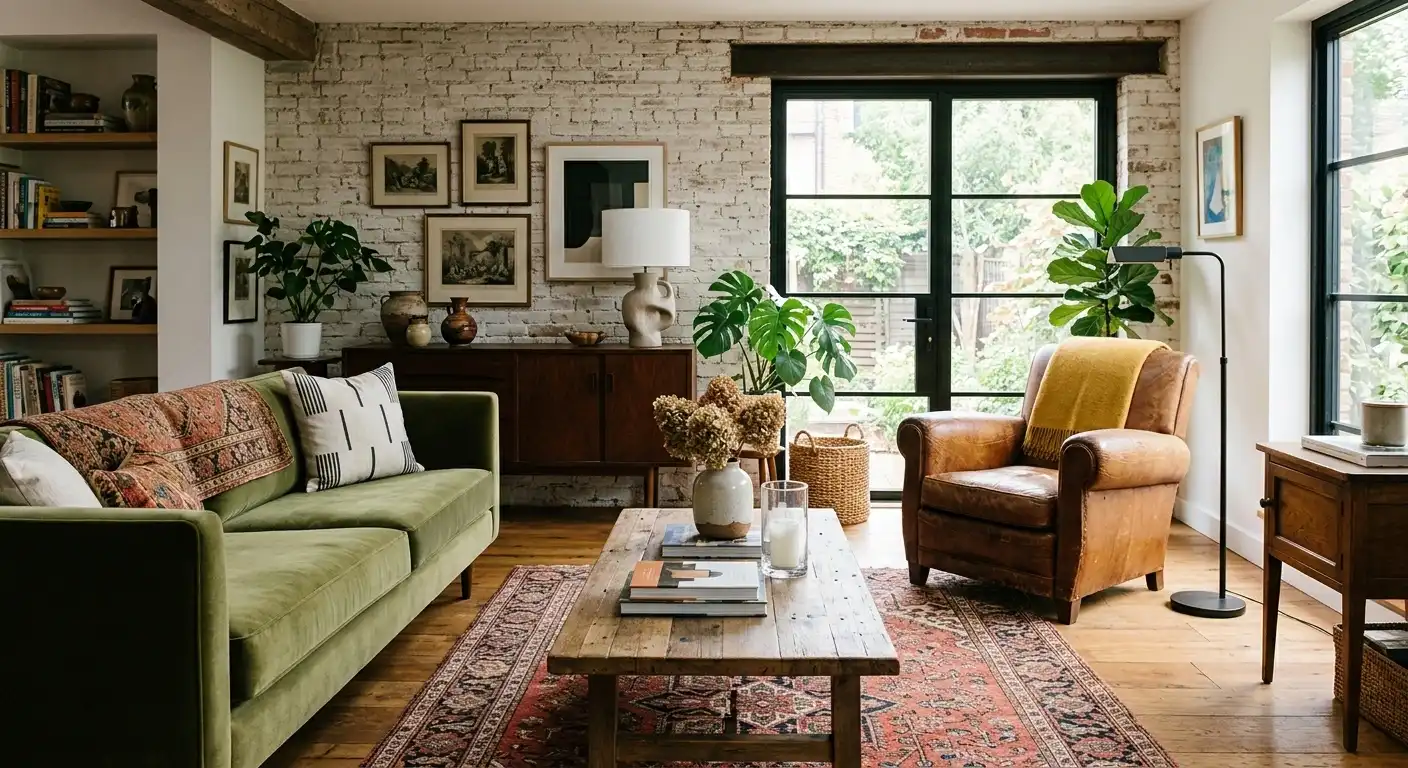
If you’ve ever pushed a modern sofa next to your grandmother’s dresser and felt like something was “off,” you’re not imagining it. Mixing old and new furniture doesn’t fail because the pieces are from different eras; it fails when there’s nothing tying them together. Fix that one thing, and almost any combination works.
The short answer: pick one repeating element, a color, a material, or a shape and make sure it shows up in both your old and new pieces. Then let one era dominate the room (roughly 80%) while the other plays a supporting role (about 20%). That single rule solves most “why does this look mismatched” problems.
The rest of this guide breaks down why that works, how to apply it room by room, and where people typically go wrong.
Why Some Old-and-New Combinations Work and Others Don’t
A brand-new sofa and a 1960s credenza don’t have “the same style” they were never designed to be compared. What actually makes them feel related is a shared visual detail your eye can latch onto: the same wood tone, the same brass hardware, a repeated curve, or a matching neutral palette.
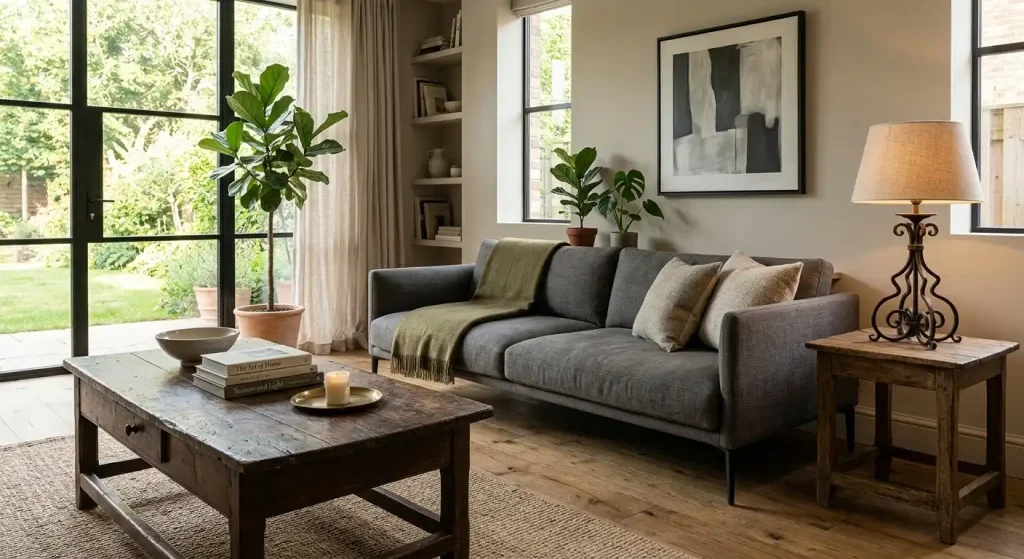
Without that connection, a room reads as two unrelated collections placed in the same space. With it, your eye stops noticing “old” versus “new” and starts noticing the room as a whole, which is the effect most people actually mean when they say a space looks “collected” or “curated.”
This is also why buying an entire matching furniture set often backfires. It removes any tension for your eye to resolve, which can make a room feel like a showroom display rather than a home someone actually lives in.
Start With a Ratio, Not a Room Full of Ideas
Before choosing individual pieces, decide which era is going to lead. A useful starting ratio is 80% one style, 20% the other for example, a mostly modern living room with two or three vintage accent pieces, or a vintage-anchored dining room with a handful of contemporary chairs or lighting.
This matters because it gives you a decision-making rule instead of an open-ended aesthetic choice. When you’re standing in a vintage shop wondering “does this fit,” the ratio tells you: am I adding to my 20%, or am I about to tip the room into looking like two different projects?
You don’t need to calculate this precisely. Walk into the room and ask which style you’d notice first. That’s your dominant 80%. Everything else should feel like an accent, not a competing statement.
The Repetition Method: The Fastest Way to Make Old and New Feel Related
Once you know your dominant style, look for one detail you can repeat across at least two pieces from different eras. The most reliable options, in order of how forgiving they are for beginners:
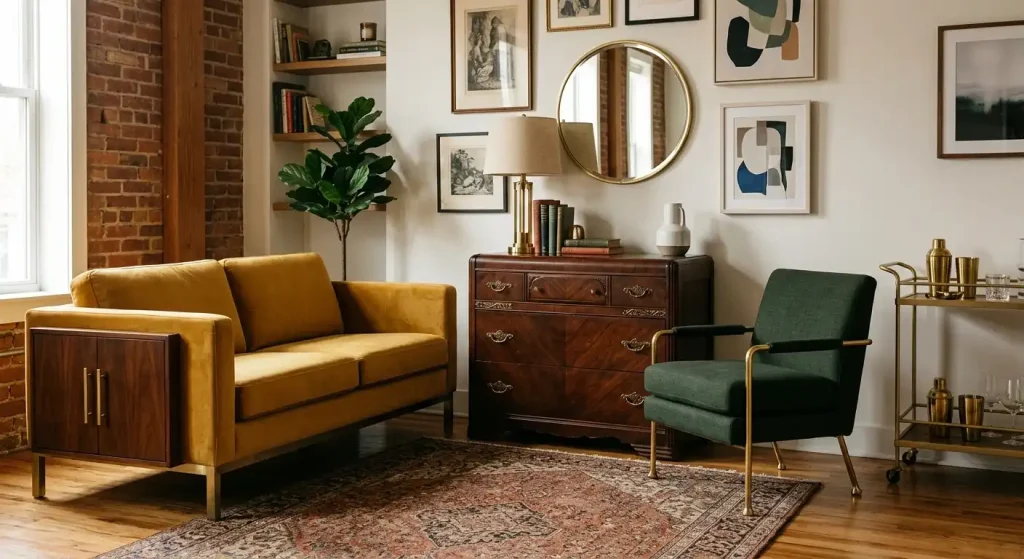
- Color or finish a black metal base on a new coffee table echoed in an old iron light fixture.
- Material a vintage teak sideboard paired with a new oak dining table; the wood tones don’t need to match exactly, but they should share a warm or cool undertone.
- Shape or line a vintage armchair with a curved back paired with a round modern side table or a curved pendant light.
- Hardware or metal finish the same brass, black, or chrome tone used on a new sofa’s legs and an antique mirror’s frame.
You only need one of these to be consistent for the pairing to feel intentional. Trying to match all four at once usually looks over-planned; picking one and repeating it two or three times around the room is what reads as effortless.
Where to Blend Old and New in a Room
A common mistake is zoning styles putting all the modern furniture on one side of a room and all the vintage pieces on the other. This tends to look like two separate decorating projects placed side by side, rather than one cohesive space.
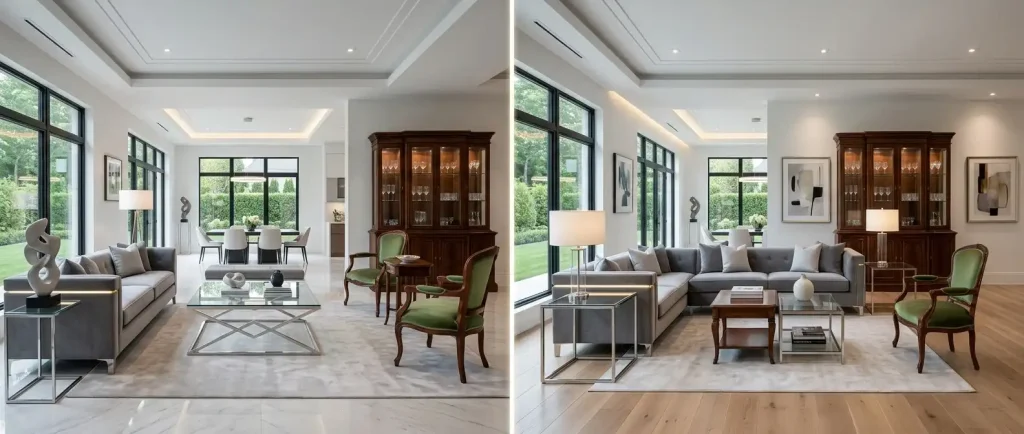
Instead, mix within furniture groupings, not across them:
| Furniture Group | Blend Example |
| Dining area | Modern table + a few vintage or mismatched chairs |
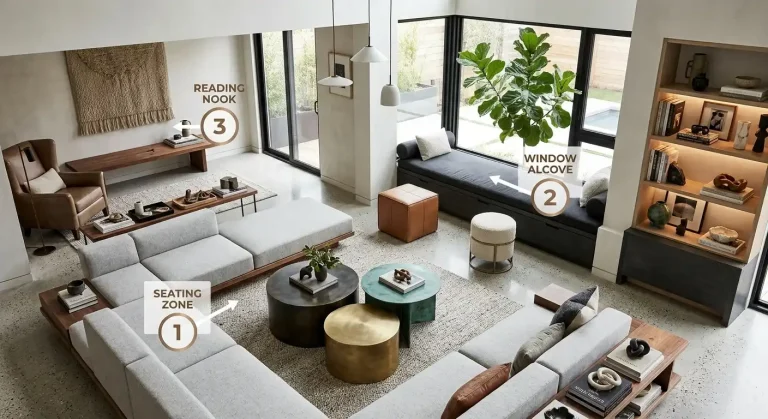
| Seating area | Contemporary sofa + vintage coffee table styled like a pro or accent chair |
| Bedroom | New bed frame + vintage nightstands or dresser |
| Home office | Antique desk + a modern, ergonomic task chair |
| Entryway | Modern console + inherited or vintage mirror |
Blending at this level inside a single grouping rather than across the whole room is what makes the contrast look purposeful instead of accidental.
A Simple Process to Follow
- Take inventory of what you’re keeping. List the old or sentimental pieces you’re building around, along with their finish, material, and rough dimensions.
- Choose your dominant style (the 80%). This is usually whichever style you already own more of, or the one that fits your home’s architecture.
- Pick your repeating detail. Decide whether color, material, shape, or hardware will be your connecting thread, and note it somewhere you’ll remember it while shopping.
- Start with one anchor piece. A sofa, dining table, or bed frame sets the tone for everything else in that grouping, choosing it before filling in smaller items.
- Add the accent (the 20%) gradually. Bring in one vintage or modern piece at a time and live with it for a week before adding the next. Rooms built too quickly often skip the “does this actually work” step.
- Edit once everything is in. Remove anything that’s fighting for attention rather than supporting the room’s main mood.
Decision Factors That Change the Approach
Room size. In small rooms and apartments, keep the vintage or new accent count low — one or two well-chosen pieces read as curated, while five competing pieces read as cluttered. Favor furniture with visible legs (both old and new) to keep sightlines open.
Renting. If structural changes aren’t an option, do the mixing through furniture, rugs, and lighting rather than built-ins or paint. A vintage rug under a modern sofa, or contemporary lighting above an inherited table, delivers the same effect without touching the walls.
Budget. You don’t need to buy new and vintage in equal amounts. A budget-friendly approach is to keep most of your current furniture (your “old”), and introduce one or two new pieces that repeat a color or material already present in the room.
Existing furniture you’re not replacing. If you’re working around pieces you already own rather than shopping from scratch, treat those as your dominant style by default. New pieces should be chosen to complement them, not the other way around.
Kids and pets. Fragile antiques with delicate finishes (thin veneers, unsealed wood, easily scratched surfaces) are harder to maintain in high-traffic households. In these homes, it often works better to use the vintage piece as a lower-traffic accent an entryway table or bedroom dresser rather than the main seating piece.
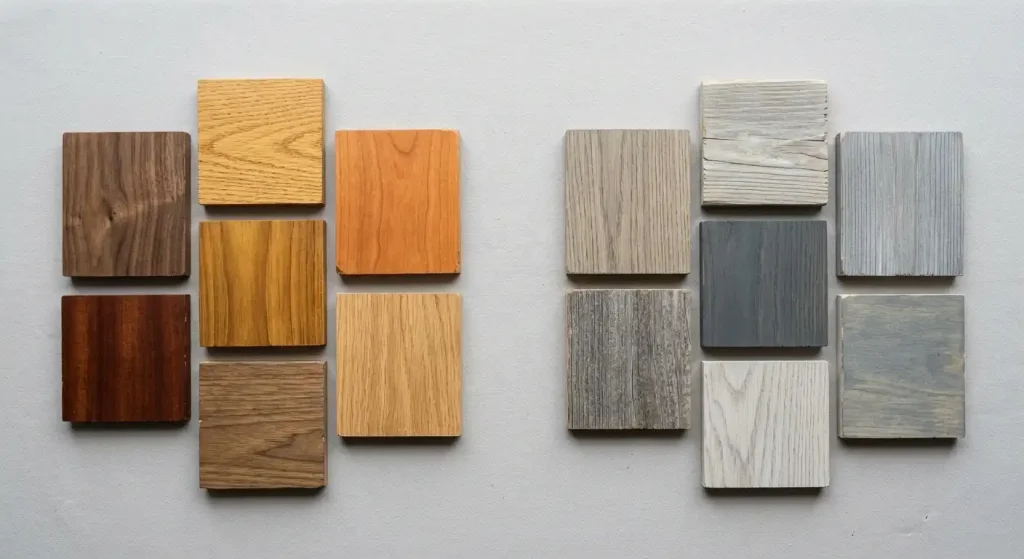
Wood tone matching. Wood tones don’t need to match exactly to work together. What matters more is whether they share the same undertone (warm honey and amber tones together, or cool gray and ashy tones together). Mixing a warm-toned antique with a cool-gray modern piece is one of the more common causes of a room feeling unresolved.
Common Mistakes That Make a Mix Look Mismatched
- Restoring every vintage piece to look brand new. Sanding away every mark or repainting distinctive hardware often removes the texture and history that made the piece worth keeping in the first place.
- Buying a full matching set and calling it done. This removes the visual contrast that makes a room feel personal, and can leave it looking like a staged showroom rather than a lived-in home.
- Ignoring scale. A delicate antique side table next to an oversized modern sectional will look disconnected regardless of color or style proportion has to be balanced alongside style.
- Mixing too many “loud” pieces at once. One ornate antique and one bold modern statement piece can work; three or four all competing for attention usually cancel each other out.
- Zoning instead of blending. As covered above, keeping all old furniture in one area and all new furniture in another tends to read as two separate rooms.
- Skipping the color thread entirely. Without at least one repeated color, material, or finish, even well-chosen individual pieces can feel like they arrived from different houses.
Frequently Asked Questions
Do wood tones have to match exactly when mixing old and new furniture?
No. They just need the same undertone: warm or cool, not the same shade.
How many vintage pieces should be in a modern room?
Follow the 80/20 ratio: one dominant style, with the other used as an accent in one or two pieces.
Is mixing old and new furniture more expensive than buying a matching set?
No — usually cheaper, since you’re only shopping for accents, not a full room set.
Can you mix furniture styles in a small apartment?
Yes. Keep the accent count to one or two pieces, choose furniture with visible legs, and repeat one color or material to tie the mix together.
What’s the easiest way to start if I don’t know where to begin?
Pick one piece you already love, then choose everything else to complement it using one repeated color, material, or shape.
Key Takeaways
- Old and new furniture feel related when they share one repeated detail — color, material, shape, or hardware not when every element matches.
- A rough 80/20 ratio (one dominant style, one accent style) is an easier decision-making tool than trying to balance everything equally.
- Blend styles within furniture groupings (a dining set, a seating area) rather than zoning old and new furniture into separate parts of the room.
- Wood tones should share an undertone rather than match exactly.
- Build the room gradually, add one accent piece at a time and live with it before adding the next.
Related Next Steps
- Explore Living Room Decor Ideas for applying this mix to your main seating area.
- See the Home Decor Guide to help define which style should be your dominant 80%.
- Browse Small-Apartment Storage Ideas if you’re applying this method in a compact room.
- Check Bedroom Decor Ideas for Every Style for pairing vintage nightstands or dressers with a new bed frame.
Sources
- Style Remains a Top Consideration for Those in the Market for Furniture — industry survey data on how consumers mix and match home furnishings.
- Star Tribune: New Style Recipe for Kitchens — Houzz research on generational shifts between traditional and contemporary style preferences.
Join the Conversation
What Do You Think?