
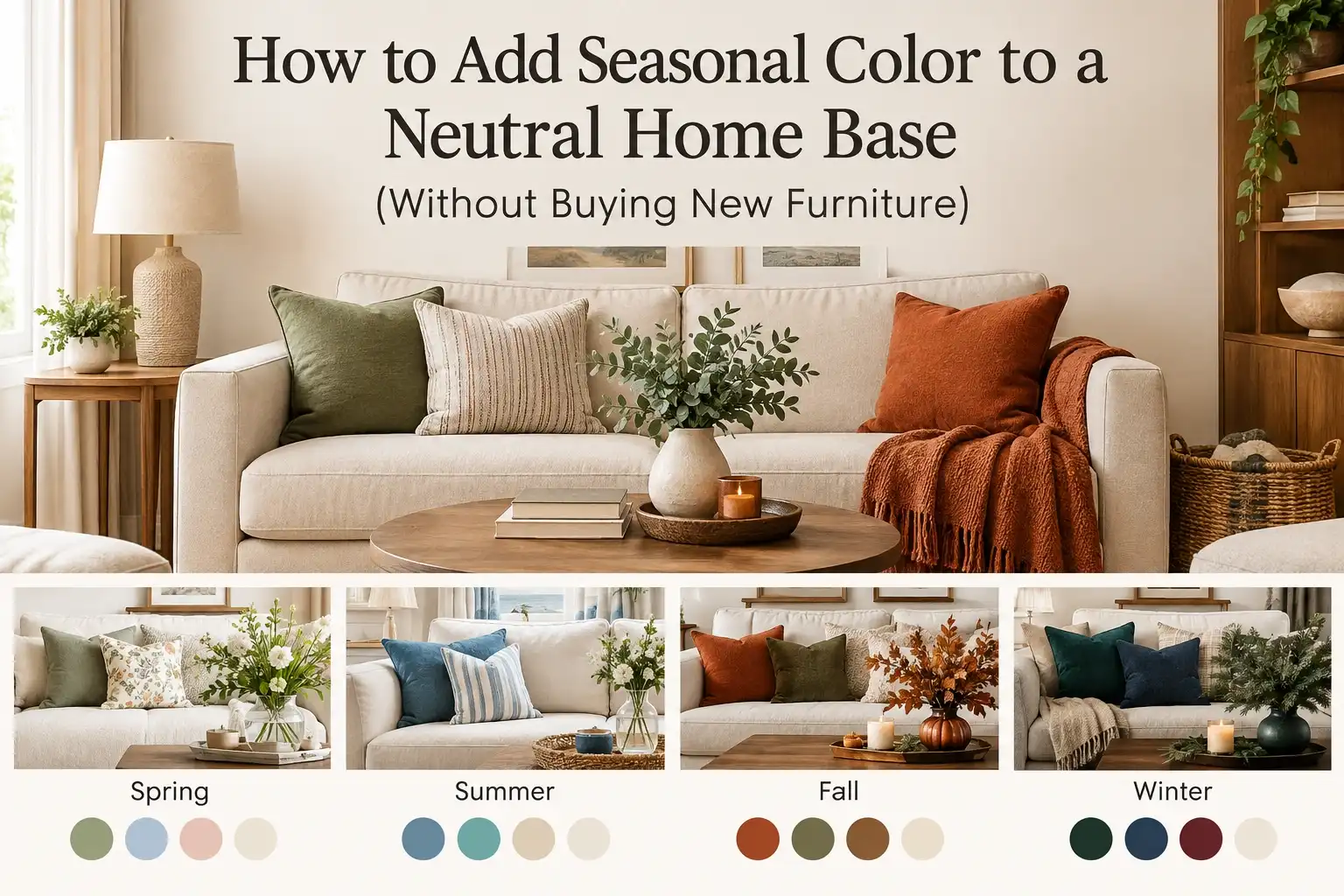
A neutral home does not have to look the same all year. The easiest way to add seasonal color is to keep large, permanent pieces neutral and rotate color through pillows, throws, artwork, textiles, greenery, and small decor.
Choose one main seasonal color, repeat it in a few places, and let your neutral foundation stay visually dominant. This gives your home a seasonal update without replacing furniture or making every room feel themed. For a broader look at seasonal styling across the whole house, see the Seasonal Home Decor Guide.
Start With the Neutral Pieces You Already Have
Your neutral base should contain the pieces you do not want to replace every season.
These may include:
- Walls
- Sofa
- Large rug
- Curtains
- Main furniture
- Larger lighting fixtures
- Flooring
- Wood or metal finishes
Good neutral foundations include warm white, cream, beige, taupe, soft gray, charcoal, and natural wood.
Good neutral foundations include warm white, cream, beige, taupe, soft gray, charcoal, and natural wood. If your walls need a refresh before you start layering in seasonal color, this living room wallpaper guide covers neutral and subtle-pattern options that stay flexible year-round.

For example, a cream sofa can work with sage green in spring, blue in summer, rust in fall, and deep green in winter.
That flexibility is what makes a neutral base useful for seasonal decorating. For general inspiration on building this kind of foundation, browse the Home Decor Guide.
Choose One Seasonal Color That Works With Your Neutral
The easiest way to keep seasonal decorating calm is to choose one main color family and one or two supporting shades.
| Season | Main Color Direction | Supporting Colors |
| Spring | Soft green | Pale blue, blush, warm white |
| Summer | Blue or teal | Sand, cream, soft green |
| Fall | Rust or terracotta | Olive, brown, cream |
| Winter | Deep green or navy | Burgundy, ivory, warm wood |
You do not have to follow these palettes exactly. Your existing colors, lighting, materials, and decorating style should guide the final choice.
A simple approach is:
Neutral base → one seasonal color → small supporting accents

This keeps the seasonal update connected instead of making the room look like several unrelated color schemes.
Check Your Neutral’s Undertone
Before choosing a seasonal color, look at the undertones already in the room.
If Your Base Is Warm
Cream, beige, tan, and warm wood usually pair well with:
- Terracotta
- Rust
- Olive
- Sage
- Warm blue
- Ochre
- Burgundy
These colors can build on the warmth already present.
If Your Base Is Cool
Cool gray, crisp white, and cooler stone tones can work well with:
- Dusty blue
- Soft green
- Navy
- Lavender
- Cool pink
- Charcoal
- Deep teal
You do not need every color in the room to have exactly the same temperature. The important thing is to avoid an accent that looks noticeably disconnected from the permanent colors around it.

Use the Keep → Swap → Add Method
You do not need to redesign your home every season. Instead, divide your decor into three simple groups.
Keep: Permanent Pieces
Keep these pieces in place throughout the year:
- Sofa
- Large rug
- Curtains
- Walls
- Main furniture
- Flooring
These create the stable neutral foundation.
Swap: Flexible Pieces
Change these when you want a seasonal update:
- Pillow covers
- Throws
- Artwork
- Table linens
- Smaller rugs
- Lampshades
- Bedding accents
These pieces can change the room’s color without changing the room itself.
Add: Small Seasonal Accents
Use a few smaller pieces for the strongest seasonal signal:
- Flowers
- Branches
- Vases
- Bowls
- Small ceramics
- Seasonal greenery
- Other small decorative objects

If you have open shelving or floating shelves, they’re an easy spot to rotate this layer in and out, see this guide on DIY floating shelves if you want to add display space first.
This method keeps seasonal decorating simple because only the flexible layer needs to rotate.
Add Color Where It Is Easy to Change
The best seasonal color sources are usually items that can be moved, stored, or replaced without much effort.
Throw Pillows
Pillows are one of the easiest ways to change a room’s color balance.
Try soft green or muted blue in spring, blue or teal in summer, rust or olive in fall, and deep green, navy, or burgundy in winter.
Keep the same pillow inserts and change only the covers. This gives you more seasonal flexibility without storing full sets of pillows.
Throws and Blankets
A throw adds both color and texture.
Lightweight cotton or linen works well for warmer months, while wool, knit, or heavier textures can make fall and winter colors feel warmer.
The color changes the visual mood, while the material helps create the feeling of the season.
Artwork
Artwork can introduce a stronger color without making a permanent change.
For example:
- Spring: botanical artwork with soft greens
- Summer: blue coastal or abstract artwork
- Fall: earthy landscapes
- Winter: deeper green, navy, or burgundy artwork
Choose pieces that still work with your permanent furniture so you can rotate them rather than buying new decor each season. If you want a bolder, more sculptural option instead of framed art, this guide to metal wall art for a modern living room works as a neutral, year-round anchor piece that you accent with seasonal color around it.
Table Textiles
Table runners, placemats, and napkins are simple ways to add seasonal color to a kitchen or dining area.
They also take little storage space, making them practical for seasonal rotation.
Entry Accents
A seasonal wreath, colored doormat, or small arrangement can make the entry feel different without changing the whole space.
One or two noticeable accents are usually enough.
One Statement Piece
A vase, bowl, lampshade, or ceramic piece can provide a stronger seasonal color.
Keep the rest of the area quieter so the statement piece has room to stand out. An empty living room corner is often the easiest place to try this, see how to decorate an empty living room corner on a budget for ideas that work well with a single seasonal accent.
Bring Seasonal Color From Nature
Natural elements can add seasonal color without making the room feel overly decorated.
Try:
- Fresh flowers
- Branches
- Seasonal greenery
- Dried grasses
- Fruit
- Small potted plants
- Natural wood
- Woven baskets
For fall, dried branches and earthy foliage can bring in rust, brown, and ochre.
For spring, fresh greenery and soft flowers can make a neutral room feel lighter.
For summer, greenery, pale flowers, and natural textures can keep the space relaxed.
For winter, evergreen branches can add deep green without filling the room with holiday decorations.
Natural elements also help seasonal color feel connected to the season rather than looking like a collection of themed objects.
Let Texture Support the Color
Color does not have to do all the work.
If you rely only on bright-colored objects, a neutral room can quickly feel crowded. Texture can make a seasonal color feel richer without adding more color.
| Season | Color | Helpful Textures |
| Spring | Sage | Linen, light ceramic, fresh greenery |
| Summer | Blue | Linen, woven materials, glass |
| Fall | Rust | Wool, wood, ceramic |
| Winter | Deep green | Knit, velvet, warm wood |
For example, a muted rust linen pillow can create a fall feeling without needing several bright orange decorations.
The same color can also feel different depending on the material around it.
Use One Color in Several Small Places
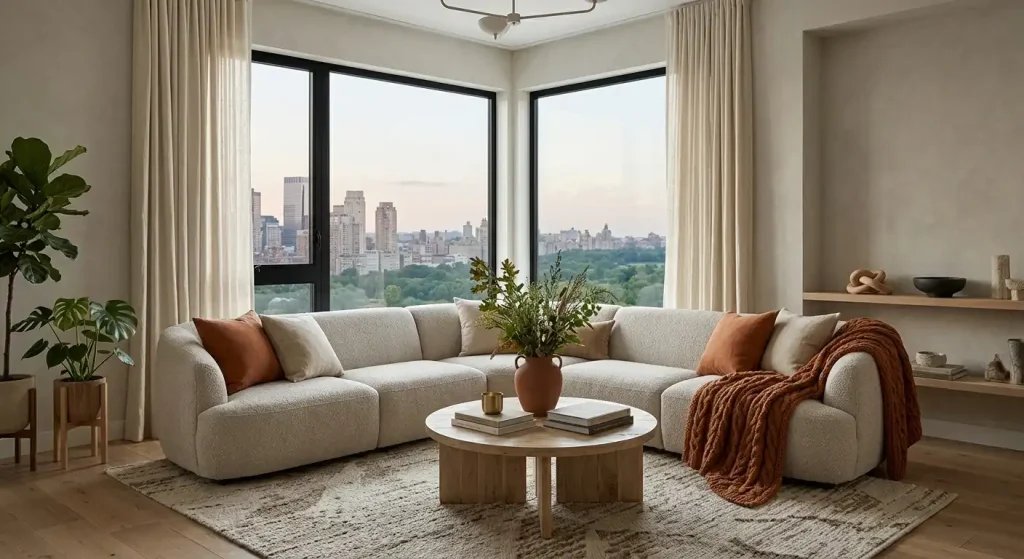
A seasonal color usually feels more intentional when it appears more than once.
For example, if you choose olive green, you could use:
- One pillow
- A small vase
- Greenery on a table
- Artwork with a touch of olive
The goal is not to fill the room with green. Repeat the color in small doses so the eye can connect different parts of the room.
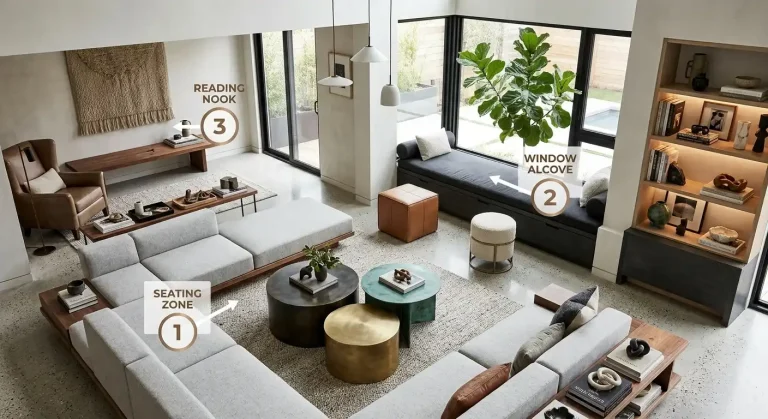
This is especially useful in open-plan spaces where one accent color can help separate areas feel visually connected. A coffee table is often the easiest place to test this repetition, see how to style your coffee table like a pro for layering ideas.
Seasonal Color Ideas for Every Season
Spring: Fresh & Soft
Spring colors can make a neutral room feel lighter and fresher.
Try:
- Sage green
- Soft blue
- Blush
- Pale yellow
- Fresh green
Use these colors through flowers, pillows, artwork, table linens, or small ceramics.
Keep the neutral foundation visible so the room feels refreshed rather than completely redesigned.
Summer: Light & Airy
Summer does not have to mean bright colors.
Try:
- Soft blue
- Teal
- Sandy beige
- Pale green
- White
Use linen pillows, lightweight throws, blue artwork, glass vases, greenery, and woven accessories.
Natural materials can create a summer feeling even when the color palette stays soft.
Fall: Warm & Earthy
Fall works especially well with many neutral bases because earthy colors add warmth without requiring a major change.
Try:
- Rust
- Terracotta
- Olive
- Ochre
- Warm brown
- Deep green
Use them through pillows, throws, ceramics, dried branches, or artwork.
You do not need pumpkins, signs, or heavily themed decorations to make a room feel like fall.
Winter: Deep & Cozy
Winter color can add depth while keeping a neutral home calm.
Try:
- Deep green
- Navy
- Burgundy
- Plum
- Charcoal
- Ivory
Pair these colors with wool, knit fabrics, velvet, wood, or other warm textures.
If you want the room to remain timeless, focus on the winter atmosphere rather than holiday symbols.
Apply Seasonal Color Room by Room
You do not need to change every room equally. Start with the spaces where the seasonal update will be most noticeable. For more room-specific direction, browse the full Rooms section.
Living Room
Use two or three pillows in your seasonal color, add one throw, and place greenery or a small seasonal arrangement on the coffee table.
Keep the sofa and large rug neutral so the accent color can change easily. For more ideas specific to this space, see Living Room Decor Ideas and the Living Room category.
Bedroom
A colored throw at the foot of the bed and one or two accent pillows can be enough.
Keep most of the bedding neutral so the seasonal color feels intentional rather than busy. If your bed frame needs a refresh too, this guide on how to style a bed without a headboard pairs well with seasonal bedding swaps. See more in Bedroom Decor Ideas for Every Style and the Bedroom category.

Kitchen & Dining
Swap dish towels, table runners, napkins, or a fruit bowl.
If you have open shelving, rotate a few colorful ceramics or small decorative pieces there.
Entryway
Use a seasonal wreath, colored doormat, or small vase and arrangement on a console table.
One noticeable seasonal detail can be enough. If your seasonal refresh extends outside, the outdoor decor ideas guide covers entry, porch, and patio styling.
Bathroom
Towels and a bath mat are easy seasonal swaps.
You can add a small soap dish, tray, or ceramic container in the same accent color for a subtle connection. For towel color and pattern direction, see hand towel design trends, and for matching your mat to your rug, see how to choose a bathroom rug and mat combination. More ideas are in Bathroom Decor Ideas the Easy Way and the Bathroom category.
What If Your Neutral Home Already Has Color?
A neutral home does not have to be completely beige or white.
You may already have:
- Blue-gray walls
- Brown wood
- Black accents
- Cream upholstery
- Green cabinetry
In that case, do not start from zero. Build the seasonal palette around the colors already in the room.
For example, a room with blue-gray walls could shift toward:
- Soft green in spring
- Teal in summer
- Rust in fall
- Navy or burgundy in winter
The existing color becomes part of the foundation.
How to Add Seasonal Color on a Small Budget
You can make a noticeable seasonal change without buying a room full of new decor.
Shop your home first.
Move artwork between rooms, change pillow covers, rearrange books, reuse vases, and bring natural elements indoors.
If you still need something, buy the pieces that create the biggest visual difference.
Good small-budget options include:
- Pillow covers instead of whole pillows
- One seasonal throw
- A small vase
- Table linens
- Affordable artwork
- Fresh or dried greenery
- Small ceramic pieces
Pillow covers are especially useful because the same inserts can be used throughout the year.
If you are renting, focus on portable pieces such as pillow covers, throws, rugs, artwork, and freestanding decor.
If you have kids or pets, washable fabrics can make pillows and throws easier to live with. Keep breakable accents away from busy areas.
A good seasonal decorating system should reduce unnecessary shopping rather than create four new shopping lists every year.
Store Seasonal Pieces So Rotation Stays Simple
Seasonal decorating becomes easier when your rotating pieces are easy to find.
Keep a labeled storage bin for each season. You can store:
- Pillow covers
- Table runners
- Small ceramics
- Seasonal artwork
- Other small rotating accents
Keep permanent pieces separate from seasonal items.
When the season changes, swap the appropriate pieces instead of starting your decorating process from scratch. If storage space is tight, this guide on living room storage ideas for small apartments has practical bin and shelving solutions.
A simple rule helps:
Shop your home before you shop for new decor.
If something already works in another room, move it before buying another version.
Avoid These Common Seasonal Color Mistakes
Using Too Many Colors
Too many unrelated colors can weaken the calm look of a neutral room.
Choose one main seasonal color and a small supporting palette.
Making Every Item Seasonal
Not every pillow, vase, artwork, and object needs to announce the season.
Let some pieces stay neutral.
Ignoring Existing Undertones
A color that looks good in one room may feel harsh in another.
Check the undertones of your walls, furniture, flooring, and other permanent finishes before choosing an accent.
Using Only Color
Seasonal atmosphere can also come from texture, natural elements, lighting, and materials.
You do not need more colorful objects to make the room feel different.
Matching Everything Exactly
Using the exact same shade and pattern everywhere can make the room feel flat.
Let the same color appear in slightly different shades, patterns, and materials.
Changing Every Room at Once
You do not need to redecorate the whole home.
Start with one or two key spaces and let smaller details carry the color into other areas.
Following Trends Too Literally
A seasonal color should work with your home.
You do not need to use a color simply because it is trending.
A Simple Seasonal Color Rotation
Once you find a palette that works, keep the neutral foundation and rotate only the flexible pieces.

Permanent base:
Cream sofa + neutral rug + wood furniture + neutral curtains
Spring:
Sage + soft blue + fresh greenery
Summer:
Blue + sand + light natural textures
Fall:
Rust + olive + warm brown
Winter:
Deep green + navy + ivory
This gives the same room a different feeling throughout the year without turning it into a completely different home.
The goal is not to decorate more often. It is to make the pieces you already own more flexible.
Frequently Asked Questions
How do you add color to a neutral home without making it look cluttered?
Keep large permanent pieces neutral and introduce one main seasonal color through a few smaller items such as pillows, artwork, flowers, or ceramics.
What colors work best with a neutral home?
It depends on the undertone. Warm beige and cream pair well with rust, terracotta, olive, and warm brown, while cool gray and crisp white can work well with blue, sage, navy, and teal.
How often should you change seasonal decor?
You can make a small refresh when the season changes. You do not need to completely redecorate four times a year.
How can I decorate seasonally without buying new things?
Shop your home first. Move artwork, pillows, vases, throws, and other flexible pieces between rooms, then add natural seasonal elements before buying anything new.
Does seasonal color work in a small space?
Yes. Use one or two small color sources, such as pillows, a throw, a runner, or towels. Keeping the larger surfaces neutral helps prevent the room from feeling crowded.
What if I do not want to change decor every season?
Keep most of your decor year-round and change only one or two small accents. Neutral ceramics, greenery, and natural textures can work across multiple seasons.
Key Takeaways
- Keep walls, sofas, rugs, and other large pieces neutral.
- Choose one main seasonal color instead of several unrelated colors.
- Check the undertones of your existing neutral before choosing an accent.
- Use the Keep → Swap → Add method to make seasonal changes easier.
- Use pillows, throws, artwork, linens, and small decor for flexible color.
- Let texture and natural elements support the seasonal palette.
- Repeat one color in a few small places instead of using large amounts of it.
- Start with one or two rooms rather than changing the entire home.
- Shop your home before buying new seasonal decor.
- Store rotating pieces by season so the next refresh is easier.
Related Next Steps
- Seasonal Home Decor Guide — Explore broader seasonal decorating ideas for different rooms and times of year.
- DIY Home Decor Ideas — Create simple seasonal accents instead of buying everything new.
- Living Room Decor Ideas — Apply the neutral-base approach to the room where seasonal changes are often most visible.
- Bedroom Decor Ideas for Every Style — Use seasonal color through bedding, throws, pillows, and smaller accents.
- Outdoor Decor Ideas Guide — Carry the same neutral-plus-accent approach onto your porch, deck, or patio.
Sources and References
- Costa, M., Frumento, S., Nese, M., & Predieri, I. (2018). Interior Color and Psychological Functioning in a University Residence Hall. Frontiers in Psychology / NCBI — https://www.ncbi.nlm.nih.gov/pmc/articles/PMC6120989/
- Study on warm/cool color environments and lighting temperature effects on visual perception and mood — https://www.ncbi.nlm.nih.gov/pmc/articles/PMC8481791/
- Psychology or Physiology? Choosing the Right Color for Interior Spaces to Support Occupants’ Healthy Circadian Rhythm at Night. MDPI, Buildings — https://www.mdpi.com/2075-5309/15/15/2665
A neutral foundation gives you more flexibility than a full seasonal redesign. With a few intentional swaps, you can make your home feel connected to spring, summer, fall, and winter while keeping the overall style calm and consistent.
For more practical decorating ideas, DecorHubs focuses on simple ways to make everyday spaces work better without unnecessary changes.

Join the Conversation
What Do You Think?