
Introduction
You can make your home look more expensive without buying designer furniture or spending thousands on a makeover. The biggest difference often comes from “scale, color, lighting, texture, and clean finishes”.
The best budget-friendly DIY projects don’t just add more decor. They solve a decorating problem, refresh something you already own, or add texture and personality without making the room feel cluttered.
From oversized wall art and furniture updates to layered lighting and simple handmade accents, these “DIY home decor ideas” focus on practical changes that are affordable and easy to adapt to real homes.
What Is DIY Home Decor?
DIY home decor means creating, updating, customizing, or repurposing decorative items yourself instead of buying everything ready-made.
It can be as simple as:
- Painting an old vase
- Creating your own wall art
- Updating furniture hardware
- Making pillow covers
- Repurposing jars for storage
- Refinishing a small table
- Styling a shelf with handmade or repurposed pieces
DIY decor isn’t about making everything from scratch.
“Expensive-looking” decor usually means a room feels polished, cohesive, well-proportioned, and intentionally styled rather than simply filled with costly items.
The best projects solve a decorating problem while fitting the room’s color palette, furniture, scale, function, and overall style.
If you’re planning a larger decorating project, our [Home Decor: The Complete Guide to Decorating Your Home] covers the fundamentals of styling an entire space.
What Makes DIY Decor Look Expensive?
DIY decor looks more expensive when it has “good scale, a coordinated color palette, varied textures, layered lighting, clean finishes, and intentional styling”. You don’t need expensive materials for a polished result; you need each piece to work with the room’s size, colors, furniture, and function.
A polished room isn’t necessarily an expensive room. The difference usually comes from how well the elements work together.
| Element | What Creates a Polished Look |
| Color | A small, coordinated color palette |
| Scale | Decor that suits the size of the room and furniture |
| Texture | A mix of wood, fabric, ceramic, metal, or natural fibers |
| Lighting | Multiple light sources at different levels |
| Finish | Clean paint, edges, hardware, and surfaces |
| Styling | Enough empty space around decorative objects |
Practical lesson: One well-finished project can have more impact than several unrelated craft projects.
14 DIY Home Decor Ideas That Make Your Space Look Expensive
1. Create Oversized DIY Wall Art
Large artwork gives a room a strong focal point, but oversized pieces can be expensive.

You can create your own using:
- A large canvas
- Fabric
- A printable art design
- A thrifted frame
- Simple abstract shapes
Choose colors that already appear in the room.
Why it works
Large-scale artwork gives an empty wall visual weight without filling it with lots of small decorations.
Common mistake: Using several tiny pieces when the wall really needs one substantial focal point.
2. Refresh Old Picture Frames
An outdated frame can make good artwork look tired.
Instead of replacing it, clean and prepare the frame, then give it a new finish.

Try:
- Matte black
- Warm white
- Natural wood tones
- Deep brown
- A muted color already used in the room
Use the updated frame for artwork, photographs, mirrors, or fabric.
Best approach: Repeat the same finish across several frames to create a cohesive gallery wall.
3. Give an Old Side Table a New Finish
Before replacing an old side table or nightstand, check whether the structure and shape are still useful.

A basic makeover can include:
- Clean the surface thoroughly.
- Repair minor imperfections.
- Sand where appropriate.
- Prime if required.
- Apply the correct paint or finish.
- Allow proper drying and curing time.
You can also replace outdated knobs or pulls.
Why it works
You’re keeping useful furniture while changing the parts that make it look dated.
Common mistake: Painting over dirt, grease, or a failing finish. Surface preparation has a major effect on the final result.
4. Replace Furniture and Cabinet Hardware
This is one of the quickest “DIY home decor ideas” for refreshing furniture without replacing it.

Change the knobs or pulls on:
- Dressers
- Nightstands
- Cabinets
- Consoles
- Bathroom vanities
Choose a finish that already appears somewhere else in the room.
For example, repeating black metal or warm brass can create visual consistency.
Why it works
Hardware is small, but it can change the entire character of an otherwise ordinary piece.
Practical tip: Measure the existing hardware before buying replacements, especially the distance between screw holes.
5. Make a Simple Decorative Tray
A decorative tray can turn several loose objects into one intentional arrangement.

Use one on:
- Coffee tables
- Ottomans
- Dressers
- Entryway consoles
- Bathroom counters
Try a simple combination such as:
Vase + candle + book
You don’t need to fill the entire tray.
Why it works
The tray creates a visual boundary, making several small objects read as one arrangement.
Expert tip: Empty space is part of the styling. Leave room around the objects rather than filling every corner.
6. Create a Coordinated Gallery Wall
You don’t need expensive artwork to create an attractive gallery wall.

Mix:
- Family photographs
- Printable artwork
- Personal illustrations
- Vintage-style prints
- Small paintings
- Mirrors
Create consistency through:
- Matching frames
- Repeated colors
- Similar subject matter
- Consistent spacing
Before hanging
Arrange everything on the floor first.
Take a photo of the layout you like, then use it as a reference while hanging the pieces.
Common mistake: Making the entire arrangement too small for the furniture underneath it.
DecorHubs tip: Before buying frames, tape the planned arrangement on the wall with painter’s tape. This makes it easier to judge the overall scale and spacing before you commit to holes in the wall.
7. Make a Simple Fabric Wall Hanging
Fabric is an easy way to add softness and texture to a room.

For a basic wall hanging, you can use:
- Fabric
- Wooden dowel
- Cord
- Scissors
- Appropriate adhesive or sewing materials
Cotton and linen can work particularly well for relaxed interiors.
Why it works
Unlike flat artwork, fabric adds texture and visual softness, which can make a neutral room feel warmer.
This works especially well in:
- Bedrooms
- Reading corners
- Living rooms
- Home offices
8. Transform a Plain Vase or Planter
A basic vase or planter can become a custom decorative accent with very little effort.

Try:
- Matte paint
- Color blocking
- A subtle texture
- One muted accent color
Then style it with greenery, branches, or dried stems.
Keep the finish simple
If the room already contains strong patterns and colors, another highly decorative object can make it feel busy.
Better approach: Let the shape of the vase and the texture of the finish do the work.
9. Make Removable DIY Pillow Covers
Changing textiles can quickly update a sofa, bed, or reading chair.
If you sew, create removable pillow covers using fabrics that complement the existing furniture.

A balanced combination might include:
- One solid color
- One subtle pattern
- One textured fabric
Why it works
Pillows introduce color and texture without requiring a permanent change.
They’re also useful for renters because the covers can be changed or taken with you when you move.
Common mistake: Using too many unrelated patterns. Repeat at least one color to keep the combination connected.
10. Turn Old Jars Into Decorative Storage
Before throwing away glass jars, consider whether they can become useful storage.
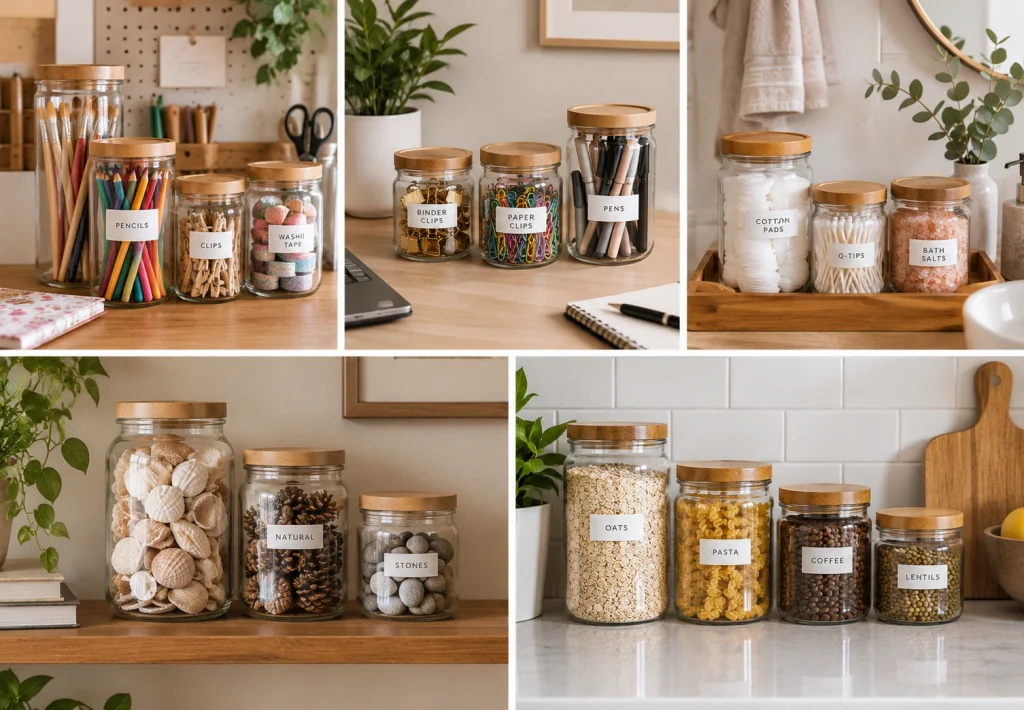
Depending on the container and its intended use, jars can hold:
- Craft supplies
- Office accessories
- Bathroom items
- Small decorative objects
- Suitable kitchen ingredients
Clean them thoroughly and add simple labels if necessary.
Why it works
Useful objects can become part of the decor instead of adding more hidden clutter.
Matching containers usually look more organized than a collection of unrelated packaging.
Safety note: Only reuse containers for food when they are suitable, clean, and intended for that purpose.
11. Create a DIY Mirror Arrangement
Instead of buying one large decorative mirror, group several smaller mirrors.

Create consistency through:
- Similar frames
- Repeated shapes
- One finish
- Similar proportions
Place the mirrors where they can reflect natural light or an attractive part of the room.
What to remember
Mirrors don’t automatically make a small room look bigger.
What they reflect matters.
A mirror facing a bright window or attractive feature can enhance the room. A mirror reflecting clutter simply repeats the visual clutter.
12. Improve the Look of Your Lighting
Lighting can completely change how a room feels. You don’t always need to replace the main fixture.

Try:
- Updating a lampshade
- Refreshing a lamp base
- Adding a table lamp
- Adding an accent lamp to a dark corner
- Using appropriate warm-toned bulbs
- Creating multiple levels of lighting
Think in terms of:
Ambient lighting + task lighting + accent lighting
For example, overhead lighting provides general illumination while a table lamp creates softer light near a sofa or reading chair.
Safety: Decorative changes are fine, but electrical wiring and permanent electrical modifications should be handled by a qualified professional.
For general guidance on safe practices around home electrical work, see the Electrical Safety Foundation International.
DecorHubs tip: A room often feels more polished when light comes from more than one height. Pair overhead lighting with a table or floor lamp instead of relying on the ceiling fixture alone.
13. Add Natural Textures
A room can feel flat when every surface has the same texture.
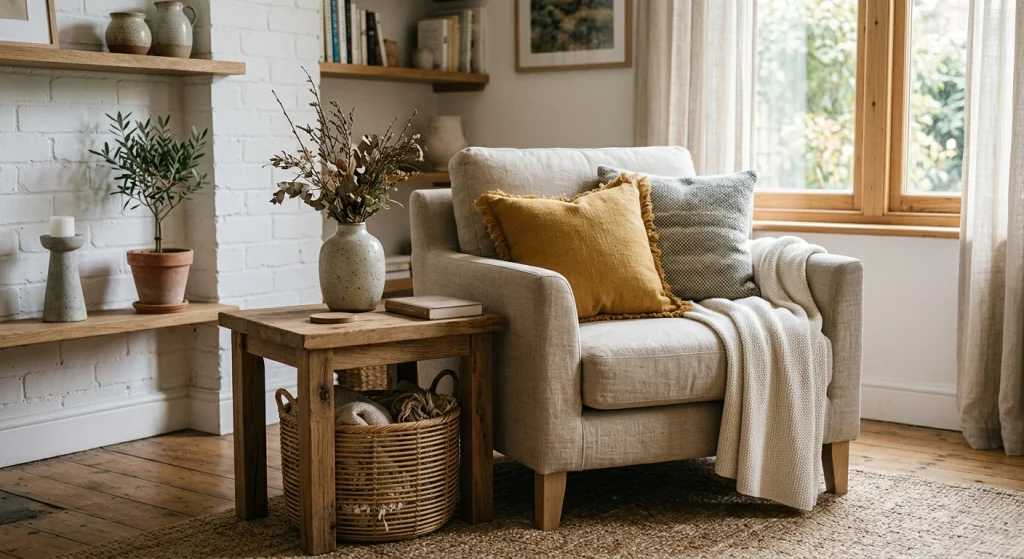
Introduce materials such as:
- Wood
- Linen
- Cotton
- Rattan
- Woven baskets
- Ceramic
- Natural branches
- Stone-like finishes
You don’t need all of them.
Choose two or three that fit your decorating style.
For example:
Wooden tray + woven basket + linen pillow
Why it works
Texture adds depth without requiring bright colors or expensive accessories.
This is particularly effective in neutral interiors, where different materials keep the room from feeling visually flat.
14. Style a Shelf or Console Like a Designer
You don’t need expensive accessories to create an attractive shelf display.
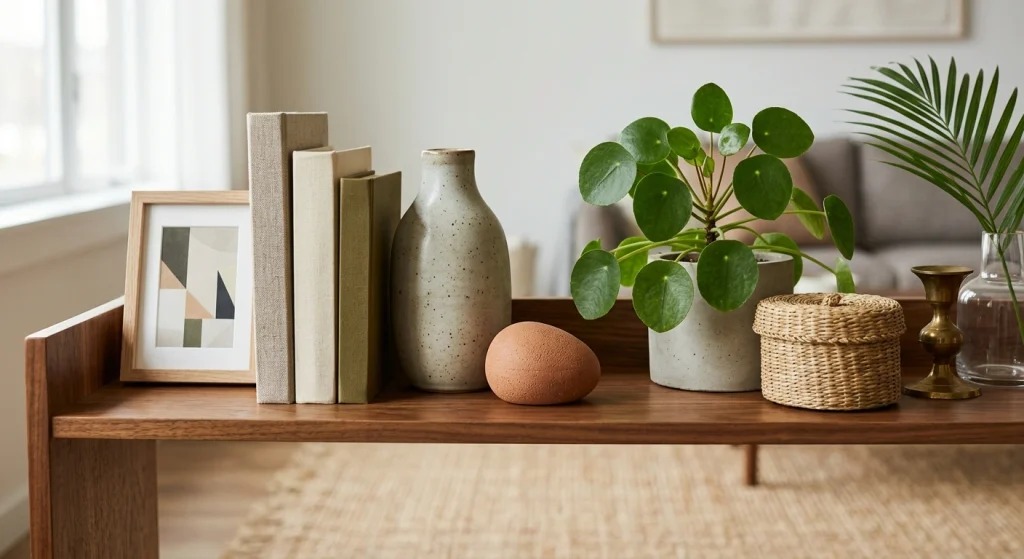
Start with objects that have different heights and shapes:
- Books
- Vase
- Artwork
- Plant
- Decorative object
- Basket
Then layer them.
For example, place a tall vase beside stacked books and add a smaller object in front.
The important part
Don’t fill every available space.
Negative space gives the eye somewhere to rest and helps individual pieces stand out.
If the shelf feels crowded, remove one or two objects.
DecorHubs tip: Step back from the shelf after styling it. If your eye immediately lands on one crowded area, remove an object rather than adding another piece to balance it.
A simple rule for choosing DIY decor
Don’t ask, “What DIY project should I make?”
Ask, “What does this room need?”
- – Empty wall → add scale
- – Flat surfaces → add texture
- – Outdated furniture → update the finish or hardware
- – Clutter → add organization
- – Dark corner → improve lighting
- – Plain sofa or bed → add textiles
- – Lack of personality → add meaningful artwork or objects
How to Choose the Right DIY Project
Start with the problem rather than the project. Look at what your room is missing, focal point, storage, texture, lighting, color, or personality and choose the DIY project that solves that specific need.
| If Your Room Has… | Try… |
| An empty wall | Oversized art or a gallery wall |
| Outdated furniture | Paint + new hardware |
| Flat-looking surfaces | Add natural textures |
| Cluttered tables | Decorative trays or storage |
| A dark corner | Layered lighting |
| A plain sofa or bed | DIY pillow covers |
| Little personality | Personalized artwork |
| Rental limitations | Portable decor and textiles |
This approach prevents you from choosing a DIY project simply because it looks attractive online.
How to Make DIY Decor Look More Expensive
Keep colors connected
Repeat colors already present in the room instead of introducing a new shade for every project.
Pay attention to scale
Small decor can disappear on a large wall. Oversized accessories can overwhelm a small room.
Finish edges carefully
Uneven paint, visible glue, crooked frames, and rough edges can make an otherwise good project look unfinished.
Don’t over-style
More accessories don’t automatically make a room look richer.
Give objects breathing room
Empty space helps important pieces stand out.
DIY Decor: What to Save On and What Not to Cut Corners On
DIY can save money, but not every part of a project should be done as cheaply as possible.
| Save On | Don’t Cut Corners On |
| Thrifted frames | Mounting hardware |
| Existing furniture | Appropriate paint |
| Repurposed containers | Safe furniture hardware |
| Fabric remnants | Protective finishes |
| Printable artwork | Materials affecting durability |
| Existing decor | Safety equipment |
Simple rule: Save on decorative appearance, not safety, stability, or durability.
Common DIY Home Decorating Mistakes
Starting too many projects
A half-finished project doesn’t improve the room. Complete one before starting another.
Copying trends exactly
A project that looks beautiful online may not suit your home’s size, layout, colors, or function.
Ignoring scale
Decor should relate to the furniture and available space.
Using too many colors
A smaller, coordinated palette usually creates a more intentional result.
Skipping preparation
Cleaning, sanding, priming, and measuring may feel slow, but they often determine the quality of the finished project.
Making everything decorative
Your home still needs to function. Don’t sacrifice useful storage, seating, lighting, or usable surfaces simply for appearance.
Quick Summary
- Create oversized wall art for an empty wall.
- Refresh old frames instead of replacing them.
- Refinish tired furniture when the structure is still good.
- Replace outdated hardware for a quick furniture upgrade.
- Use decorative trays to organize small objects.
- Build a gallery wall with consistent frames or colors.
- Add fabric wall decor for softness and texture.
- Paint plain vases and planters for personalized accents.
- Make removable pillow covers to change color and texture.
- Repurpose jars into attractive storage.
- Group mirrors to add light and visual depth.
- Layer lighting instead of relying on one ceiling fixture.
- Mix natural textures such as wood, linen, and rattan.
- Style shelves with negative space rather than filling every gap.
Frequently Asked Questions
What DIY home decor ideas make a room look expensive?
Oversized wall art, updated furniture hardware, layered lighting, natural textures, coordinated textiles, and uncluttered styling can make a room look more polished without a large budget.
How can I make my home look expensive on a budget?
Focus on lighting, scale, color, texture, and clean finishes. Repainting furniture, updating hardware, creating wall art, and removing clutter can have a bigger impact than buying more accessories.
What is the easiest DIY home decor project?
Painting a vase or picture frame is one of the easiest options. Simple wall art, decorative trays, and furniture hardware updates are also beginner-friendly.
How do I make DIY decor look expensive?
Use a limited color palette, choose the right scale, prepare surfaces properly, and keep the final finish clean. Simple designs usually look more polished than overly complicated craft projects.
What are good DIY room decor ideas for beginners?
Start with painted frames, vases, trays, simple wall art, pillow covers, or small furniture updates. These projects require fewer tools and are easier to correct if something goes wrong.
Is DIY home decor cheaper than buying decor?
It can be, especially when you reuse furniture and materials you already own. However, specialty tools and materials can make some DIY projects more expensive than ready-made alternatives.
What DIY decor is good for renters?
Portable projects such as artwork, pillow covers, decorative trays, painted accessories, fabric wall hangings, and furniture updates work well for renters. Check your lease before making permanent changes.
How do I make a small room look more expensive?
Keep the room uncluttered, use appropriately scaled furniture, add layered lighting, repeat a limited color palette, and choose a few strong decorative accents instead of many small pieces.
What colors make a home look expensive?
There is no single expensive-looking color. Warm whites, soft neutrals, earthy tones, muted greens, and deep natural shades can look sophisticated when they work with the rest of the room.
What makes home decor look expensive?
Proportion, consistency, lighting, texture, and finishing quality usually matter more than the price of individual items. A well-edited room can look more refined than one filled with expensive but unrelated decor.
Final Thoughts
Making a home look expensive isn’t about making every object expensive. It’s about “editing the room carefully”.
Choose DIY projects that solve an actual decorating problem. Reuse what you already have when possible, keep your colors connected, pay attention to scale, add texture, and take the time to finish each project properly.
Most importantly, don’t feel pressured to decorate every empty surface. A polished home has room to breathe.
Start with one wall, one piece of furniture, or one corner that feels unfinished. Make one thoughtful change, then decide what the room actually needs next.
That approach keeps “DIY home decor” affordable, practical, and personal.