
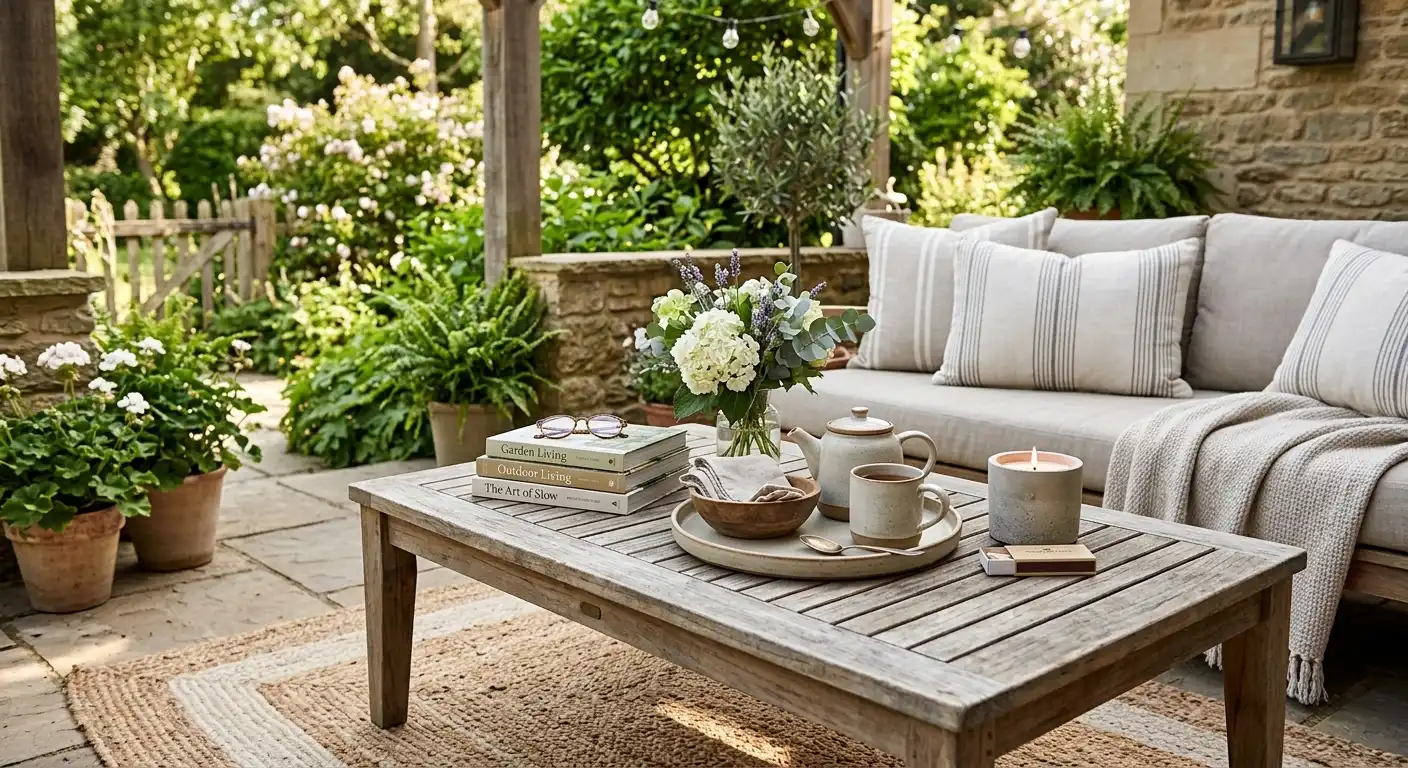
An outdoor coffee table only looks “styled” if it can survive being outside. Most advice skips that part and jumps straight to trays and candles. Then the tray warps, the candle blows over, and the whole vignette gets packed away by the second storm.
Here’s the short version: style your outdoor coffee table in layers: base, height, life, function, keep the surface at least half empty, and pick materials that can actually take sun, wind, and rain. That’s it. The rest of this guide shows you how to apply each layer to different tables, styles, and seasons.
A good rule of thumb: keep at least half the tabletop open for drinks, plates, books, or whatever the table needs to hold.
Want the bigger picture first? Check the full outdoor decor ideas guide, or browse the outdoor room hub for more patio guides. And if it’s actually an indoor table you’re working on, our coffee table styling guide covers that, the rules change quite a bit once weather’s out of the picture.
The 4-Layer Styling Method
This same layered approach works indoors and out because each layer gives the arrangement a different visual job. Instead of grabbing random objects and seeing what sticks, build the tabletop in four layers.
- Base layer – a tray, runner, or woven mat that anchors everything and protects the tabletop underneath.
- Height layer – one taller piece (a vase, lantern, or small sculpture) that gives your eye somewhere to land.
- Life layer – something organic: a potted plant, cut flowers, a bowl of citrus. This is what keeps the table from feeling staged.
- Function layer – the things you’ll actually use: coasters, a small catch-all dish, a serving bowl, or another practical piece.
You don’t need four separate objects to hit four layers. On a small table, one tray can be the base and a single potted herb can cover the life layer on its own. What matters is that each layer is doing a different visual job grounding, height, natural texture, and function so the table looks intentional instead of just full.
Here’s why this beats “add a tray and a plant”: most generic advice stops at listing items. A layering system gives you something to fall back on. When the wind knocks something over, or you’re redecorating for fall, you know exactly what to swap and why, instead of starting from a blank table again.
Get the Proportions Right First
Styling can’t fix a table that’s the wrong size or height for its seating. This is the part most guides skip, and it’s usually the actual reason a setup looks slightly off in person even though it is photographed fine.
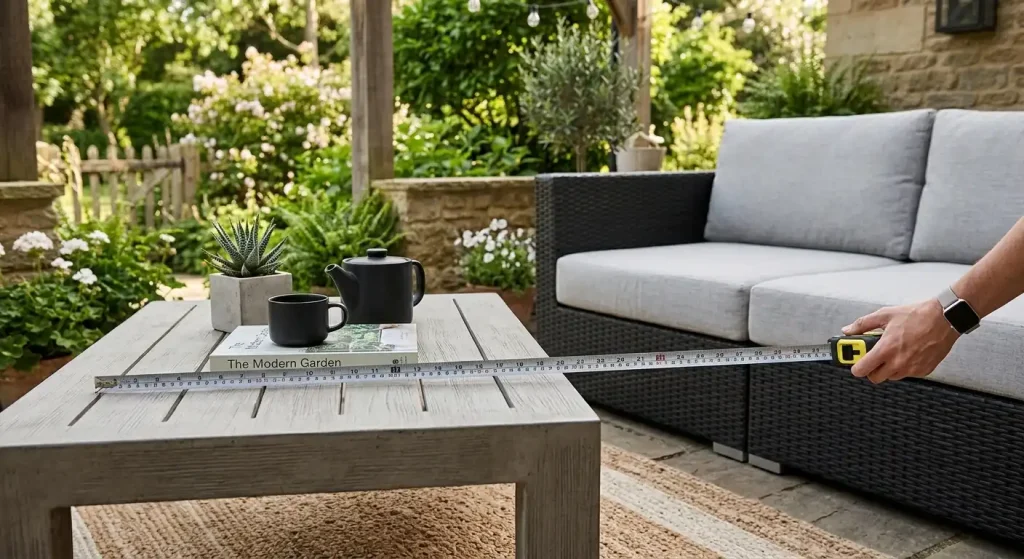
- Height: the tabletop should sit at or just below your seat cushion height, so drinks and plates are within easy reach.
- Distance from seating: Start with about 14–18 inches between the table edge and fixed seating, then adjust for legroom, reach, and the walking path around the table.
- Surface size: aim for roughly two-thirds the length of the sofa or seating group in front of it. That’s long enough to feel proportional without taking over the space.
Stuck with a table that’s already the wrong size and can’t swap it? Style around it instead. A runner can visually shorten a too-long table, and a single bold tray can make a small one feel purposeful rather than sparse.
Choose Decor That Can Actually Live Outside
This is the biggest gap in most “outdoor coffee table” advice: it recommends decor as though it’s going on an indoor console table. Outdoor conditions change what “good” decor even means.
| Decor Element | Indoor-Only Choice (Avoid Outside) | Weather-Ready Alternative |
| Tray | Painted wood, unsealed metal | Powder-coated metal, teak, or resin-wicker tray |
| Vase/planter | Unglazed ceramic, paper-based materials | Glazed ceramic, concrete, or UV-stable resin |
| Candles | Open taper candles, paper lanterns | Flameless LED candles or enclosed glass hurricanes |
| Textiles (runners, mats) | Cotton, linen, jute | Outdoor-rated polyester, olefin, or treated rope |
| Books/decorative objects | Real hardcovers, framed prints | Weatherproof decorative boxes, stone or resin objects |
A few material notes worth knowing before you buy anything:
- Untreated wood and paper-based decor are poor choices for exposed outdoor use because moisture and humidity can lead to warping, staining, or mold. Even covered patios do not provide complete protection from the weather.
- Unglazed terracotta struggles most in cold climates. The clay is porous, so it absorbs water, and that water expands when it freezes. Do that enough times and the walls crack.
- Metal trays and lanterns should have a powder-coated, corrosion-resistant, or rust-resistant finish. Unprotected metal can corrode over time and may leave rust stains on the tabletop.
- Fabric runners should be labeled outdoor or performance fabric solution-dyed acrylic or olefin. They resist fading and don’t hold onto moisture the way cotton does.
- If real candles are part of the plan, treat them as a safety item first, decor second.
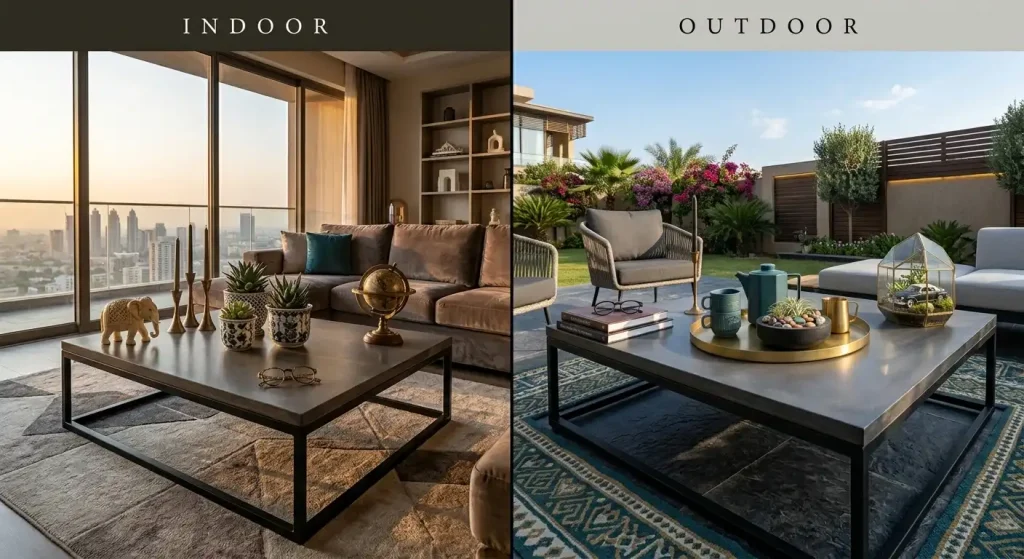
Indoor vs. Outdoor Coffee Table Styling: What Actually Changes
If you’ve styled an indoor coffee table before, some of this will feel familiar and some of it will trip you up if you don’t adjust for it.
- Materials that “just look nice” indoors frequently fail outdoors. A linen runner or a stack of hardcovers works fine on a living room table. Outside, rain and UV exposure can quickly fade, stain, or deteriorate them.
- Wind becomes a real design constraint. Indoors, you never think about whether a vase will tip. Outdoors, a gust can turn a nice arrangement into a mess on the deck.
- The table gets used harder. Drinks land on it without coasters, kids drop things on it, and it might double as a landing spot for keys or a phone. Style with that in mind rather than against it.
- Seasonal exposure matters more. An indoor table doesn’t care what month it is. An outdoor one does sun in summer, rain in fall, frost in winter.
If your table sits under real foot traffic during get-togethers, our guide on decorating a deck for entertaining goes deeper into planning around that.
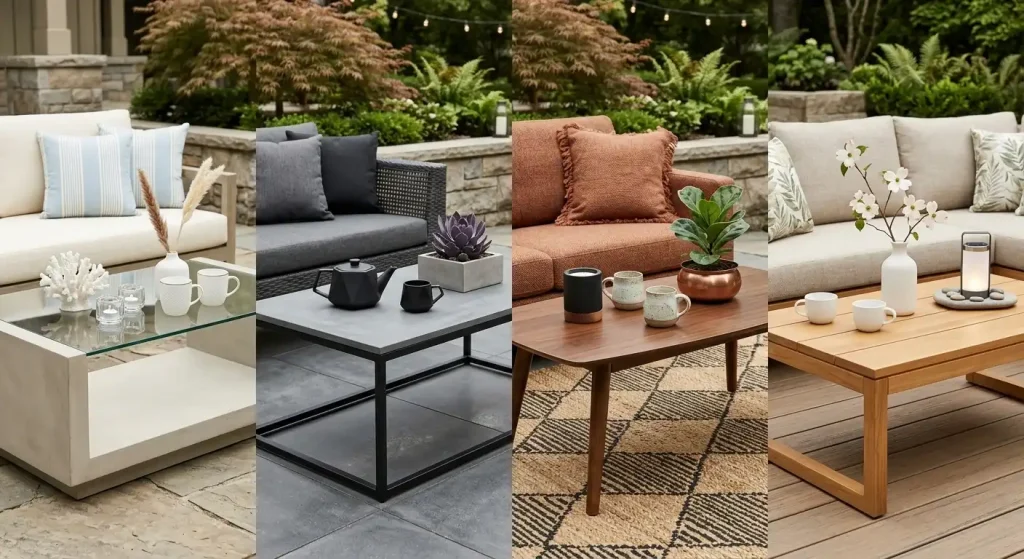
Five Style Directions, and How to Execute Each One
Pick whichever direction actually matches your patio’s existing style — not a look you saved once and never revisited. Each one below comes with the specific materials and colors that make it read correctly outdoors.
Coastal
Driftwood or whitewashed wood table, a soft blue-and-white ceramic vase, a small bowl of shells or smooth stones, and a jute-look outdoor rug underneath. Keep the palette to two or three colors, or it starts to feel more theme park than beach house.
Modern Minimalist
Neutral-toned table (black, gray, or concrete-look), one sculptural object, one plant in a simple pot. Nothing else. The restraint is the whole point here — resist the urge to add a fourth thing.
Garden/Botanical
Two or three potted plants at different heights (rosemary or mint both look good and stay useful), a small glass hurricane candle, and a woven tray underneath it all.
Boho/Eclectic
Mix textures on purpose — rattan tray, ceramic vase, woven textile runner — and let the colors vary more than you would in other styles. Just keep object heights varied too, or it tips into clutter fast.
Classic/Symmetrical
Center the table between matching seating and mirror the styling: two identical lanterns flanking one centered vase or bowl. This is the easiest style to get wrong by rushing it, because symmetry only reads as intentional when both pairs genuinely match in scale and finish.
Small Patios, Renters, and Tight Budgets
Most styling advice assumes a big table and money to spend on it. Most patios don’t work that way.
- Small or narrow tables: style one end only, and use a single multi-purpose tray instead of scattered objects. A too-full small table looks more cluttered than an empty one ever will.
- Renters: stick to portable, non-damaging decor — potted plants, battery-powered string lights, outdoor rugs that don’t need installing. Permanent fixtures aren’t worth it in a space you’ll eventually leave.
- Tight budgets: one good tray and one plant, done well, will always beat five mismatched cheap accessories. Spend on the base layer since it’s the piece that makes everything else look coordinated. Our DIY home decor ideas has budget builds for a tray or planter if you’d rather make than buy.
- Shared or multi-use tables: if it doubles as a dining spot or a workspace, keep the styling light enough to clear off in under a minute.
Decorating on a budget elsewhere in the house too? Decorating an empty living room corner on a budget uses the same “spend on the anchor piece” logic indoors.
What to Actually Buy
If you’re starting from scratch, here’s roughly where to put your money, in order:
- A weather-rated tray — this is your base layer and does the most visual work. Powder-coated metal or teak holds up best.
- One durable planter or vase — concrete, glazed ceramic, or UV-stable resin. Skip unglazed terracotta in climates with freezing temperatures unless you’re prepared to bring it indoors or otherwise protect it for winter.
- A flameless LED lantern or candle — covers both the height layer and evening atmosphere without the fire risk of an open flame.
- Coasters or a small catch-all dish — cheap, easy to find, and the piece most people skip until they need it.
You don’t need all four on day one. A tray and a plant alone will already look more finished than an empty table.
Seasonal Swaps That Keep the Table Looking Intentional Year-Round
Instead of restyling from scratch every few months, keep the base layer — tray, table, runner — constant and swap only the life and height layers.
- Spring/summer: fresh-cut or potted flowers, citrus in a bowl, lighter linen-look outdoor textiles.
- Fall: small pumpkins or gourds, warmer-toned candles, a wool-look (but outdoor-rated) throw folded at one corner.
- Winter/holiday: evergreen sprigs, string lights, weatherproof lanterns instead of open flame.
This keeps things cohesive without buying a whole new set of decor four times a year. For swapping decor by season across the rest of the house, see our seasonal home decor guide.
Common Mistakes to Avoid
- Overcrowding the surface so there’s no room left to actually use it. This is the single fastest way to turn “styled” into “cluttered.”
- Using indoor-only materials unsealed wood, paper, unglazed ceramic that can warp, fade, stain, or crack when exposed to outdoor conditions.
- Ignoring wind. Anything lightweight or top-heavy (paper lanterns, tall unweighted vases) ends up on the ground the first breezy evening. Weight it down or tuck it inside a tray.
- Matching everything too perfectly. A table styled entirely from one matched decor set tends to read as store display, not lived-in.
- Skipping the function layer. Decor-only tables stop getting used, and once a coffee table stops being useful, nobody keeps up the styling either.
Frequently Asked Questions
What’s the easiest thing to put on an outdoor coffee table?
A tray, one potted plant, and coasters. That covers the base, life, and function layers with very little effort.
How do I keep decor from blowing away on a windy patio?
Use weighted materials — ceramic, concrete, stone — and group small items inside a tray so they move as one unit instead of scattering.
Should an outdoor coffee table match the dining table?
No. Coordinate material or finish, not an exact match. A shared palette works better anyway.
How often should I restyle an outdoor coffee table?
Rarely. Keep the base the same year-round and swap only seasonal accents every few months.
Is it safe to use real candles on an outdoor coffee table?
Flameless LED candles or enclosed lanterns are the safer default outdoors.
Key Takeaways
- Style in four layers — base, height, life, function — instead of placing random objects.
- Get proportions right first: table height at or below seat height, 14–18 inches from fixed seating.
- Choose weather-rated materials. Indoor decor materials fail outdoors within a season.
- Keep at least half the surface open so the table stays usable, not just photogenic.
- Swap seasonal accents instead of restyling the whole table from scratch.
Related Next Steps
- Outdoor Decor Ideas Guide — the full pillar guide for patio and backyard styling.
- How to Decorate a Deck for Entertaining — extend this styling logic to hosting.
- How to Style Your Coffee Table Like a Pro — the indoor version of this same table.
- Seasonal Home Decor Guide — rotate accents through the year across the whole home.
- DIY Home Decor Ideas — budget-friendly builds for trays, planters, and more.
Ready to put this into practice? Start with just the tray and one plant this weekend — the rest of the layers can wait.
Sources
- National Fire Protection Association – Candle Safety — official guidance on safe candle use.
- Colorado State University Extension – Container Gardens — research-backed guidance on container placement and freeze-thaw exposure.
- Penn State Extension – Container Gardening Fundamentals — university guidance on drainage and material choice for outdoor containers.
Join the Conversation
What Do You Think?