

The easiest way to style a coffee table is to combine an anchor, a stack, something alive, and one personal or sculptural accent. Vary the heights, group objects in odd numbers, and leave enough empty space for everyday use.
The short version: Clear the table completely, then rebuild it with four elements: an anchor (usually a tray), a stack (books or boxes), something alive (a plant or flowers), and one sculptural or personal object grouped in odd numbers with varied heights. It’s a reliable formula for tables of almost any size or shape.
The rest of this guide walks through why that formula works, how to adapt it to your table’s shape and your household’s real life, and how to keep the whole thing from feeling like a magazine set that falls apart the moment someone puts down a coffee mug.
For more ways to bring the rest of the room together, see our full living room decor ideas guide.
The Design Principle Behind Every Well-Styled Table
Before picking objects, it helps to understand the two principles that make a tabletop look intentional instead of cluttered.
Odd numbers and grouping. Items arranged in groups of three (or five) read as more natural and interesting to the eye than paired, symmetrical arrangements. This is sometimes called the “rule of thirds” in styling circles, not the photography grid, but the same underlying idea: asymmetry with a loose visual balance holds attention better than a perfectly mirrored layout.
Height variation. A table where everything sits at the same level looks flat, even if every object is beautiful on its own. A balanced arrangement usually needs height variation: something low and flat (a tray or a stack of books), something mid-height (a vase or bowl), and something taller (a candle, a small sculpture, or a plant that rises above the rest). Your eye moves through the arrangement instead of skimming past it.
Everything else in this guide is really just an application of those two ideas, adjusted for your table’s shape, your room, and the way you actually use the space.
Start With Your Table’s Shape and Size
Table shape changes how you should approach styling more than almost anything else. Trying to style a round table with a rectangular layout (or vice versa) is one of the most common reasons a table looks off, even with nice objects on it.
- Rectangular and square tables are the most forgiving. Split the surface into a loose grid corner-to-corner works well and give each “zone” a role: a tray with functional items on one end, a book stack with an accent object in the middle third, and negative space left intentionally open on the other end.
- Round and oval tables work better with a centralized approach rather than corner zones, since there are no real corners to anchor to. Two reliable options: cluster one to three substantial items in the exact center, or build asymmetric book stacks slightly off-center and let smaller objects fill the gaps around them. Round tables can work particularly well in tighter spaces because their curved edges can make circulation feel easier.
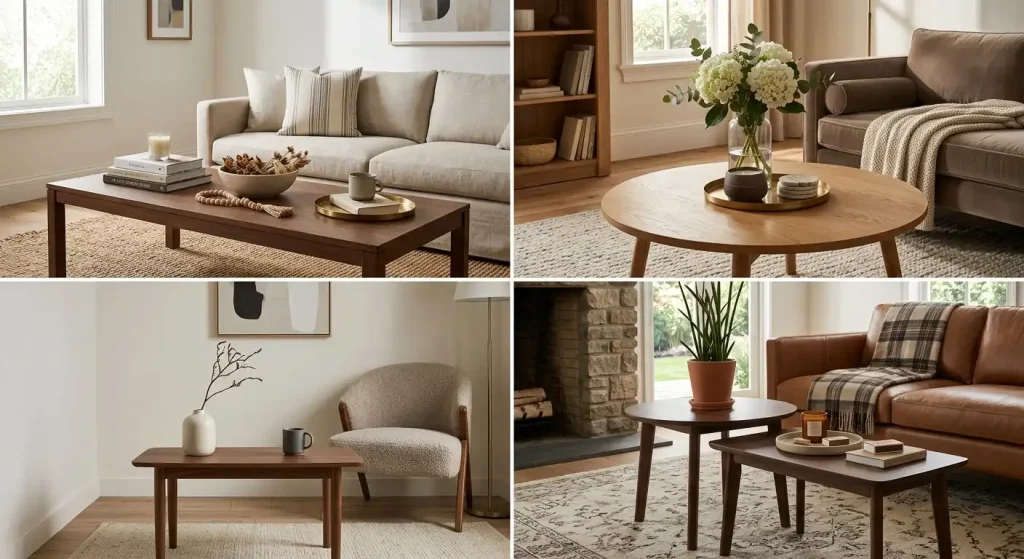
- Small or narrow coffee tables (or a table doing double duty as an ottoman) can’t support four full zones. Pick two, at most three, elements a tray and one accent piece is often enough. Overloading a small table is the fastest way to make a small room feel more cramped, not more finished.
- Nesting tables give you a shortcut to height variation for free, since the tables themselves are already staggered style the taller table a bit more sparsely and let the lower one carry a tray or stack.
The Essential Elements (and What Each One Actually Does)
Rather than treating a coffee table like a random collection of pretty things, think of it as a short list of roles to fill. You don’t need every category, and more expensive doesn’t mean better; a thrifted bowl earns its place just as well as a designer one if it does its job.
- The anchor (usually a tray). A tray visually contains everything else, so the table reads as “styled” rather than “cluttered with stuff.” It also does the practical job of catching crumbs, rings, and small messes. Wood, woven rattan, or lacquer all work to pick a finish that contrasts slightly with your table’s own material so the tray doesn’t disappear into it.
- The stack (books or boxes). A short stack of two or three hardcover books, ideally with interesting spines or covers, adds height and a sense of being lived-in. Turning a book or two spine-in occasionally softens a busy cover and lets the stack recede when you want the visual focus elsewhere.
- Something alive. A plant, a few stems in a bud vase, or a small bowl of seasonal fruit brings color and texture that manufactured objects can’t fully replace. If upkeep is a concern, a well-made faux stem or a low-maintenance plant like a pothos cutting solves the same problem without the guilt of a wilted arrangement.
- One sculptural or personal object. This is the piece with no job except to look good and mean something: a small ceramic vessel, a piece of travel-sourced pottery, a candle in an interesting holder. It’s also the easiest element to swap seasonally without redoing the whole table.
- A functional item, styled rather than hidden. Coasters, a remote-control box, or a small dish for keys and glasses keeps daily-use items from creeping back onto the table unstyled. Choosing one that matches your palette means you don’t have to hide it every time someone visits.
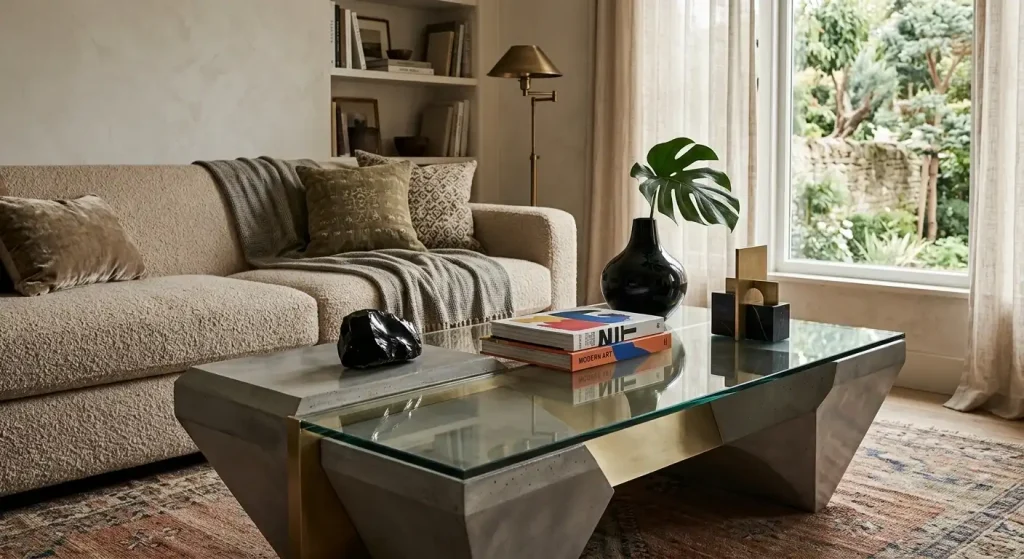
For most living rooms, four roles are plenty; smaller tables may need only two or three. If it takes more than a few seconds to figure out where your eye should land first, the table has too many competing elements.
Step-by-Step: How to Style a Coffee Table
- Clear the table completely. Remove everything, including things that have lived there so long you’ve stopped noticing them. Wipe the surface down and you’ll spot scratches or water rings worth addressing before you start.
- Choose your anchor first. Set the tray (or largest single piece) down before anything else. This decides how much of the table’s surface is “available” for the rest of the layout.
- Build the tallest element next. Place your candle, sculpture, or tall vase where it won’t block sightlines from the seating around the table, usually toward the back or one side rather than dead center.
- Add the stack, slightly off-center from the tall element. Books or boxes go near, but not directly beside, the tallest piece, so the two don’t compete for the same visual “column.”
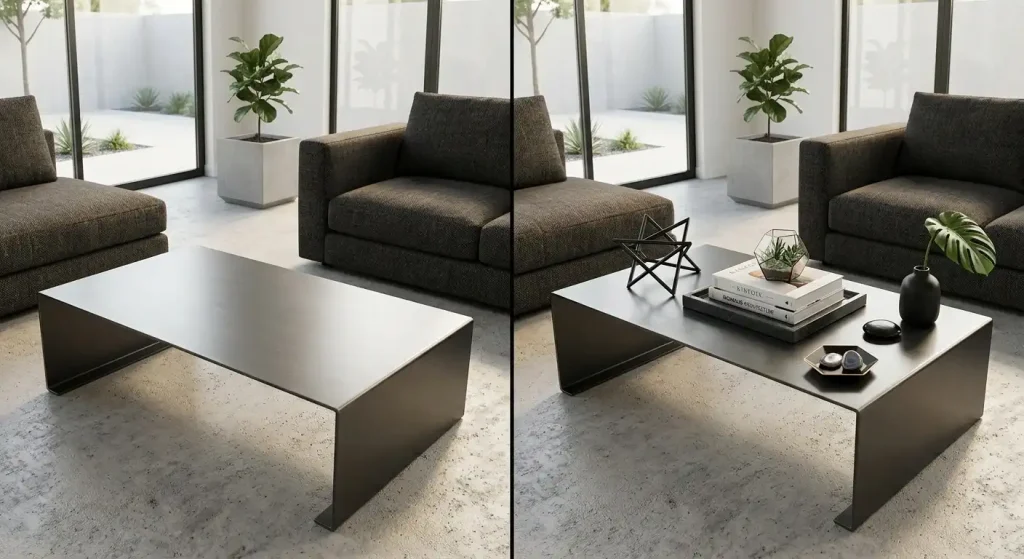
- Fill in with the mid-height and low pieces. Bowl, plant, or smaller objects go into the remaining space, angled slightly rather than lined up in a row.
- Step back and check the negative space. A well-styled table still has a visible empty surface somewhere to set down a drink or a plate without rearranging everything. If you can’t find a spot to put a coffee mug down, remove one item.
- Walk around the table. If people view it from more than one side (a sofa on one side, chairs on the other), make sure it looks intentional from both angles, not just the one you styled facing.
Side Table Decor vs. Coffee Table Decor: What Changes
| Coffee Table | Side Table | |
| Main role | Seating area ko visually anchor karna + drinks, books, remotes aur decor hold karna | Ek specific seat ke paas functional surface provide karna |
| Styling approach | Layered arrangement with an anchor, stack, plant, and accent | Simpler arrangement with 1–2 decorative elements |
| Typical amount | Around 3–5 decorative objects, depending on table size | Usually 1–2 decorative items |
| Best functional pieces | Tray, books, bowl, coasters, decorative objects | Lamp, coaster, small dish, books, plant |
| Height | Multiple heights create visual movement | Keep height controlled so it doesn’t overwhelm the seating area |
| Negative space | Leave enough open space for drinks and everyday use | Prioritize usable surface for the person sitting nearby |
| How to coordinate | Can be the main decorative surface in the seating area | Repeat one color or material from the coffee table |
| Avoid | Overfilling the surface or blocking sightlines | Copying the coffee table arrangement or adding too many objects |
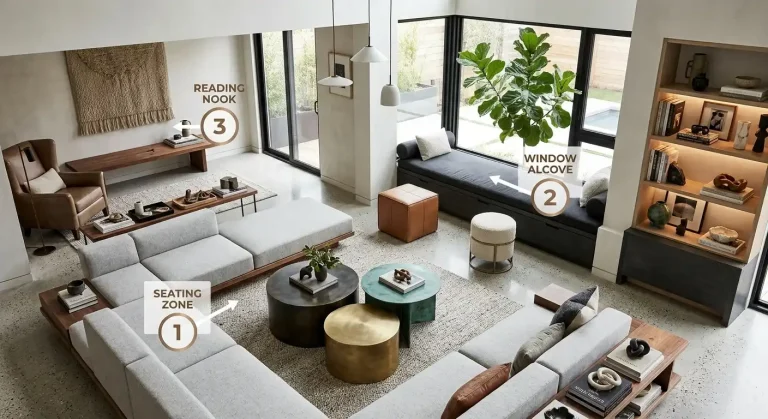
Think of the coffee table as the room’s central styling moment and the side table as a supporting, functional surface. They should feel connected, not identical. For more on getting the full seating area to feel put-together, browse our living room decor ideas.

Coffee Table Decor Ideas by Style
The formula above stays the same across styles. What changes is the materials and level of “polish” in the objects you choose.
- Modern/minimalist: One tray, one sculptural object, one plant. Favor matte finishes, a limited palette (two colors plus a neutral), and generous negative space restraint is the style here, not an afterthought.
- Traditional: Leather-bound or cloth-covered books, brass or wood accents, a low floral arrangement, and symmetry allowed on rectangular tables where it suits a more formal room.
- Boho: Woven trays, mixed textures (rattan, ceramic, raw wood), a trailing plant, and objects collected over time rather than bought as a set this style tolerates, and benefits from, a bit more visual density than modern does.
- Farmhouse: Wood and galvanized-metal trays, stacked linen-bound books, a simple stoneware vase, and one worn or vintage-look object for warmth.
- Coastal/light and airy: Light woods, glass or seagrass trays, a single stem in a clear or ceramic vase, and pale, breathable color choices that keep the surface from feeling heavy.

Looking for full-room inspiration to match your coffee table style? Check our living room decor ideas and living room wallpaper ideas for pairing walls and furniture together.
Styling for Real Homes: Kids, Pets, Renters, and Budgets
Most styling advice assumes a quiet, adult-only living room with no time pressure which isn’t how most homes actually work. Adjust the formula, don’t abandon it.
- Homes with young kids: Skip glass, sharp edges, and anything light enough to become a projectile. A tray with soft-edged, heavier objects (a wood bowl, a chunky candle in a stable holder) gets you most of the visual effect with far less risk. Consider styling only one end of the table and leaving the rest genuinely open for homework, snacks, or games.
- Homes with pets: Cats are drawn to knock things off edges; dogs go after anything at nose height. Keep the tallest objects toward the back or center, avoid dangling ribbons or trailing greenery near table edges, and choose a tray with enough of a lip to contain small items if the table gets bumped.
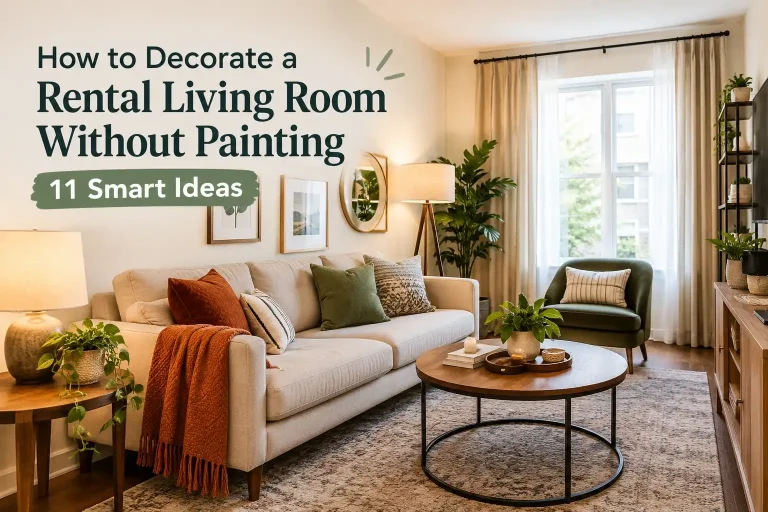
- Renters: Nothing here requires paint, hardware, or permanent changes, it’s entirely about what you set on top of an existing table. If storage is tight, a tray also doubles as a way to clear the whole table quickly for movie night, then reset it in under a minute.
- Small budgets: Thrifted trays, a library-sale book stack, and a cutting from an existing houseplant in a jar can achieve the same four-role formula as a fully purchased set. The layout principle (odd numbers, varied height, one anchor) matters far more to the final look than how much any single object cost. For more no-cost styling tricks, see our DIY home decor ideas.

If you don’t already own coffee table decor, start with things you have elsewhere in the home: a small bowl, a few books, a plant cutting in a simple jar, a candle, or a decorative box. The goal is to fill the styling roles, not to buy a matching set.
Common Coffee Table Styling Mistakes
- Styling for photos, not for use. If there’s no room left to set down a drink, the table isn’t finished, it’s just full. Leave real negative space on purpose.
- Everything is the same height. A table full of low, flat objects (or all one height) is the single fastest way to make a styled table look accidentally under-decorated.
- Matching too perfectly. A tray, vase, and candle holder all in the exact same finish and brand tends to look like a display in a store, not a lived-in room. Mix at least one material or era.
- Ignoring the table’s actual shape. A rectangular, corner-based layout crammed onto a round table (or a centered round arrangement stretched across a long rectangular one) rarely looks settled, no matter how nice the individual pieces are.
- Forgetting how the table is viewed. A table styled to look good from the sofa but ignored from the room’s entryway or the opposite chair will always feel one-sided.
A Quick Seasonal Refresh
You don’t need to restyle the whole table for each season, swap only the two most flexible elements: the “something alive” piece and the sculptural accent. A bowl of citrus in winter, a small vase of greenery in spring, dried stems or a candle in a warm tone for fall the tray, books, and functional items can stay exactly as they are year-round. For more seasonal swap ideas across the whole home, see our seasonal home decor guide.
Frequently Asked Questions
How many things should be on a coffee table?
Most tables look best with three to five objects grouped into the four roles above (anchor, stack, something alive, one accent), not counting the functional item. Fewer than three tends to look unfinished; much more than five, especially on a smaller table, starts to look cluttered rather than curated.
What is the “rule of thirds” for coffee table styling?
It refers to grouping objects in odd numbers — typically three — rather than pairs, because asymmetrical groupings read as more natural and visually interesting than perfectly matched, symmetrical ones.
Should a coffee table always have a tray?
Not always, but a tray solves two problems at once: it visually contains the arrangement so the table reads as intentional, and it protects the surface from rings and scratches. On very small tables, a tray can sometimes be the only styled element you need.
How do I style a coffee table with kids or pets?
Favor heavier, softer-edged objects over glass or breakable pieces, keep tall items toward the back or center rather than the edges, and consider leaving one end of the table completely clear for everyday use rather than styling the entire surface.
Is it okay to leave a coffee table empty?
Yes — a bare table isn’t a styling failure, especially with kids, pets, or heavy daily use. If you’d rather not decorate it at all, a single tray with a coaster or two still looks considered without requiring ongoing upkeep.
Key Takeaways
- Use the four-role formula anchor, stack, something alive, one accent grouped in odd numbers with varied heights.
- Match your approach to the table’s actual shape: zones for rectangular tables, a centered or clustered approach for round ones.
- Side tables need less: one to two items, prioritizing function over decoration.
- Adjust for real life first kids, pets, renters, and budget all change which materials and quantities make sense, not whether the formula works.
- Leave visible negative space; a table with no room for a drink isn’t finished, it’s overfilled.
Related Next Steps
- Explore living room decor ideas for how coffee table styling fits into the full seating area.
- Pair your coffee table look with the right walls using our living room wallpaper ideas guide.
- Browse our full living room category for more layout, furniture, and decor guides.
- Check our seasonal home decor guide for simple ways to refresh accent pieces throughout the year.
- Try more no-cost styling tricks in our DIY home decor ideas guide.
- Decorating the rest of the house too? See our guides for bedroom, bathroom, kitchen, and outdoor decor.
Sources and References
- Principles of Grouping — Wikipedia — on the psychological basis for why grouped, asymmetrical arrangements (like odd-numbered object groupings) read as more coherent than evenly paired ones.
- Gestalt Principles — The Decision Lab — on how the brain organizes visual elements into wholes, supporting why height variation and grouping create a more “finished” look than flat, evenly spaced objects.
- Gestalt Principles of Perceptual Organization — eCampusOntario — academic overview of proximity and grouping principles referenced in the styling formula above.
Join the Conversation
What Do You Think?