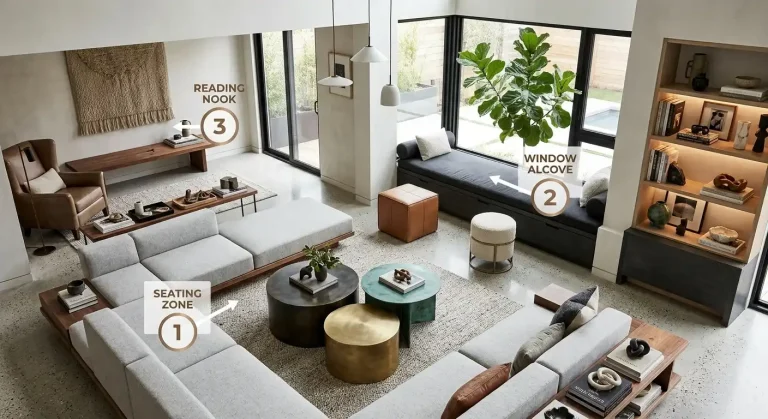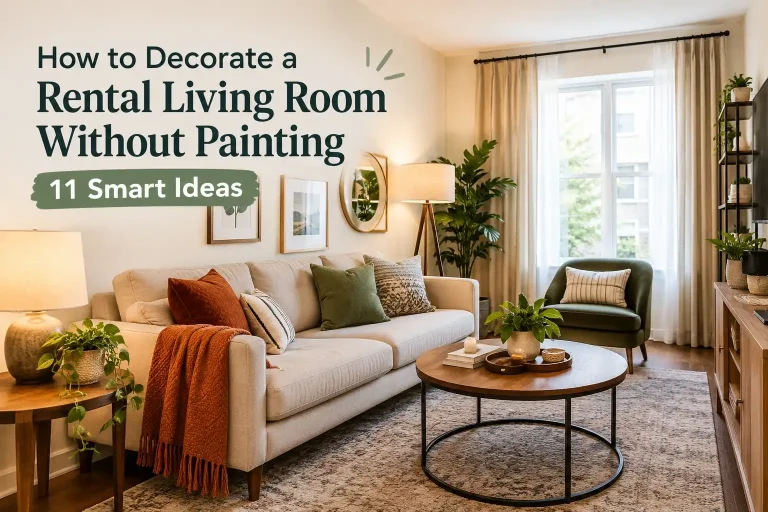
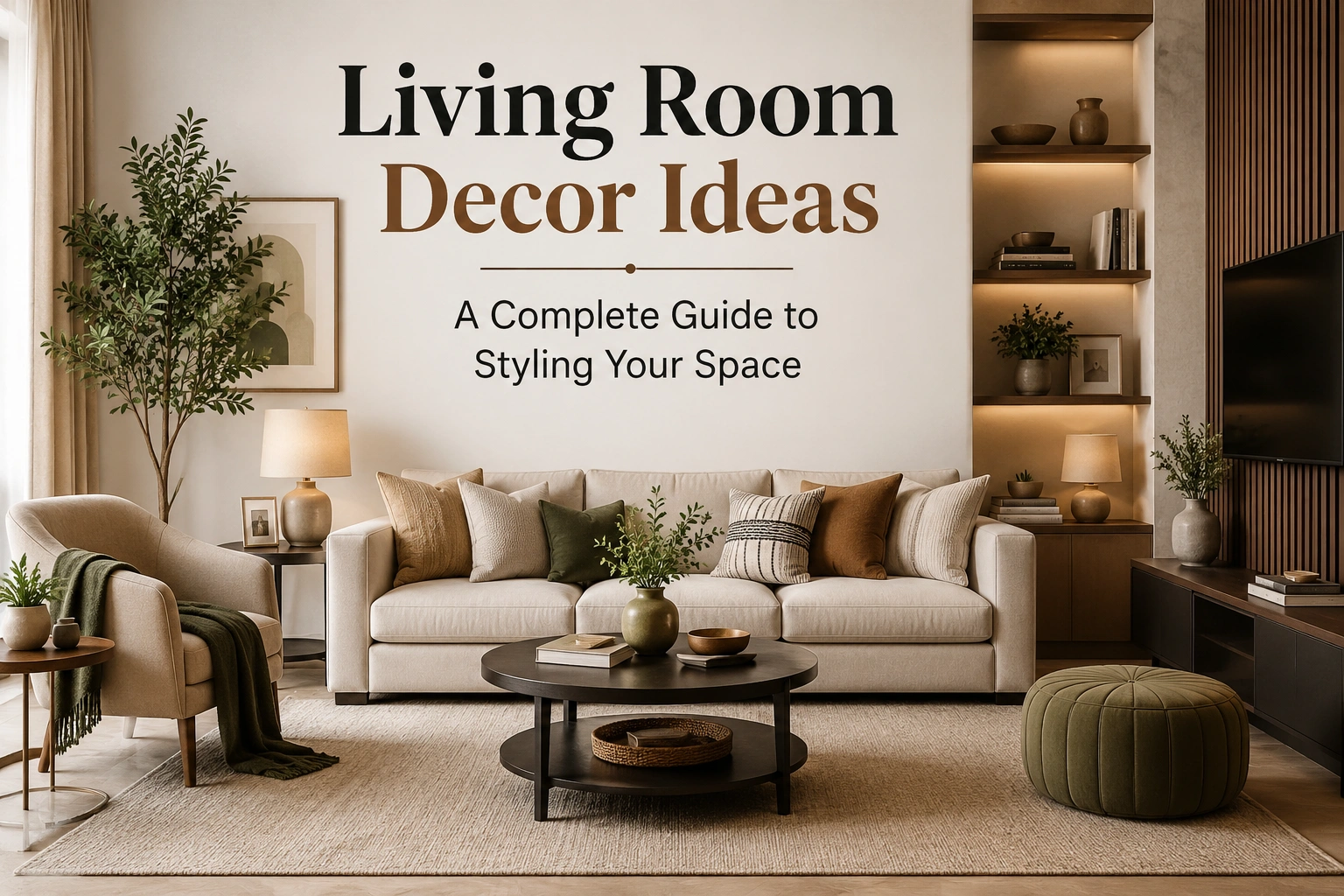
A living room can have great furniture and still feel unfinished, crowded, or simply “not right.” The problem is often less about buying new things and more about layout, scale, color, lighting, and how the pieces work together.
The best living room decor ideas start with the way you actually use the space. Whether you have a small apartment, a large open-plan room, an awkward layout, or a limited budget, a few smart changes can make the room feel more comfortable, balanced, and pulled together.
In this guide, you’ll learn how to choose a living room style, arrange furniture, build a color palette, layer lighting, decorate empty walls, choose the right rug and textiles, make a small room feel larger, and refresh your space without overspending. These same styling principles run through our full home decor guide, so it’s worth a look if you’re decorating more than one room at once.
The goal isn’t to copy a perfectly styled room from a magazine. It’s to create a living room that looks good, functions well, and feels like your home.
Let’s get into it.
Quick answer: The easiest way to improve a living room is to fix the layout before buying new decor. Create a clear focal point, make sure furniture is properly scaled for the room, then add color, layered lighting, rugs, wall decor, and accessories.
The DecorHubs Styling Order
When a living room feels “off,” fix it in this order:
1. Layout → 2. Scale → 3. Light → 4. Color → 5. Accessories
Start with layout because no amount of decor can fix furniture that blocks movement. Check the scale next so the main pieces fit the room. Then improve lighting, establish your color palette, and finish with smaller decorative details.
How to Start Decorating Your Living Room
Living room decor ideas work best when you start with a plan, not a shopping cart. Before you buy anything, figure out three things: how you use the room, what’s already working, and what’s bothering you about the space right now.
This simple starting point helps you decide what actually needs to change instead of buying decor that doesn’t solve the room’s main problem.
Walk into your living room and ask yourself these questions:
- What happens in this room? Watching TV, hosting friends, reading, working from home. Write it down.
- What do I actually dislike? Be specific. Is it the layout, the color, the clutter, or the lack of light?
- What can I keep? Most rooms don’t need a full redo. A sofa in good shape, a rug you like, or a coffee table that fits can all stay.
This is the part most guides skip. They jump straight to pretty pictures. But a room only looks good long term when the decor matches how you live in it. A young family needs stain-resistant fabric and rounded corners. A couple who hosts often needs flexible seating. A remote worker needs a quiet corner with good light.
Pro Tip: Take a photo of your living room before you change anything. Look at it on your phone later. Photos flatten a room and make problems, like an awkward furniture gap or a bare wall, much easier to spot than standing in the room itself.
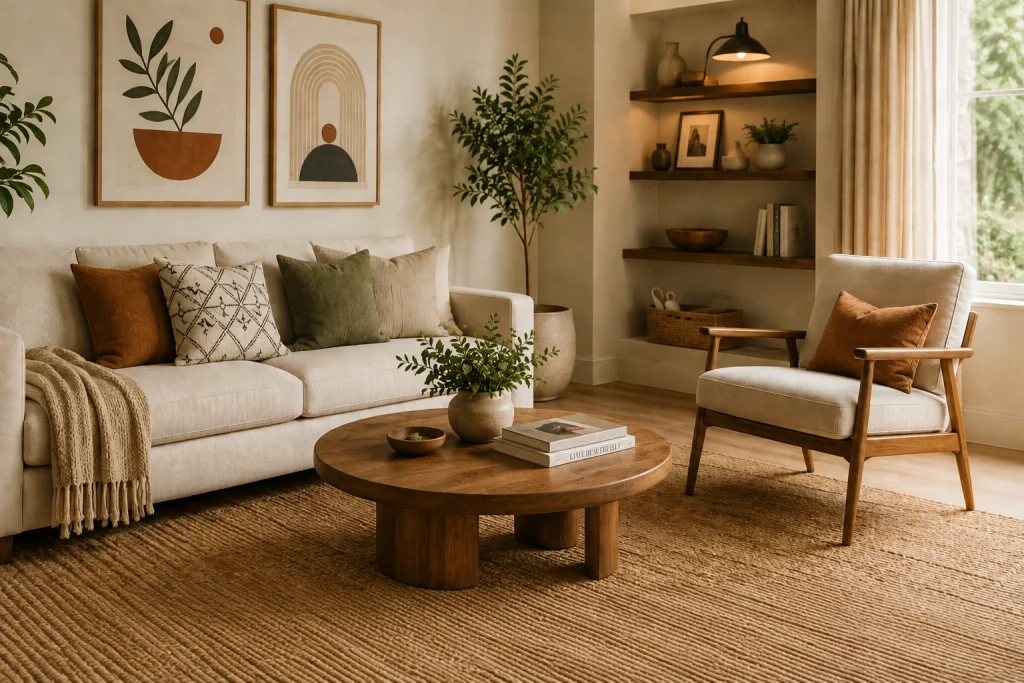
Choosing a Living Room Decor Style
Picking a style is the fastest way to make living room decorating ideas feel less overwhelming. Once you know your style, color and furniture choices get a lot easier because you’re no longer choosing from everything, just from what fits.
Here are the styles most homeowners lean toward, grouped by feel:
Clean and calm styles
- Modern and contemporary: straight lines, few patterns, a neutral base with one or two bold pieces
- Minimalist: only what you need, lots of open space, quality over quantity
- Scandinavian: light wood, white and soft gray, cozy textures, function first
- Japandi: a mix of Japanese simplicity and Scandinavian warmth, natural materials, low furniture
Warm and lived-in styles
- Farmhouse: shiplap, warm wood tones, vintage touches, comfortable seating
- Traditional: classic furniture shapes, richer colors, symmetry
- Rustic: raw wood, stone, leather, an outdoorsy feel
Bold and personal styles
- Boho: layered textiles, plants, mixed patterns, global touches
- Eclectic: a mix of eras and styles that still feels put together
- Mid-century modern: tapered legs, warm wood, bold accent colors from the 1950s and 60s
- Industrial: exposed brick, metal fixtures, leather, a warehouse feel
You don’t need to pick just one. Most real living rooms borrow from two styles, like modern with warm farmhouse touches, or Scandinavian with a few boho plants. The goal isn’t to match a magazine page. It’s to pick a direction so your living room design ideas stay consistent instead of random.
A simple way to choose:
- Want a clean, uncluttered room? Start with modern, minimalist, Scandinavian, or Japandi.
- Want a warmer, more traditional feel? Consider a farmhouse, traditional, or rustic.
- Want more personality and color? Try boho, eclectic, mid-century modern, or industrial.
- Want a mix? Choose one main style and borrow one or two elements from another rather than mixing everything at once.
Living Room Decor Trends for 2026
Living room design in 2026 is less about following one perfect style and more about creating spaces that feel comfortable, personal, and practical. Warm neutrals, natural materials, layered lighting, multifunctional furniture, and a mix of modern and traditional elements can all work together without making the room feel overly coordinated.
The most useful approach is to treat trends as inspiration rather than rules. Choose ideas that fit your room, lifestyle, and budget, then mix them with pieces you already love.
For a timeless result: Use current trends in smaller, replaceable elements such as pillows, artwork, lighting, textiles, and accessories rather than rebuilding the entire room around a short-term trend.
What Makes a Good Living Room Layout?
A good living room layout creates a clear focal point, keeps main walking paths open, and places seating close enough for comfortable conversation. The exact arrangement depends on the room’s size, doors, windows, TV, fireplace, and how the space is used.
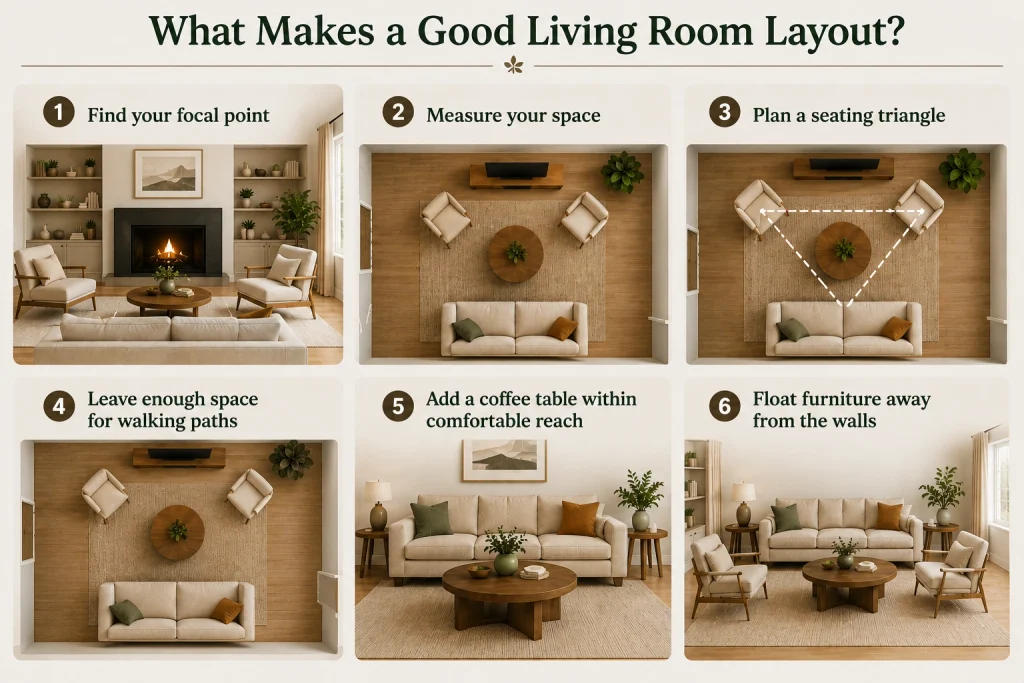
Here’s a simple step-by-step process for planning your layout:
Step 1: Find your focal point: Pick the fireplace, the TV, or the best window in the room and arrange seating to face it.
Step 2: Measure your space: Note your room dimensions and mark doorways so you know where people need to walk.
Step 3: Plan a seating triangle: Place your sofa and one or two chairs so people can talk without shouting across the room.
Step 4: Leave enough space for walking paths: As a practical starting point, aim for about 30 to 36 inches in your main pathways, then adjust based on the room’s size and how people actually move through it.
Step 5: Add a coffee table within comfortable reach: A common starting point is about 14 to 18 inches from the sofa, but the right distance depends on the table’s height, the sofa, and how the room is used.
Step 6: Float furniture away from the walls: Pushing every piece against the wall can make a room feel disconnected and leave the center of the seating area underused.
Living Room Layout Ideas With a TV
If the TV is your focal point, position the screen at a comfortable viewing height from your main seating position rather than following a single fixed measurement. Angle side seating slightly toward the TV instead of straight ahead so conversation still feels natural when it is off.
Living Room Layout Ideas With a Fireplace
A fireplace works best as the anchor, with the sofa facing it directly and the TV placed above or beside it, not competing for the same wall. If your room has both a fireplace and a TV on different walls, it’s fine. Just accept that one will be the main focal point and the other a secondary one.
Awkward Living Room Layouts
For long, narrow rooms, break the space into two zones, like a seating area and a reading nook, instead of lining furniture up in one row. For rooms with lots of doorways, a sectional sofa or rug can define the seating area without needing walls.
Choosing the Right Furniture
Furniture is where scale matters more than style. A gorgeous sofa that’s too big for the room will make the whole space feel tight, no matter how nice your living room decor ideas are otherwise.
Here’s how the main furniture pieces should work together:
| Furniture Piece | Best For | Ideal Size Rule | Price Range (USD) | Notes |
| Sofa | Main seating, most rooms | About two-thirds the length of the wall it sits against | 600–2,500 | Sectional sofas suit larger or open-plan rooms |
| Loveseat | Small living rooms, secondary seating | Fits where a full sofa feels too big | 400–1,200 | Great paired with one accent chair |
| Accent chair | Extra seating, adding color or texture | Should not block the main walking path | 150–800 | Easiest way to add personality |
| Coffee table | Central surface for the seating area | About two-thirds the length of the sofa | 100–700 | Leave 14–18 inches of space from the sofa |
| TV stand or console | Media storage, focal wall | Slightly wider than your TV | 150–900 | Doubles as storage for books and decor |
| Bookshelf or built-ins | Storage and display | Fits empty corners or flanks a fireplace | 100–1,500 | Great for adding height to a room |
A flexible starting point for many living rooms: A standard sofa paired with one accent chair and a properly sized coffee table can provide comfortable seating without overcrowding the room. The right combination still depends on your room size, layout, and how you use the space.
Pro Tip: If you’re replacing only one piece, consider the item that is causing the biggest visual or functional problem first. A properly sized rug or coffee table can sometimes improve the entire room without the cost of replacing a sofa.
Browse Living Room Decor for more detail.
Building a Living Room Color Palette
A color palette is defined as the set of colors you repeat across walls, furniture, and accessories to make a room feel planned instead of random. Most well-styled living rooms use a simple 60-30-10 rule: 60% a dominant neutral color, 30% a secondary color, and 10% an accent color.
Popular living room color schemes right now lean toward warmth:
- Neutral base: beige, cream, warm white, or light gray walls
- Earth tone accents: terracotta, olive green, rust, and warm brown
- Cool accents: soft blue or sage green for a calmer feel
- Monochromatic scheme: different shades of the same color, like ivory, tan, and chocolate brown, for a quiet, cohesive look
Here’s a simple way to think about it: your walls set the mood, your furniture holds the main color, and your accessories, like pillows, art, and vases, carry the accent color you can change anytime without repainting.
A practical color approach: Warm neutrals paired with one deeper accent color, such as navy, forest green, or warm brown, can create a living room that feels balanced without becoming visually overwhelming.
Use this as a starting point rather than a strict rule. Your room’s natural light, existing furniture, flooring, and personal taste should guide the final palette.
If your room gets little natural light, lean warmer, like cream and beige, since cool grays can feel flat without sunlight. If your room gets a lot of natural light, cooler tones like soft gray or blue will still feel bright and balanced.
Lighting Ideas for Every Living Room
Living room lighting is often the most overlooked part of a room, but it changes the mood of a space more than almost anything else. One ceiling light in the middle of the room is not enough for most living rooms.
A useful lighting framework for most living rooms is to combine ambient, task, and accent lighting. Keeping these sources separate gives you more control over brightness and mood throughout the day.
- Ambient lighting provides overall illumination.
- Task lighting supports activities such as reading or working.
- Accent lighting highlights artwork, shelves, plants, or architectural features.
This creates a more flexible lighting setup than relying on a single ceiling fixture.
Floor lamps and table lamps are the easiest way to add task lighting without any electrical work. Pendant lights work well over a seating area in rooms with higher ceilings. Wall sconces free up table space and add a soft glow along a wall. If you have natural light coming in during the day, sheer curtains let it through while still giving you privacy at night.
Living Room Wall Decor Ideas
Living room wall decor is defined as anything placed on the walls to add color, texture, or personality, including art, mirrors, shelving, and wallpaper. Bare walls are one of the biggest reasons a room feels unfinished, even when the furniture is great.
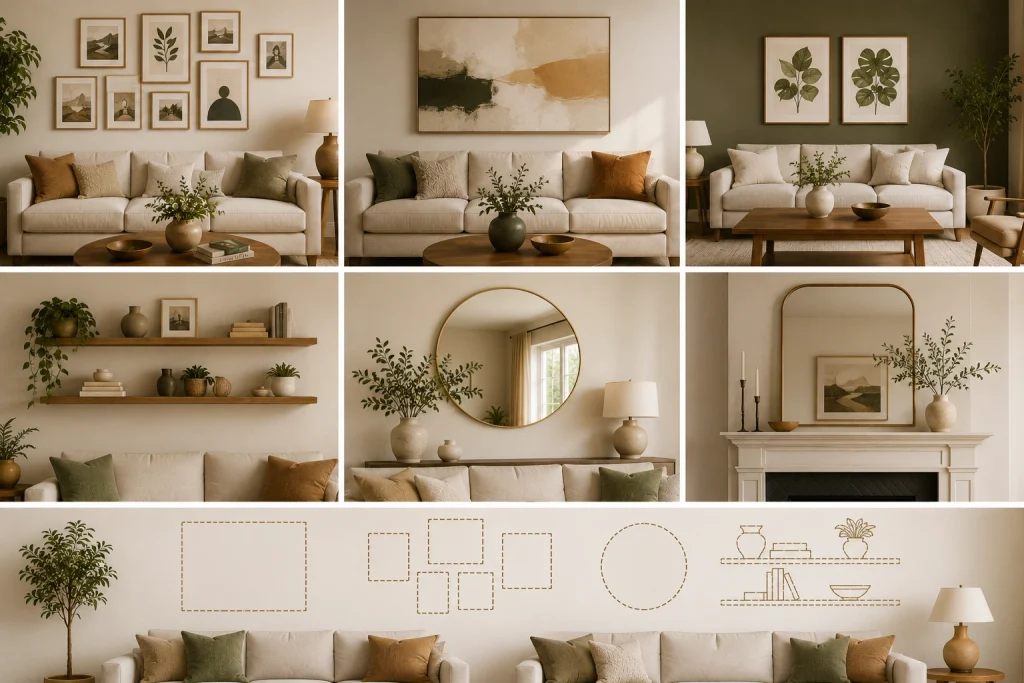
The best ways to style a living room wall are:
- Gallery wall: a mix of framed art and photos arranged together, great above a sofa or console table
- One large piece of art: simpler than a gallery wall and works well in modern or minimalist rooms
- Accent wall: one wall painted a bold color or covered in wallpaper to add depth without overwhelming the room
- Floating shelves: display books, plants, and small decor pieces while keeping the floor clear
- Mirrors: bounce light around the room and make it feel larger, especially useful across from a window
- Mantel styling: if you have a fireplace, layer a mirror or art above it with a few smaller objects on the mantel itself
What Should I Put on the Wall Behind My Sofa?
A large piece of art, a gallery wall, a mirror, or a carefully styled set of shelves can all work behind a sofa. Choose the option based on the room’s size and decorating style.
As a practical starting point, keep the overall wall arrangement visually proportional to the sofa rather than using pieces that look too small or too large. Hang artwork at a comfortable viewing height and adjust it based on the furniture and room.
For more hands-on wall projects, like framing your own art or building a floating shelf, see more in DIY Home Decor.
Rugs, Textiles, and Soft Touches
An area rug does more than protect the floor. It defines the seating area and ties the whole layout together. The most common mistake is buying a rug too small for the room.
A practical starting point is to place at least the front legs of the main seating on the rug so the seating area feels visually connected. In a larger room, a rug that accommodates more of the furniture can create a stronger, more unified layout.
Beyond the rug, textiles do a lot of the emotional work in a room:
- Throw pillows in two or three coordinating patterns, not five different ones
- Throw blankets draped over the sofa arm or a basket nearby
- Curtains hung close to the ceiling, not just above the window frame, to make ceilings feel taller
- Baskets for hidden storage that still looks styled
Small Living Room Decor Ideas
Small living room ideas focus on one goal: making the room feel open without making it feel empty. A small room decorated well can feel just as inviting as a large one.
Quick answer: To make a small living room feel bigger, use appropriately scaled furniture, keep the floor visually open, choose one large rug, use lighter colors where they suit the room, and bring light around the space with mirrors and well-placed lighting.
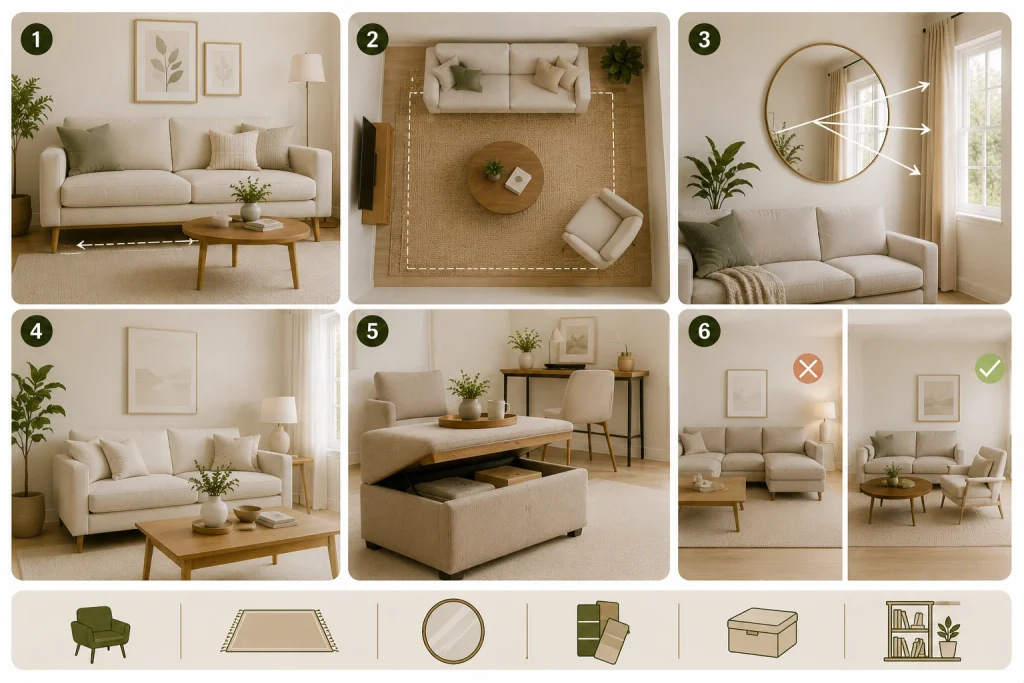
The best ways to make a small living room feel bigger:
- Choose furniture with visible legs — Furniture that floats off the floor lets light pass under it, which makes the room feel more open.
- Use one large rug, not several small ones — A single rug reads as more space than a few scattered ones.
- Hang mirrors where they can reflect natural light — Placing a mirror opposite or near a window can reflect light and create a stronger sense of openness.
- Pick a lighter color palette — Light walls and furniture reflect more light than dark ones.
- Use multifunctional furniture — An ottoman with storage or a console that doubles as a desk saves floor space.
- Skip the oversized sectional — A loveseat and one chair often work better than a large sectional in a tight room.
Small apartment living rooms benefit most from vertical storage, like tall bookshelves, since they use wall space instead of floor space. If a small kitchen is next on your list, our small kitchen design ideas guide covers the same space-saving thinking layout, storage, and light applied to that room specifically.
Budget-Friendly Living Room Makeover Ideas
You don’t need a full furniture budget to update a room. These budget-friendly living room decorating ideas focus on what changes the room’s look the most for the least money.
| Idea | Cost Range | Impact | Time Needed |
| Rearrange existing furniture | $0 | High | 1 hour |
| Add new throw pillows and a blanket | 30–80$ | Medium | 10 minutes |
| Paint an accent wall | 50–150$ | High | A weekend |
| Add a large mirror | 50–200$ | Medium | 30 minutes |
| Swap in a new rug | 100–300$ | High | 1 hour |
| Add floor lamps for layered lighting | 40–150$ | High | 15 minutes |
Start with the changes that cost the least: rearrange the furniture, improve the lighting, edit clutter, and check whether the rug is properly sized. Only then decide which new pieces are actually worth buying.
This approach helps you spend money on the problems that remain rather than replacing furniture unnecessarily.
What to Buy First for a Living Room
If you’re decorating your living room from scratch, avoid buying everything at once. Start with the pieces that define the room’s layout, then add smaller decorative items.
A practical order is:
- 1- Sofa or main seating: Choose the size and shape based on your room and how you use it.
- 2- Rug: Select a size that visually connects the seating area.
- 3- Coffee table: Choose one that fits comfortably between the seating pieces.
- 4- Lighting: Add floor lamps, table lamps, or other sources to create layered lighting.
- 5- Window treatments: Curtains can add softness, privacy, and visual height.
- 6- Wall decor: Add artwork, mirrors, or shelves once the main furniture is in place.
- 7- Accessories: Finish with pillows, throws, plants, books, and smaller decorative pieces.
The goal is to build the room from the largest functional decisions to the smallest styling details. This makes it easier to avoid buying pieces that don’t fit the final layout.
More ideas at Home Decor Guide
Quick Living Room Check
Before buying anything, answer these five questions:
- – Is the main walking path clear?
- – Can everyone reach the coffee table comfortably?
- – Does the rug connect the seating area?
- – Does the room have more than one light source?
- – Is there one clear focal point?
If you answered “no” to any of these, fix that issue before adding more decor.
Common Living Room Decorating Mistakes
Even good living room decor ideas fall flat when a few common mistakes get in the way. Here are the ones that show up most often:
✅ Buying a rug too small for the seating area: leaves furniture floating with no visual anchor
✅ Pushing every piece of furniture against the wall: creates a “waiting room” feel instead of a lived-in one
✅ Hanging art too high: artwork should generally feel comfortable to view from a seated or standing position. A common starting point is to place the center around eye level, then adjust for the sofa, mantel, or other furniture underneath it.
✅ Relying on one ceiling light: flattens the room and skips the ambient, task, and accent layers
✅ Matching everything too closely: a room with zero contrast can feel flat instead of calm
✅ Ignoring scale: a tiny coffee table in front of a large sofa, or an oversized sectional in a small room, throws off the whole layout
✅ Forgetting the walls: bare walls are one of the fastest ways to make a finished room look unfinished
FAQ: Living Room Decor Ideas
How do I decorate my living room?
Start with the layout before buying decor. Define the room’s focal point, arrange furniture around it, check traffic flow and scale, then add a color palette, layered lighting, a properly sized rug, wall decor, and accessories.
How do I make my living room look cozy?
Warm, layered lighting makes the biggest difference in a cozy living room. Add soft textiles like throw blankets and pillows, choose warm neutral colors, and avoid one harsh overhead light as your only light source.
How should furniture be arranged in a living room?
Furniture should be arranged around a clear focal point while keeping main walking paths open and seating close enough for conversation. A practical starting point is about 30 inches or more for main pathways, but the exact amount depends on the room and how people move through it. Float furniture slightly away from the walls when the space allows.
How can I make a small living room look bigger?
Light colors where appropriate, visible furniture legs, appropriately scaled furniture, and one large rug instead of several small ones can help a small living room feel more open. Mirrors placed where they reflect natural light can also increase the sense of brightness and space.
What colors make a living room feel cozy?
Warm neutrals like beige, cream, and warm gray, paired with earth tone accents like terracotta or olive green, tend to feel cozier than cool grays or stark white. Adding one deeper accent color, like brown or navy, adds warmth without making the room feel dark.
How can I make my living room look expensive without overspending?
Focus on proper furniture scale, a properly sized rug, and layered lighting instead of buying more items. A room with the right proportions and good lighting almost always reads as more expensive than a cluttered room full of pricier pieces.
How do I decorate a living room on a budget?
Rearranging existing furniture, adding new textiles, and improving lighting cost very little and make a noticeable difference. Save bigger purchases, like a new sofa, for last, after smaller changes show you what the room actually still needs.
What should I put on a living room wall?
A gallery wall, one large piece of art, or floating shelves all work well, especially behind the sofa or above a fireplace mantel. Fill about two-thirds of the furniture’s width with your wall decor for the most balanced look.
How do I choose a living room color palette?
The 60-30-10 approach can be a useful starting point: use one dominant color across most of the room, a secondary color for supporting elements, and a smaller accent color for details such as pillows, artwork, or accessories. Treat the proportions as a guideline rather than a strict formula.
What are the most popular living room decorating styles?
Modern, Scandinavian, farmhouse, and mid-century modern are among the most requested living room styles right now. Most real living rooms actually mix two styles rather than following one strictly.
Quick Summary
- Start with the layout: Create a clear focal point and keep main walking paths open.
- Check furniture scale: Choose pieces that fit the room rather than filling every available space.
- Build a color palette: Use a dominant color, supporting color, and accent color as a flexible framework.
- Layer your lighting: Combine ambient, task, and accent lighting for more control over the room’s mood.
- Choose the right rug: Make sure the rug visually connects the seating area instead of floating separately underneath the coffee table.
- Use walls strategically: Art, mirrors, shelves, and other wall decor can add personality and help balance the room.
- Start with low-cost changes: Rearranging furniture, editing clutter, and improving lighting can make a noticeable difference before you buy anything new.
Good living room decor ideas aren’t about buying more. They’re about solving the room’s biggest problems in the right order: layout first, scale second, then color, lighting, and personality.
Before buying anything, step back and ask what the room actually needs. A better furniture arrangement may solve a traffic problem. A larger rug may connect the seating area. A floor lamp may fix a dark corner. And a few carefully chosen wall pieces may be all the room needs to feel finished.
The best result is a living room that doesn’t just look styled, it works for the way you actually live.
Next steps:
- Measure your room and sketch your current furniture layout.
- Identify the room’s main focal point and check whether furniture supports it.
- Pick one style direction to guide your color and furniture choices.
- Check your rug and furniture scale before buying anything new.
- Start with one small change this week, such as adding a floor lamp, rearranging the seating, or replacing an undersized rug.
Once your living room is sorted, keep the same styling order going through the rest of the house with our bedroom decor ideas and bathroom decor ideas guides, or browse DecorHubs for more room-by-room inspiration.