

TL;DR
- Start with the bed, layout, lighting, and color palette before buying decorative accessories.
- Choose a bedroom style as a direction, not a strict rule. Mixing complementary pieces usually feels more personal than matching everything.
- For a small bedroom, focus on proper furniture scale, open floor space, vertical storage, and visual continuity.
- On a tight budget, improve the pieces you use every day first, then add inexpensive decorative changes.
- Use bedding, rugs, curtains, artwork, and throws to create seasonal changes without replacing permanent furniture.
- Layered lighting can make a bedroom feel warmer and more finished without a major renovation.
- If the room feels unfinished, fix the largest issue first: layout, lighting, bedding, storage, or visual clutter.
- Avoid decorating by shopping first. Plan the room, measure the space, then buy what solves an actual problem.
What You’ll Learn
- How to plan a bedroom before buying decor
- Bedroom decor ideas for different styles and budgets
- Practical ways to decorate a small bedroom
- How to choose colors, bedding, rugs, and lighting
- Easy seasonal bedroom updates
- Common decorating mistakes to avoid
- A simple order for putting your bedroom together
How to Start Decorating a Bedroom
A bedroom can have beautiful furniture and still feel wrong. Usually, the problem is not a lack of decoration. It has a poor layout, mismatched proportions, harsh lighting, or too many unrelated pieces competing for attention.
The most effective Home decor ideas start with the room’s function. Decide how you want the bedroom to feel, how you actually use it, and what needs to fit before you start shopping. Then build the room around the bed, storage, lighting, textiles, and a simple color palette.
Many beginners do this backward. They buy pillows, artwork, baskets, and accessories because those items are easy to shop for, then discover there is no good place for them.
A better approach is to decorate from large decisions to small ones:
Layout → furniture → color → lighting → textiles → accessories
That order saves money and makes the final room feel intentional rather than assembled piece by piece.
Start with three questions
What should the room feel like?
Choose three words such as calm, warm, natural or modern, elegant, dramatic.
What needs to happen in the room?
Sleeping may be the main function, but perhaps you also read, work, dress, exercise, or store a large wardrobe there.
What is already working?
You do not need to replace everything. A good bed frame, wooden dresser, or vintage mirror may be worth keeping and building around.
Measure before you buy
Measure the room, doors, windows, existing furniture, and available walking space. Also note where outlets and light switches are located.
Practical lesson: If you are unsure about a furniture size, use painter’s tape to mark its footprint on the floor. It is much easier to move tape than a heavy dresser.
Bedroom Decor Ideas by Style
Your bedroom does not have to fit perfectly into one design category. Styles are useful as a starting point, but the most successful rooms usually contain a little variation.
Modern Bedroom Ideas
A modern bedroom works best with clean lines, simple furniture, a controlled color palette, and minimal visual clutter.
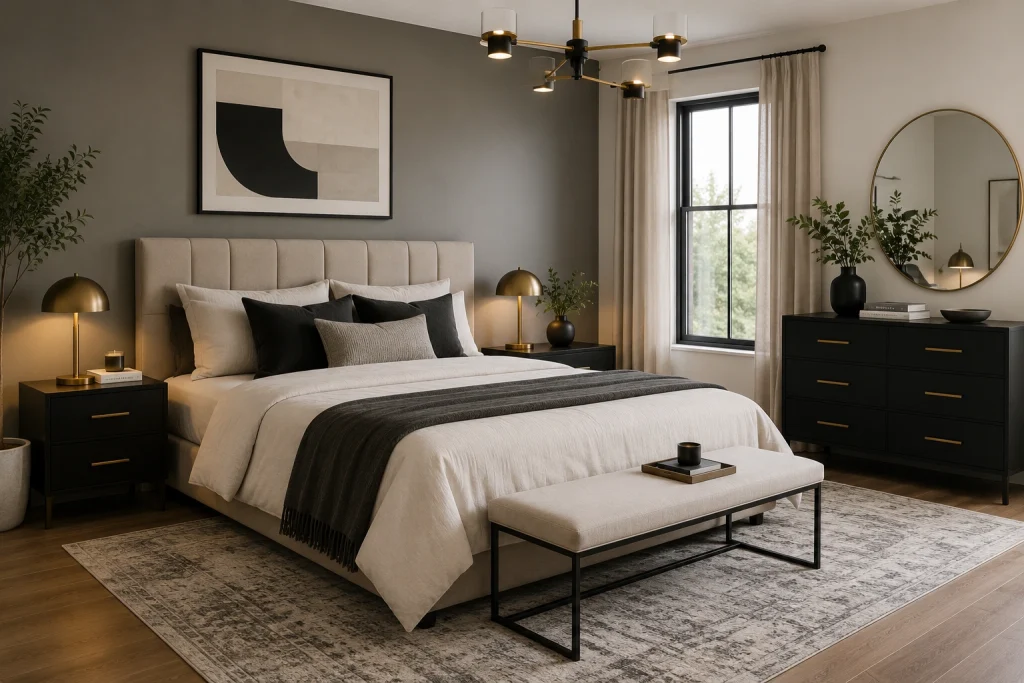
Try:
- An upholstered or streamlined wooden headboard
- Two simple nightstands
- Large-scale artwork
- Neutral bedding with one contrasting accent
- Black, brass, or brushed-metal details
- A low-pile or subtly textured rug
Common mistake: Making the room so minimal that it feels cold.
Add warmth through wood, linen, wool, cotton, or soft lighting rather than filling the room with more objects.
Minimalist Bedroom Ideas
Minimalism works best when it removes visual noise without removing comfort.
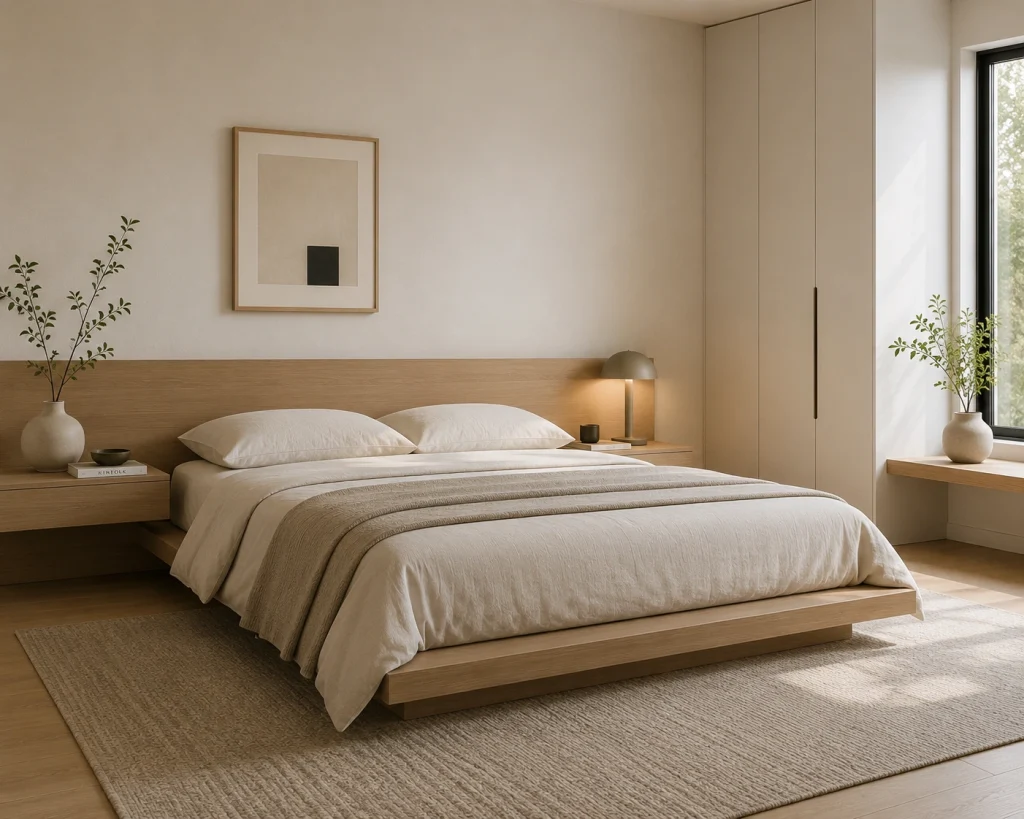
Use:
- Simple furniture
- Closed storage
- Limited colors
- Natural materials
- One or two meaningful decorative pieces
- Uncluttered bedside surfaces
A minimalist bedroom should still feel lived-in. A book you actually read, a soft blanket, or a framed photograph can make the room feel personal without creating clutter.
Boho Bedroom Ideas
Boho style is especially effective when texture does most of the decorating.
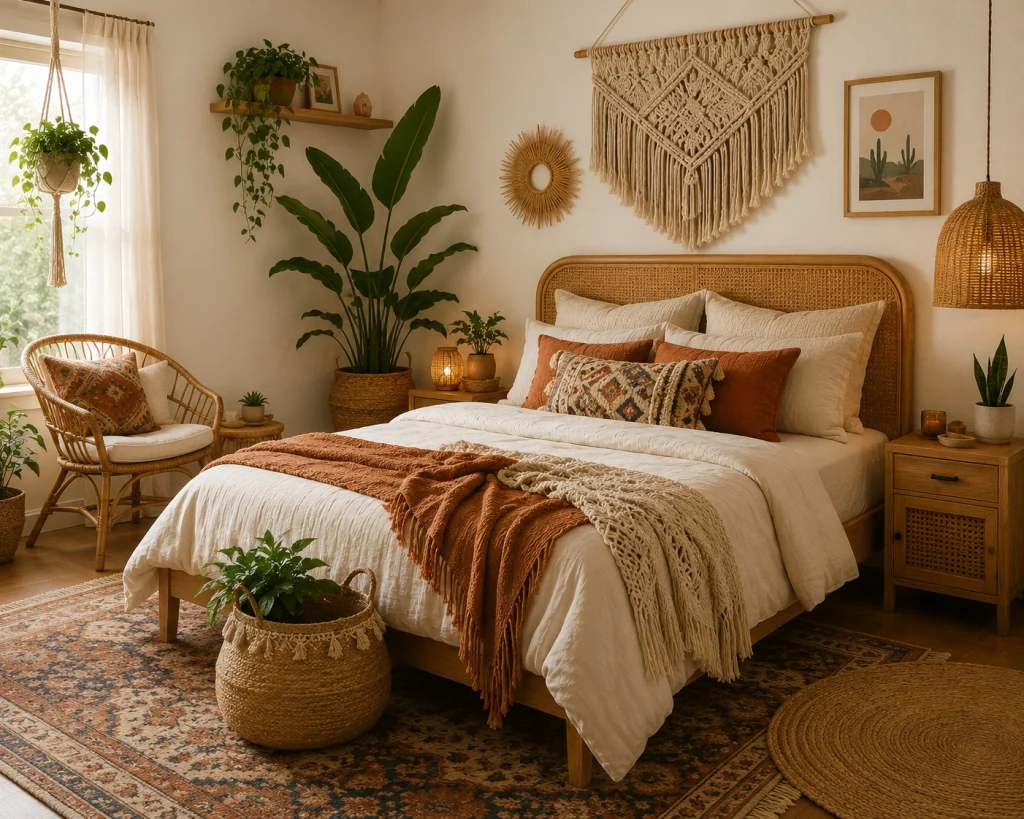
Combine:
- Rattan
- Woven baskets
- Linen
- Cotton
- Wood
- Patterned cushions
- Plants
- Handmade or vintage-looking accessories
For example, a wooden bed, woven basket, linen bedding, and textured rug can establish a relaxed boho feel without covering every surface in decorations.
Expert observation: Boho rooms often look better when the color palette is restrained and the variety comes from materials and patterns.
Farmhouse Bedroom Ideas
A modern farmhouse bedroom does not need to look like a themed country room.
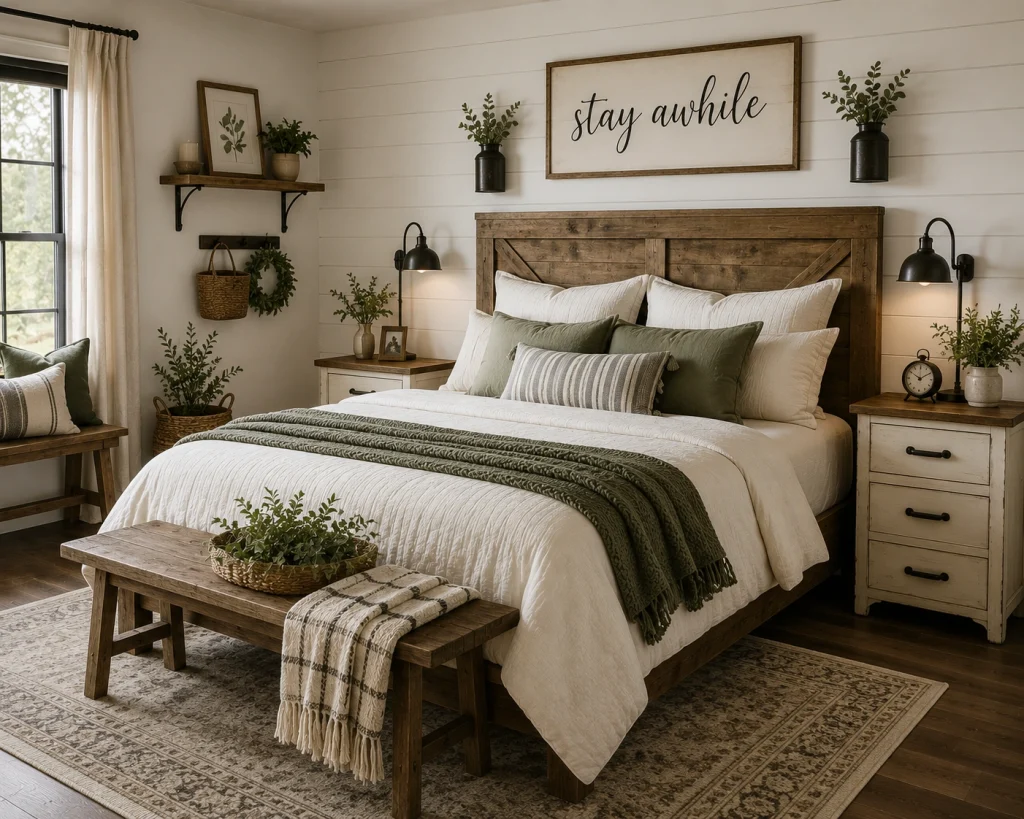
Consider:
- Natural wood
- Cream or warm-white walls
- Cotton quilts
- Simple stripes or checks
- Black metal accents
- Vintage-inspired artwork
- Woven storage
Mixing one or two older-looking pieces with cleaner furniture can make the room feel collected rather than manufactured.
Japandi and Scandinavian Bedroom Ideas
These styles work well for people who prefer calm spaces with natural materials.
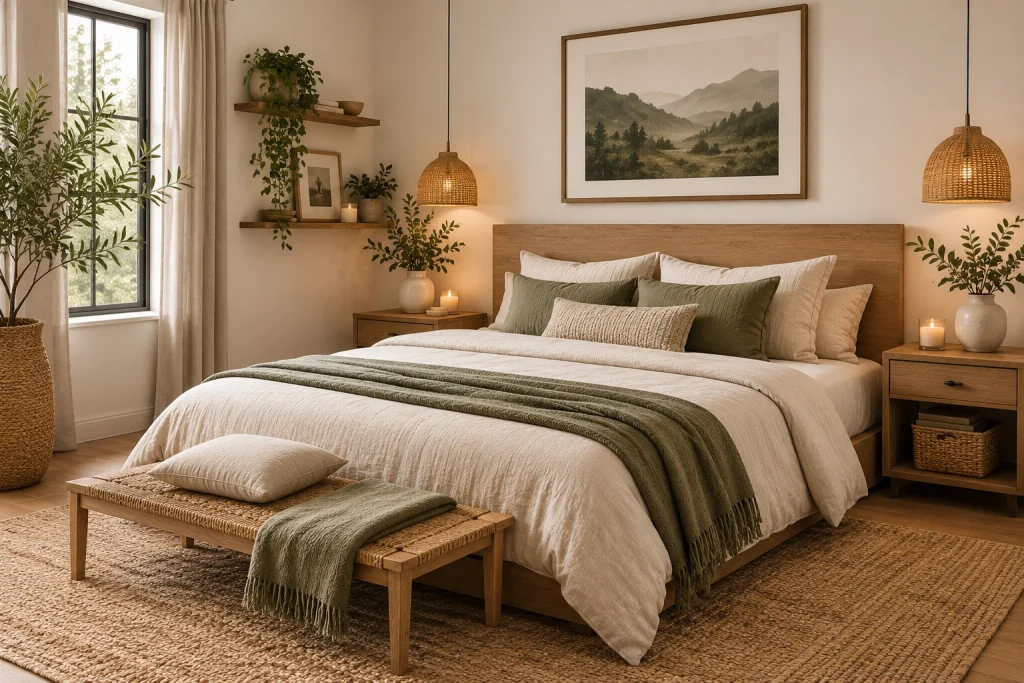
Try:
- Light or medium wood
- Soft beige, cream, gray, or muted green
- Simple furniture
- Functional storage
- Natural fabrics
- Minimal decoration
- Warm lighting
Common mistake: Using too much white and leaving the room visually flat.
Introduce contrast through wood grain, darker accents, woven textures, or greenery.
Traditional Bedroom Ideas
Traditional bedrooms can feel elegant without becoming formal.
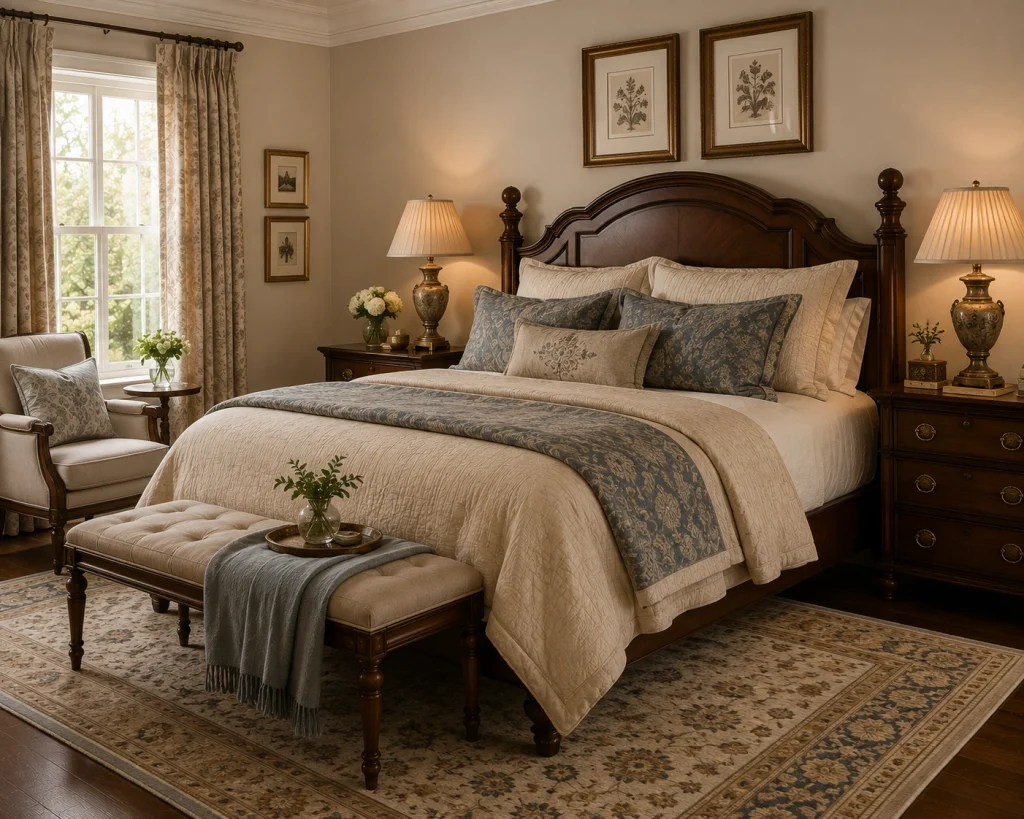
Use:
- A substantial headboard
- Classic bedside tables
- Layered bedding
- Framed artwork
- Table lamps
- Wood furniture
- Soft patterned fabrics
The trick is restraint. Too many ornate pieces can make the room feel dated, while a few classic elements can create a timeless foundation.
Eclectic Bedroom Ideas
Eclectic rooms allow more freedom, but they still need a connection between different pieces.
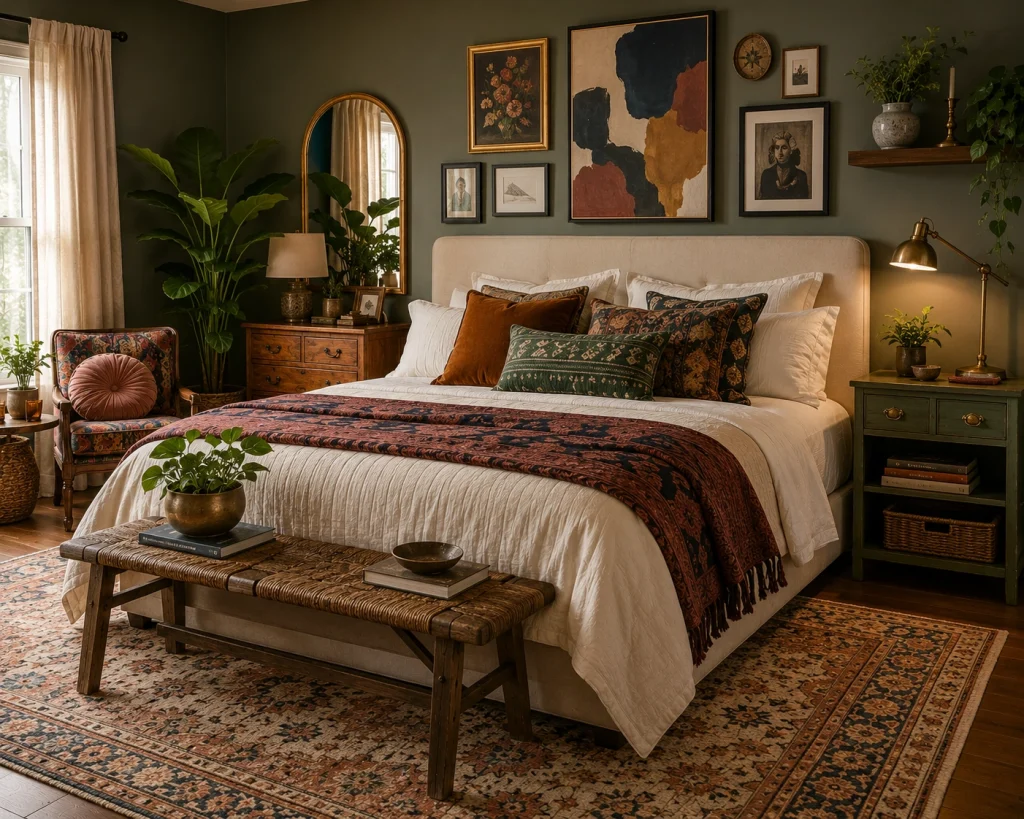
Repeat at least one visual element:
- A color
- A wood tone
- A metal finish
- A pattern
- An artwork color
For example, a vintage wooden nightstand can work beside a modern upholstered bed if the two pieces share a warm color relationship elsewhere in the room.
If you enjoy mixing styles, check our living room decor ideas for more inspiration on blending pieces.
Cottage Bedroom Ideas
Cottage-style bedrooms work well when you want the room to feel soft, relaxed, and lived-in.
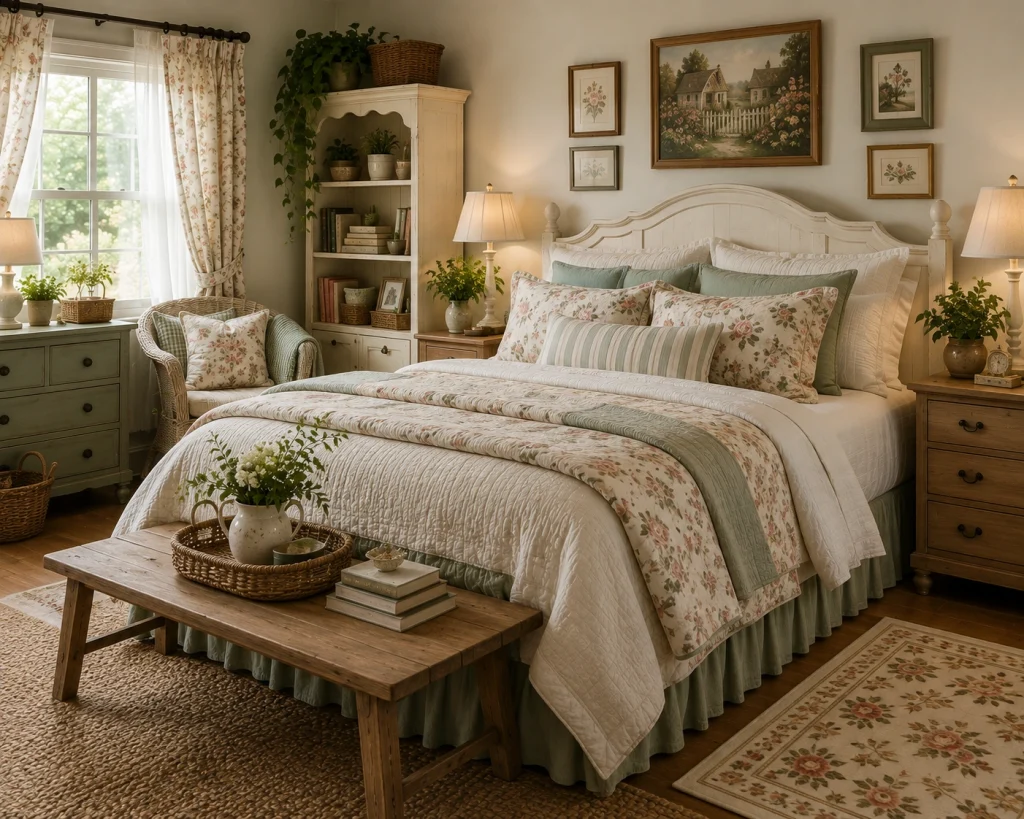
Try:
- Soft floral or striped bedding
- Painted or natural wood furniture
- Warm whites and muted colors
- Woven baskets
- Vintage-style artwork
- Layered curtains and quilts
Practical tip: Keep the pattern mix simple. One floral, one stripe, and mostly solid textures are usually easier to balance than several competing prints.
Bedroom Decor Ideas for Every Budget
You can make a meaningful bedroom change with almost any budget. The important part is deciding what deserves your money.
A useful rule is:
Spend more on things you use every day. Save on things you change often.
Budget bedroom ideas under $100
If your budget is limited, focus on visible, high-impact changes:
- New pillow covers
- A throw blanket
- Updated bedding
- A bedside lamp
- New curtain panels
- Simple artwork
- Storage baskets
- Rearranging existing furniture
Decluttering costs nothing and can sometimes make a bigger difference than buying another accessory. For more low-cost projects, see our DIY home decor ideas to refresh pillow covers, curtains, or artwork yourself.
Bedroom updates around $100–$300
With a moderate budget, you can make a more noticeable change.
Consider:
- A quality duvet or quilt
- A larger rug
- Better bedside lighting
- Curtains
- A mirror
- A new nightstand
- Improved closet organization
Choose one or two priorities instead of trying to buy everything.
Higher-budget bedroom improvements
If you have more to invest, focus on foundational pieces:
- A quality bed frame
- Upholstered headboard
- Durable flooring or a substantial rug
- Built-in or well-planned storage
- Custom window treatments
- High-quality lighting
- A well-designed wardrobe
Practical lesson: Do not spend a large amount on a decorative trend while living with furniture that is uncomfortable, poorly sized, or difficult to use.
Where to save
You can usually spend less on:
- Decorative pillows
- Small artwork
- Vases
- Seasonal accessories
- Baskets
- Small plants
- Decorative trays
These are easy to replace when your style changes.
Small Bedroom Decor Ideas
A small bedroom does not need to look empty to feel spacious. The goal is to control visual clutter and use the available space efficiently.
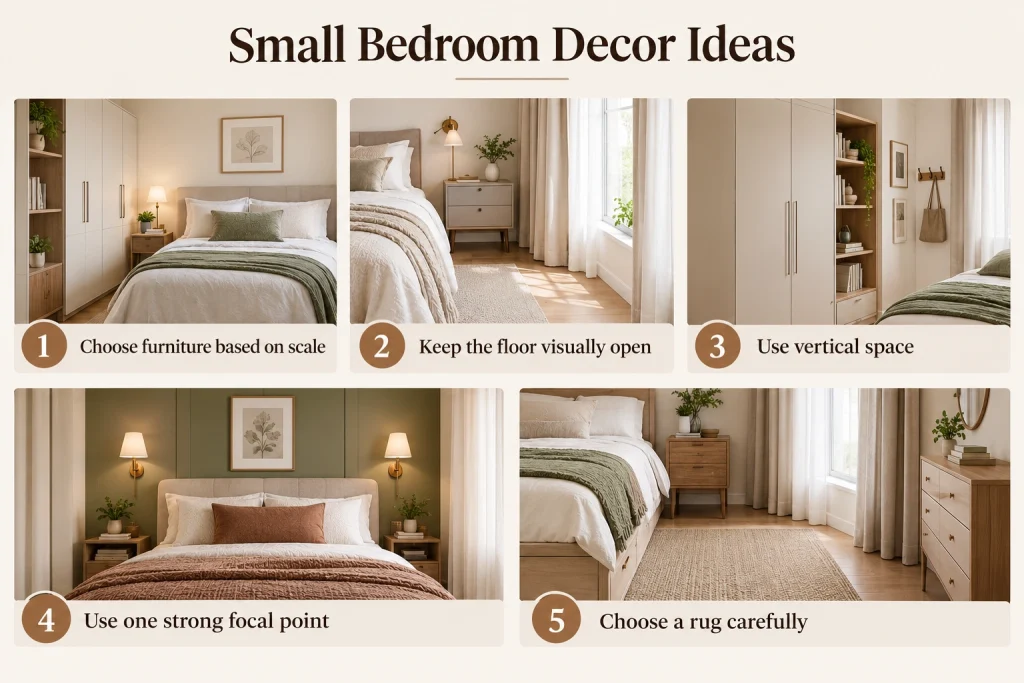
Choose furniture based on scale
A common mistake is assuming a small room needs tiny furniture.
Several small pieces can actually create more visual clutter than one properly scaled bed and a well-designed storage unit.
Measure the furniture before buying it and think about how much clearance you need around it.
Keep the floor visually open
Furniture with visible legs can sometimes make a room feel lighter because more floor remains visible.
You can also consider:
- Wall-mounted shelves
- Narrow bedside tables
- Wall sconces
- Tall storage
- Under-bed storage
Not every solution needs to be floating furniture. Choose what is practical for your room and cleaning routine.
Use vertical space
When floor space is limited, the walls become valuable storage and decorating space.
Try:
- Tall wardrobes
- Vertical shelving
- Tall curtains
- Stacked artwork
- Wall-mounted lighting
- Hooks behind doors
Use one strong focal point
A small room can become visually busy when every wall has something competing for attention.
Choose one primary feature:
- A headboard
- Artwork
- Wallpaper
- A painted wall
- A beautiful window treatment
Then let the rest of the room support it.
Choose a rug carefully
A tiny rug floating beside the bed can visually divide an already small room.
Where possible, choose a rug that connects the bed with the surrounding furniture. If the room cannot accommodate a large rug, use a smaller option deliberately rather than placing one randomly in the middle of the floor.
Real-world example: In a narrow bedroom, a compact nightstand, wall-mounted reading light, storage bed, and tall curtains can free up more usable floor space than simply replacing everything with smaller versions.
How to Choose Bedroom Colors
Color should support the mood and architecture of the room.
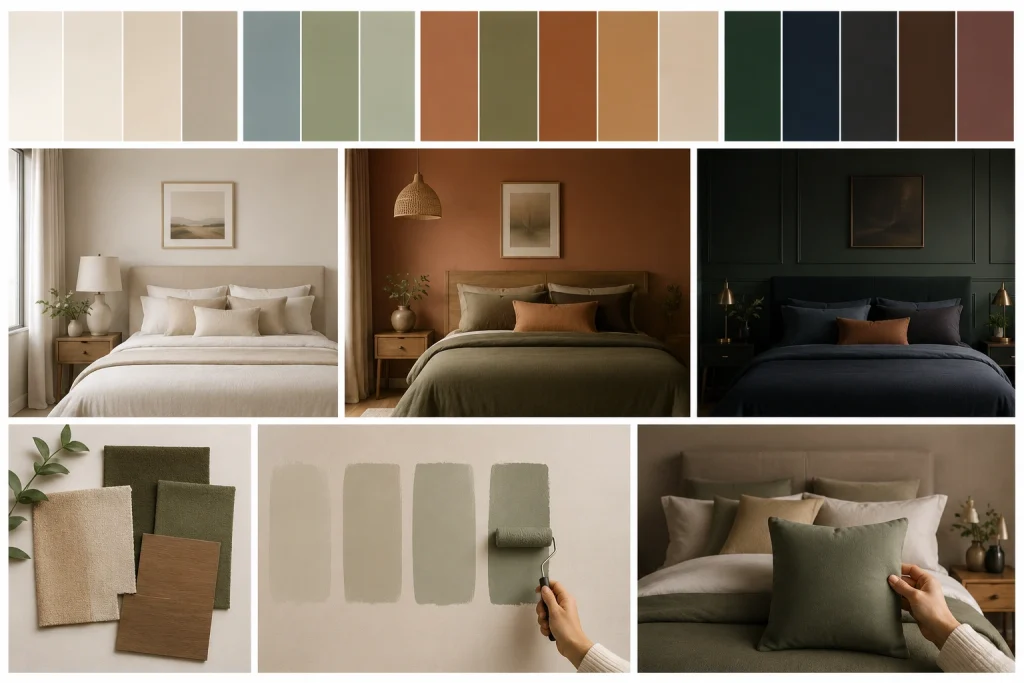
Calm bedroom colors
Consider:
- Warm white
- Cream
- Beige
- Taupe
- Dusty blue
- Muted sage
Cozy bedroom colors
Try:
- Terracotta
- Olive
- Rust
- Warm brown
- Camel
- Cream
Dramatic bedroom colors
If you want a more intimate atmosphere, consider:
- Deep green
- Navy
- Charcoal
- Chocolate brown
- Muted plum
Dark colors are not automatically wrong for small bedrooms. The result depends on the amount of natural light, the ceiling height, furniture, trim, and how consistently the color is used.
Keep the palette simple
A useful starting point is one dominant color, one supporting shade, and a small accent color. You do not need to calculate exact percentages; the goal is simply to prevent too many unrelated colors from competing in the room.
Always test paint in the actual room
A color that looks soft in a store can look much cooler or warmer under your bedroom’s lighting.
Test a larger sample and observe it during the morning, afternoon, and evening.
Common mistake: Choosing wall paint first and then discovering that the bedding, curtains, and existing furniture do not work with it.
If you already own major furniture, use those pieces to guide your color palette.
Bedroom Bedding and Bed Styling Ideas
The bed is usually the largest visual element in a bedroom, so changing the bedding can transform the entire room.
Start with comfort, then style it.
A practical layered bed
You can use:
- Fitted sheet
- Flat sheet if preferred
- Duvet or comforter
- Quilt or folded blanket
- Sleeping pillows
- One or two decorative pillows
- Optional lumbar cushion
There is no rule that says a bed needs a huge pile of pillows.
If you dislike removing decorative pillows every night, use fewer.
Mix texture instead of color
A neutral bed can still look rich.
Try:
Cream cotton sheets + linen duvet + knitted throw + textured lumbar pillow
The colors stay simple while the materials create depth.
Choose bedding for how you sleep
A beautiful comforter that makes you too warm is not a successful decorating choice.
Consider:
- Breathability
- Weight
- Ease of washing
- Fabric feel
- Seasonal temperature
- Personal sleeping preferences
Expert observation: Bedding is one area where appearance should never be the only deciding factor. It is both decor and something you interact with for hours every night.
For more science-backed guidance on choosing bedding materials for better sleep, see Sleep Foundation’s bedding guide.
Bedroom Lighting Ideas
Lighting can completely change how a bedroom feels.
A single bright ceiling light often creates a flat, harsh atmosphere. A better setup uses several layers.
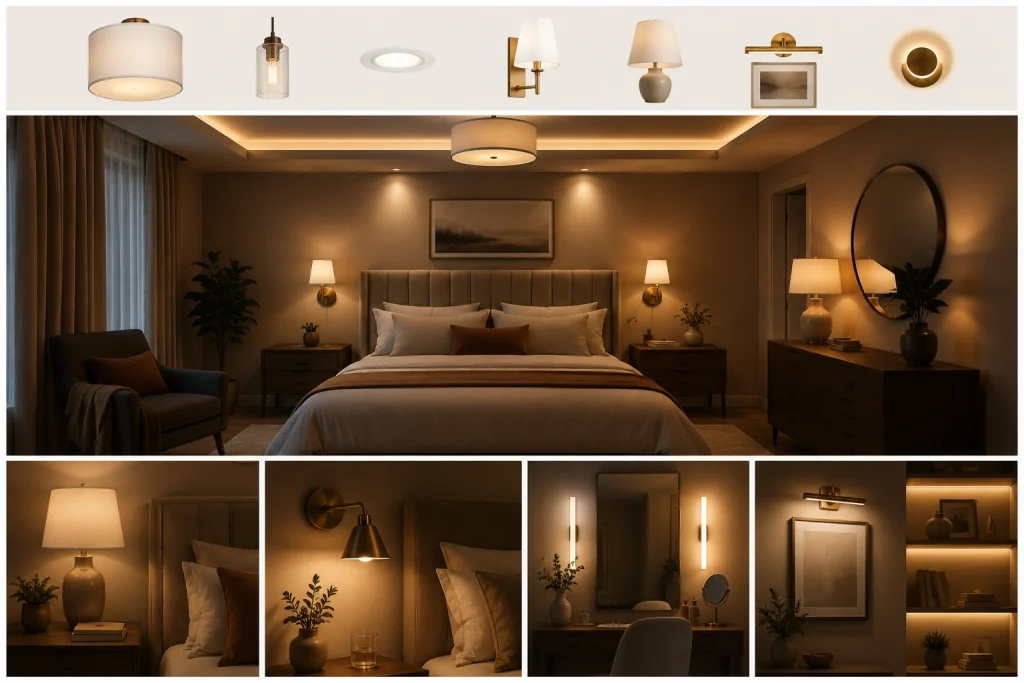
Ambient lighting
This provides general illumination.
Examples include:
- Ceiling fixtures
- Flush mounts
- Pendants
- Recessed lights
Task lighting
This is useful for reading or getting ready.
Try:
- Bedside lamps
- Adjustable sconces
- Reading lights
- Dressing-area lighting
Accent lighting
Accent lighting creates atmosphere.
Consider:
- Small table lamps
- Picture lights
- Decorative wall lights
- Soft indirect lighting
Choose bedside lighting based on use
If you read before sleeping, an adjustable light is more useful than a beautiful lamp that shines directly into your eyes.
If your nightstand is small, a wall-mounted sconce can free the surface for a book, water, or other essentials.
Common mistake: Choosing every light fixture separately.
Even when fixtures are not identical, they should feel related through finish, shape, scale, or color.
Bedroom Decor Ideas for Every Season
You do not need four different bedrooms to make the space feel seasonal. Keep your permanent pieces relatively timeless and change removable layers.
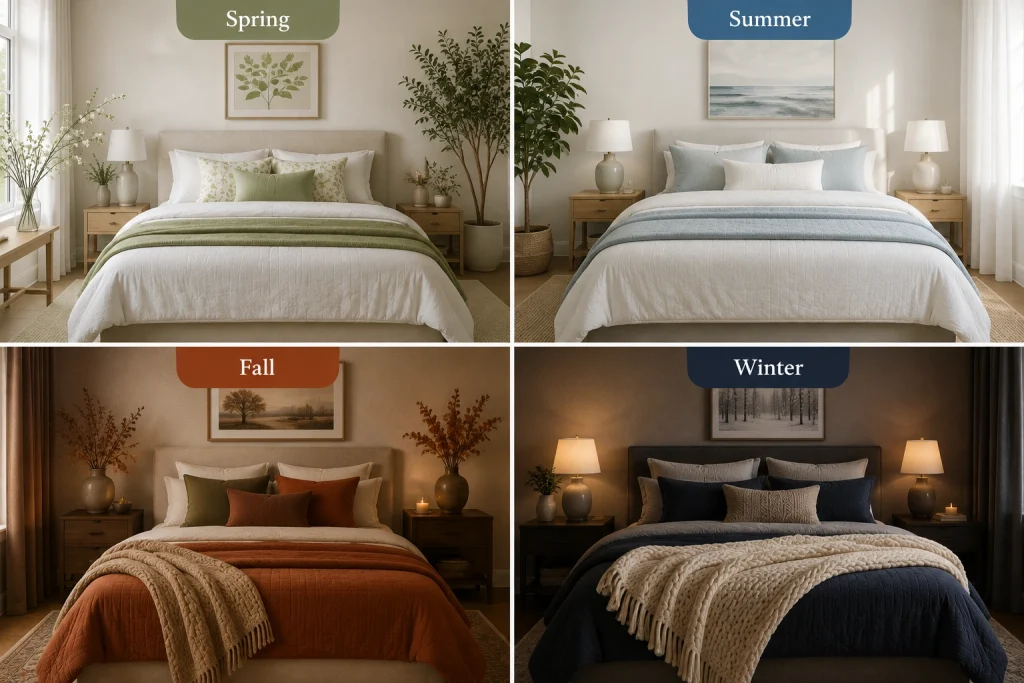
Spring bedroom decor
Create a lighter, fresher feeling with:
- Soft green
- Pale blue
- Lightweight bedding
- Fresh flowers or branches
- Botanical artwork
- Lighter textiles
You can get the effect without adding obvious seasonal decorations.
Summer bedroom decor
Focus on breathability and visual simplicity.
Try:
- Cotton bedding
- Linen layers
- Lightweight quilts
- Natural textures
- Fewer decorative pillows
- Light curtains
Remove heavy layers that make the room feel visually and physically warm.
Fall bedroom decor
Bring in richer colors and textures:
- Rust
- Olive
- Camel
- Warm brown
- Plaid
- Knitted throws
- Heavier quilts
You do not need seasonal signs or themed objects. A change in textile weight and color is usually enough.
Winter bedroom decor
Make the room feel warmer with:
- Wool textures
- Chunky blankets
- Layered bedding
- Deeper accent colors
- Soft rugs
- Warm bedside lighting
Practical lesson: Keep seasonal bedding and accessories in clearly labeled storage. Rotating a small collection is cheaper and easier than buying new decor every few months.
Bedroom Decor Ideas by Room Type
Different bedrooms have different priorities.
Primary bedroom
A primary bedroom can accommodate more substantial furniture and stronger focal points.
Prioritize:
- Comfortable bed
- Adequate storage
- Good bedside lighting
- Quality window treatments
- A properly sized rug
- Comfortable seating if space allows
Guest bedroom
A guest room should feel welcoming without becoming overdecorated.
Include:
- Comfortable bedding
- Clear bedside surface
- Reading light
- Space for clothing
- Mirror
- A few thoughtful accessories
Do not fill every drawer with decorative items. Guests need usable space.
Teen bedroom
A teen’s room often needs to support more than sleep.
Plan for:
- Bed
- Clothing storage
- Study area
- Task lighting
- Charging access
- Flexible wall decor
Use easily changeable elements artwork, bedding, posters, accessories—to allow the style to evolve.
Apartment bedroom
Apartment bedrooms often require multifunctional thinking.
Consider:
- Storage beds
- Narrow nightstands
- Tall wardrobes
- Mirrors
- Wall-mounted lighting
- Curtains that visually increase height
Choose furniture that solves more than one problem whenever possible. Looking to decorate other spaces too? Explore our guides for kitchen, bathroom, and outdoor spaces, or browse all room ideas.
Common Bedroom Decorating Mistakes
1. Decorating before fixing the layout
Beautiful accessories cannot compensate for a bed blocking a walkway.
Better approach: Solve movement and furniture placement first.
2. Buying a tiny rug
A small rug can make large furniture look disconnected.
Better approach: Measure the bed and surrounding furniture before choosing the rug size.
3. Using only one light source
A ceiling fixture rarely creates enough warmth for a bedroom.
Better approach: Add bedside or accent lighting.
4. Matching every piece
A complete matching bedroom set can feel flat.
Better approach: Coordinate materials and finishes without making everything identical.
5. Ignoring storage
Visible clutter quickly overwhelms decorative styling.
Better approach: Give everyday objects a designated home.
6. Adding too many accessories
More decoration does not always mean more personality.
Better approach: Group a few meaningful pieces and leave breathing room around them.
A Simple Bedroom Decorating Plan
If you are starting from scratch, use this order:
1. Declutter and measure
Remove what you do not use, then measure the room, windows, doors, outlets, and existing furniture.
2. Fix the layout
Position the bed first, then add storage and secondary furniture while keeping walkways clear.
3. Choose your style and colors
Pick three style words and build a simple palette around the furniture you already own.
4. Add the major layers
Focus on the bed, rug, curtains, lighting, and main artwork before smaller accessories.
5. Add texture and personality
Use materials such as wood, linen, cotton, wool, or rattan, then add a few meaningful decorative pieces.
6. Live with the room
Do not fill every empty surface immediately. Use the room for a few days and buy only what you genuinely still need.
Frequently Asked Questions
What are the best bedroom decor ideas for a small room?
Use appropriately sized furniture, vertical storage, open floor space, and a simple color palette. Avoid overcrowding the room with small decorative pieces.
How can I decorate a bedroom on a budget?
Start with bedding, lighting, curtains, or rug changes that affect the whole room. Save on smaller accessories that are easy to replace.
What colors make a bedroom feel relaxing?
Warm whites, beige, taupe, muted green, dusty blue, and other soft tones can create a calm atmosphere. Choose colors that work with your room’s natural and artificial lighting.
How can I make my bedroom cozy without clutter?
Add warmth through layered bedding, rugs, curtains, and soft lighting rather than adding lots of accessories. Texture creates coziness without visual clutter.
Should bedroom furniture match?
No. Different pieces can look more natural when they share complementary colors, materials, finishes, or proportions.
How can I update my bedroom for different seasons?
Change removable elements such as bedding, throws, pillows, and small accessories. Keep major furniture and permanent finishes consistent.
Final Bedroom Styling Tips
The best bedroom decor ideas are the ones that work with your space, lifestyle, and budget. Start with the layout and major pieces, then build the look with color, lighting, bedding, texture, and carefully chosen accessories.
You don’t need to redecorate everything at once. A few thoughtful changes can make your bedroom feel more comfortable, cohesive, and personal while keeping the space practical for everyday life.


Join the Conversation
What Do You Think?