
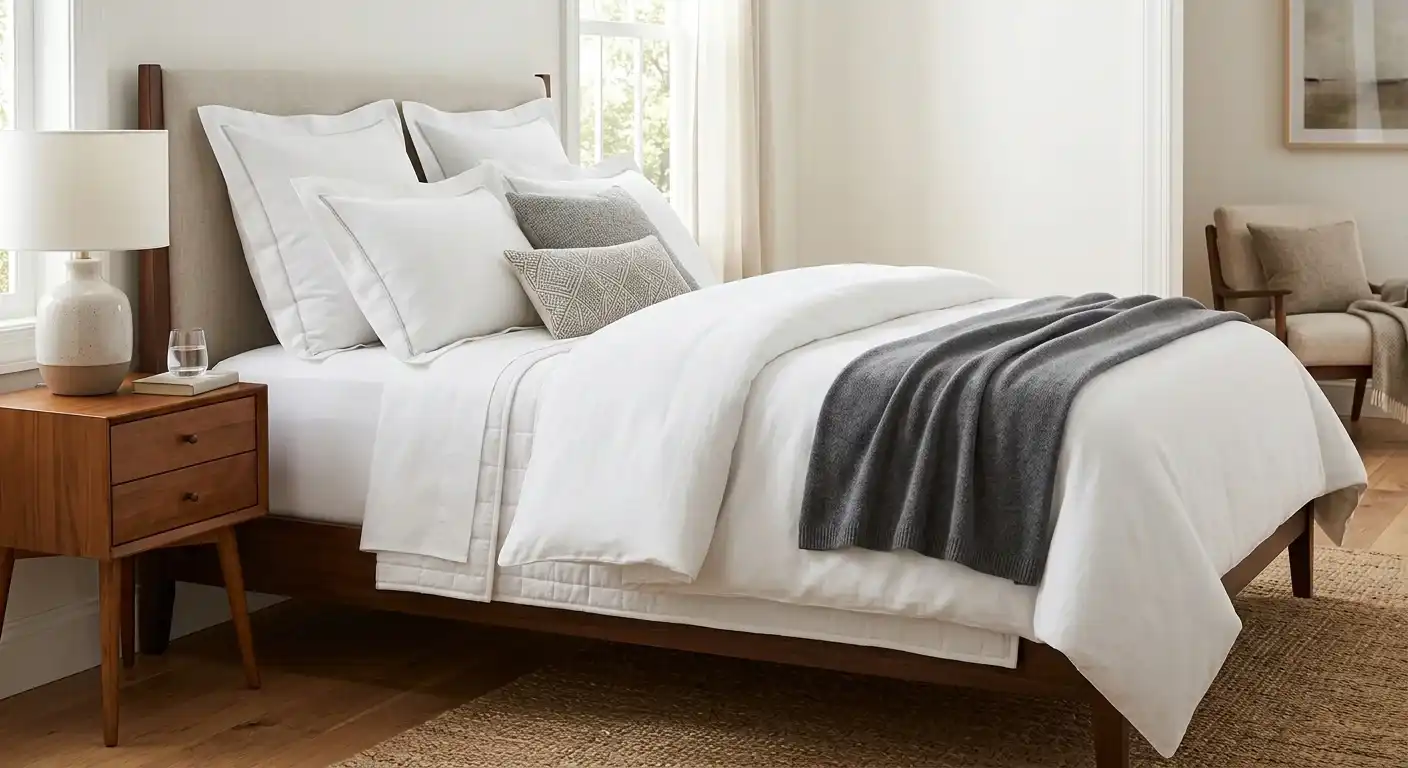
A hotel-style bed is less about buying more bedding and more about how you arrange the pieces you already have.
Start with a smooth fitted sheet, add a flat sheet if you use one, then build texture and height with a lightweight blanket or coverlet, a well-filled duvet, layered pillows, and one finishing throw. Keep the colors coordinated and vary the textures so the bed looks full without becoming crowded.
The goal is simple: a bed that looks crisp, balanced, soft, and inviting while still being comfortable to sleep in.
What Makes a Bed Look Hotel-Style?
A polished hotel-inspired bed usually has several visual elements working together:
- A smooth, well-fitted foundation
- Clearly defined bedding layers
- A duvet with enough loft to give the bed shape
- Pillows arranged from large to small
- A restrained color palette
- Different textures instead of lots of patterns
- Symmetry around the head of the bed
- One simple finishing layer at the foot
The important part is that every layer should have a purpose.
Some pieces provide warmth. Others add texture, height, softness, or visual structure. You don’t need every possible bedding layer to achieve the look.
In fact, using fewer pieces well often looks more polished than piling several blankets and pillows onto the bed.
The Best Bedding Layer Order
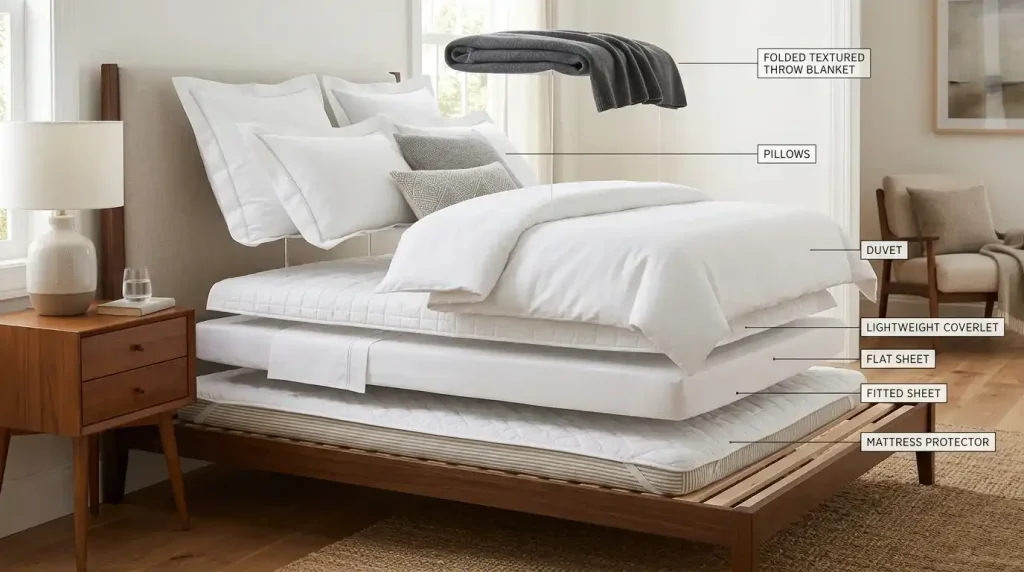
Build the bed from the mattress upward:
- Mattress protector or topper, if needed
- Fitted sheet
- Flat sheet
- Lightweight blanket or coverlet, optional
- Duvet or comforter
- Pillows
- Throw blanket
This order gives you a clean foundation and lets each visible layer contribute something different.
You can also simplify it.
For a warm bedroom, you might use only a fitted sheet, flat sheet, lightweight duvet, pillows, and throw. In a colder room, a blanket beneath the duvet can add warmth without requiring a much heavier duvet.
The best hotel-style bed is not the one with the most layers. It is the one where the layers work together.
1. Start With a Smooth, Well-Fitted Base
The fitted sheet is the foundation of the entire bed.
If it is loose, too shallow for the mattress, or bunched around the corners, the finished bed will still look untidy no matter how carefully you arrange the upper layers.
Before adding anything else:
- Check that the fitted sheet matches your mattress depth.
- Pull each corner completely underneath the mattress.
- Smooth wrinkles outward from the center.
- Make sure a mattress topper hasn’t made the sheet too tight.
- Tuck or straighten the edges before adding the next layer.
A smooth base creates the clean silhouette that makes the rest of the bedding look intentional.
You also don’t need to choose sheets based on thread count alone. Material and weave affect how sheets feel, drape, breathe, and perform over time.
2. Add a Flat Sheet for a Classic Layered Finish
A flat sheet gives you another visible layer between the fitted sheet and duvet.
Lay it evenly across the mattress and keep the top edge straight. At the foot of the bed, tuck it underneath the mattress so it stays in place.
For a more tailored finish, you can use a hospital corner tuck at the bottom corners. This creates a clean diagonal fold and keeps the sheet from hanging loosely.
Do You Need a Flat Sheet?
No.
A flat sheet is useful if you like the traditional layered feel or want to create a visible sheet band when the duvet is folded down.
If you prefer a simpler duvet-only setup, you can skip it.
The hotel look comes from clean lines and coordinated layers, not from following one mandatory bedding formula.
3. Add a Lightweight Blanket or Coverlet for Texture
A blanket, quilt, or coverlet is an optional middle layer that can add warmth and visual depth without making the bed excessively heavy.
Place it over the flat sheet and underneath the duvet.
For a subtle layered effect, fold it so part of the texture remains visible. A waffle weave, quilted finish, or woven surface can make a neutral bed look more dimensional without introducing another busy pattern.
This layer is especially useful when:
- Your duvet looks flat on its own.
- You want more texture.
- You need additional warmth.
- You want to introduce a second neutral tone.
- You want a lighter alternative to using a very heavy duvet.
If your room is already warm or your duvet provides enough warmth, leave this layer out.
Optional layers should solve a problem, not simply add more bedding
4. Choose a Duvet With Enough Loft
The duvet is usually the largest visual element on the bed, so its fullness has a major effect on the finished appearance.
A very flat duvet can make the bed look unfinished. An extremely bulky one can make it look stuffed and difficult to use.
Choose an insert and cover combination that gives the bed soft volume without excessive weight.
Also pay attention to proportions. The duvet should provide balanced coverage on both sides of the mattress rather than stopping too close to the edges.
Should You Size Up Your Duvet?
Not automatically.
A larger duvet can create more generous side drape, but the right size depends on your mattress dimensions, mattress depth, bed frame, duvet construction, and the amount of overhang you prefer.
Instead of automatically buying one size larger, compare the manufacturer’s duvet dimensions with your mattress measurements.
The goal is:
balanced coverage + enough fullness + comfortable weight
rather than simply choosing the biggest duvet available.
5. Fold the Duvet Down to Reveal the Layers
One of the easiest ways to make a bed look more finished is to fold the top section of the duvet toward the middle of the bed.
A fold of roughly one-quarter to one-third of the duvet length usually creates enough space to reveal the sheet or blanket underneath.
The exact measurement doesn’t need to be perfect.
Focus on keeping the fold:
- Straight
- Even on both sides
- Proportional to the bed
- Smooth along the top edge
This creates a visual break between the pillows and the main duvet instead of leaving one large uninterrupted surface.
For an especially crisp look, fold the duvet and the flat sheet together if your bedding setup allows it.
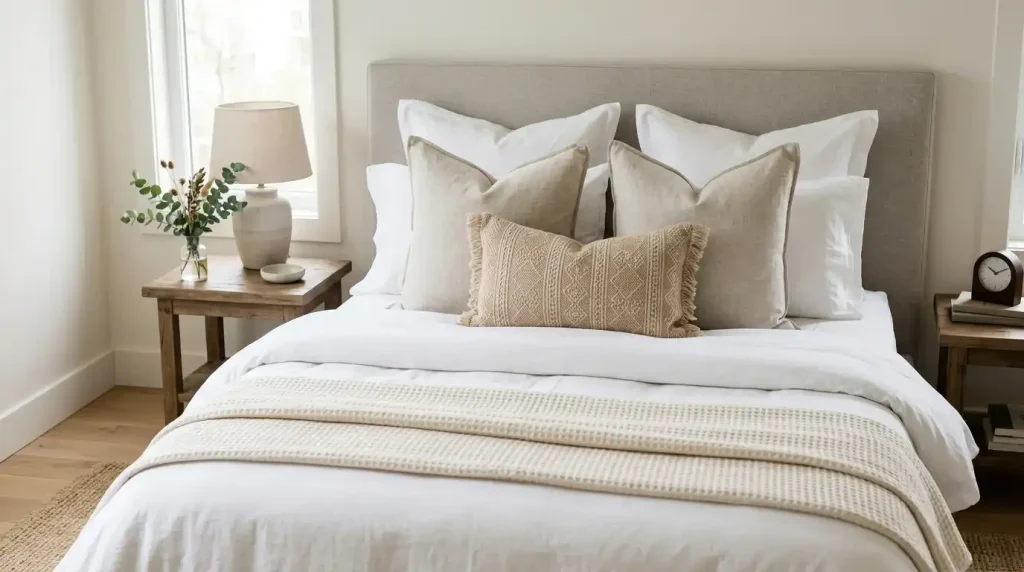
6. Arrange Pillows From Large to Small
Pillows provide the height and structure at the head of the bed.
Instead of placing every pillow in one flat row, create a gradual progression from larger pieces at the back to smaller pieces at the front.
A simple arrangement is:
Back: Euro shams
Middle: Sleeping pillows
Front: One lumbar or small decorative pillow
The principle is more important than a fixed number:
Large → medium → small
This creates depth while keeping the arrangement visually organized.
How Many Pillows Should You Use?
Use the bed size as a starting point rather than a strict rule.
| Bed Size | Sleeping Pillows | Euro Pillows | Accent Pillow |
| Twin | 1 | 1 | 1 optional |
| Full | 2 | 2 | 1 |
| Queen | 2 | 2 | 1 |
| King | 2 king or 3 standard | 2–3 | 1–2 |
You can use fewer pillows if you prefer a simpler bedroom.
A good arrangement should also remain practical. Sleeping pillows should be easy to remove at night, while decorative pillows can provide shape, color, and texture.
You don’t need a wall of pillows to make a bed look luxurious.
7. Finish With One Textured Throw
The final throw gives the bed a visual finishing point.
Fold it horizontally across the lower third of the bed for a tailored look, or drape it loosely over one corner for a softer appearance.
Choose a texture that contrasts with the duvet:
- Smooth duvet + chunky knit throw
- Crisp cotton + waffle weave
- Matte linen + soft woven blanket
- Quilted coverlet + lightweight wool throw
One strong textural accent is usually enough.
Several throws and blankets can make the foot of the bed look heavy, especially when the bed is already layered with a coverlet and duvet.
How to Use Texture Without Making the Bed Look Busy
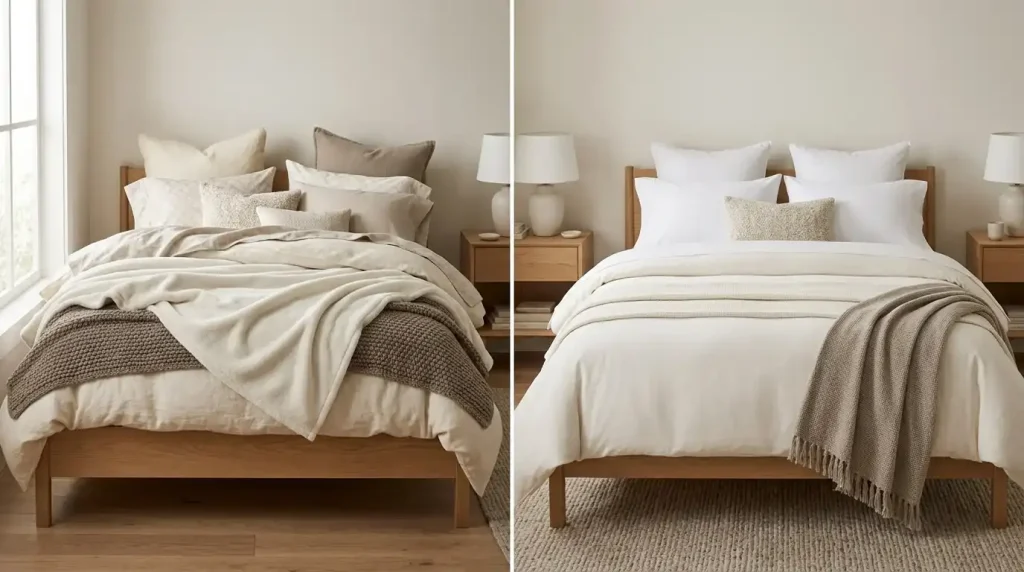
You don’t need lots of patterns to make layered bedding look interesting.
In fact, a neutral bed can look more sophisticated when the colors stay similar while the textures change.
Try combining:
- Smooth cotton sheets
- A crisp duvet cover
- A woven or quilted blanket
- Textured pillow shams
- One soft throw
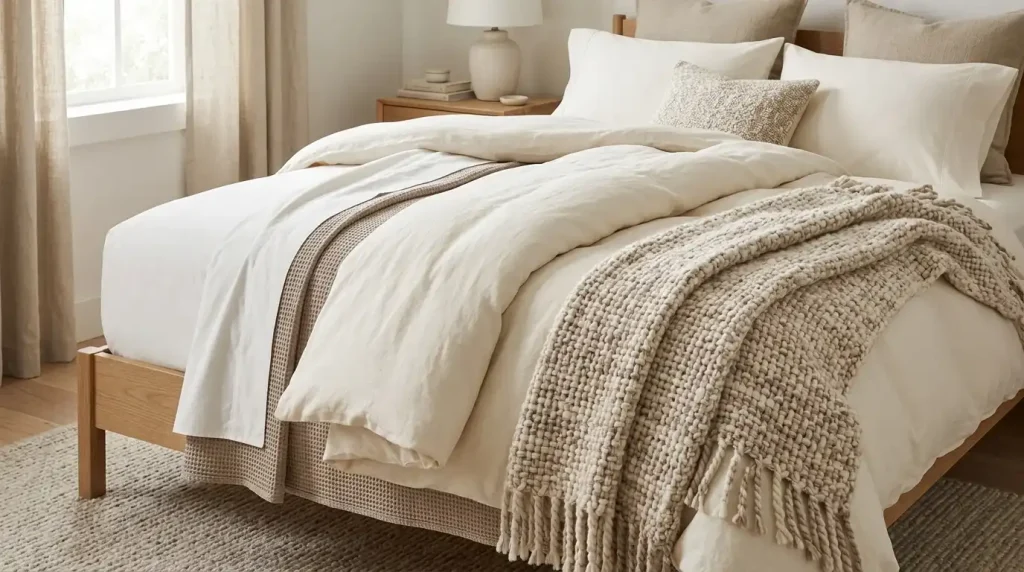
The eye still notices the difference between these surfaces even when the colors are nearly identical.
A Simple Neutral Palette
| Role | Example |
| Base | White or ivory |
| Supporting tone | Beige, taupe, gray, or soft sage |
| Accent | Rust, charcoal, muted blue, or brown |
You don’t have to use three colors.
A white-and-ivory bed can look just as layered as a multi-color bed when the textures are varied.
The goal is cohesion, not perfect matching.
How to Layer Bedding Without Making It Bulky
A common mistake is assuming that a luxurious bed needs more blankets, more pillows, and a thicker duvet.
It doesn’t.
If your bed already feels crowded, reduce the visual weight instead of adding more pieces.
Try these adjustments:
Use One Optional Middle Layer
Choose either a lightweight blanket or coverlet instead of stacking several heavy layers.
Keep the Throw Lightweight
A thick knit throw can look beautiful, but it may make the foot of the bed feel bulky when combined with a heavy duvet and coverlet.
Limit Decorative Pillows
Start with one accent pillow. Add another only if the bed looks proportionally empty.
Choose Loft Over Weight
A duvet can look full without being extremely heavy. Look for an insert that provides volume while remaining comfortable for your sleeping temperature.
Let Some Layers Disappear
Not every layer needs to be visible across the entire bed. Folding a blanket or duvet creates separation without covering the whole surface with another piece.
The finished bed should look full, not overloaded.
How to Choose Bedding Fabrics for a Hotel-Style Look
There isn’t one fabric that automatically makes bedding look luxurious.
Your choice should balance appearance, texture, comfort, and how you sleep.
| Bedding Choice | Visual Effect | Best For |
| Cotton percale | Crisp and structured | Classic hotel-inspired look |
| Cotton sateen | Smooth with subtle sheen | Softer, polished appearance |
| Linen | Relaxed and textured | Casual boutique-hotel style |
| Quilted coverlet | Structured texture | Adding depth without much bulk |
| Waffle blanket | Visible texture | Simple neutral beds |
| Chunky knit throw | Cozy contrast | Relaxed bedrooms |
Percale and sateen are different weaves rather than completely different materials. Percale generally has a crisp, breathable feel, while sateen tends to feel smoother and drape more closely. Linen is known for its breathable, textured character.
Don’t choose bedding based on thread count alone. The material, weave, construction, and how the fabric feels to you all matter.
How to Layer Bedding on a Budget
You don’t need to replace your entire bedding collection to change the look of your bed.
Start with the pieces that create the biggest visual difference.
If You Already Have Good Sheets
Keep them.
Add:
- One duvet cover
- One lightweight textured blanket
- Two Euro shams
- One accent pillow
- One throw
You can build the look gradually instead of buying everything at once.
If Your Bed Looks Flat
Improve the duvet first.
A fuller-looking duvet can change the silhouette of the entire bed without replacing the sheets or buying multiple decorative layers.
If Your Bed Looks Messy
Fix the fitted sheet and pillow arrangement before buying anything.
Poor fit, loose edges, and uneven pillow proportions are often more noticeable than the price of the bedding.
If You Want a More Expensive Look
Focus on:
- Consistent colors
- Better fit
- Texture
- Pillow proportions
- Clean folds
- A neat finish
A coordinated neutral setup can look more polished than a collection of expensive pieces that don’t work together.
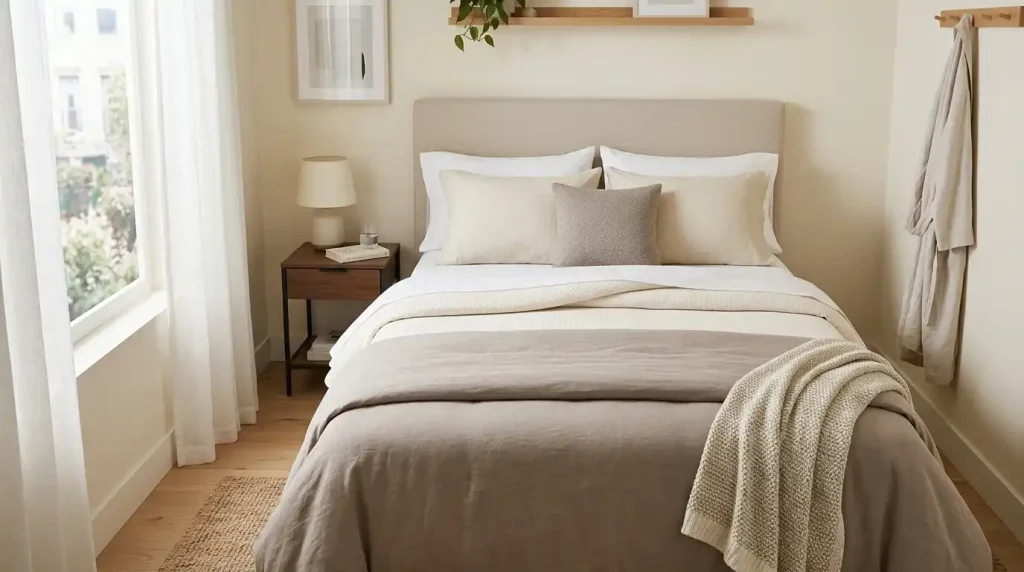
How to Make a Hotel-Style Bed Work in a Small Bedroom
A heavily layered bed can dominate a small room.
Instead of removing all the styling, reduce the visual weight.
Try:
- Two large back pillows instead of several rows.
- One accent pillow instead of multiple small cushions.
- A lightweight blanket instead of a bulky coverlet.
- One folded throw instead of several blankets.
- A mostly neutral color palette.
- Bedding that fits the mattress without excessive overhang.
The goal is to make the bed feel inviting while leaving visual breathing room around it.
For more ways to balance the rest of a compact bedroom, see our Bedroom Decor Ideas for Every Style.
How to Style a Bed Without a Headboard
A headboard naturally creates a visual backdrop for pillows.
If your bed doesn’t have one, you can create some of that height through the bedding arrangement.
Try:
- Two large Euro pillows at the back.
- A taller pillow arrangement.
- A long lumbar pillow across the front.
- A consistent neutral palette behind the accent pillow.
- A slightly fuller duvet to give the bed more visual presence.
Don’t compensate for the missing headboard by adding excessive pillows.
If you want more ideas, see our guide to How to Style a Bed Without a Headboard.
How to Adapt Bedding for Different Sleepers
The best-looking arrangement still needs to work at night.
For Hot Sleepers
Use breathable sheets and lighter layers.
Cotton percale and linen are common choices for people who prefer a lighter, more breathable feel. You can also remove the coverlet at night and use the throw only as a decorative layer.
For Cold Sleepers
Add a lightweight blanket underneath the duvet rather than automatically choosing an extremely heavy duvet.
This gives you another layer of warmth that can be removed or adjusted as needed.
If You Have Pets
Choose bedding that is easy to wash and use a removable throw as an extra protective layer over the main bedding.
Regular sheet washing becomes especially important when pets sleep in the bed.
If You Rent
Bedding is one of the easiest ways to change the appearance of a bedroom without modifying the space.
A coordinated duvet cover, pillow arrangement, and throw can create a completely different look without painting walls or replacing furniture.
Common Bedding Layering Mistakes
Using Too Many Pillows
A large collection of decorative pillows can hide the headboard and make the bed frustrating to use.
Better: Create a clear back-to-front progression and stop when the arrangement feels balanced.
Making Every Layer the Same Texture
Several smooth fabrics can blend into one flat surface.
Better: Mix smooth, woven, quilted, or subtly textured materials.
Choosing Bedding Only for Appearance
A beautiful duvet isn’t useful if it makes you too warm or uncomfortable.
Better: Choose the warmth and fabric based on how you sleep.
Using Too Many Colors
Multiple unrelated colors can make the bedding look disconnected.
Better: Start with one neutral base, add one supporting tone, and use an accent only if needed.
Making Every Fold Perfect
An overly rigid bed can look staged rather than inviting.
Better: Keep the main bedding crisp and let one throw or pillow introduce a little softness.
Ignoring Proportions
Even expensive bedding can look awkward if the fitted sheet is too shallow or the duvet doesn’t provide enough coverage.
Better: Check mattress and bedding dimensions before replacing your layers.
The 5-Minute Hotel-Style Bed Routine
You don’t need to completely remake the bed every morning.
Use this quick reset:
- Pull the duvet evenly toward the head of the bed.
- Smooth obvious wrinkles with your hands.
- Fold the duvet down evenly.
- Arrange the pillows from largest to smallest.
- Refold or drape the throw at the foot.
That’s enough to restore the overall shape.
The trick is maintaining the visual hierarchy, not chasing perfectly wrinkle-free bedding every morning.
How to Keep Layered Bedding Looking Fresh
A layered bed only looks polished when the bedding is clean and cared for.
For most people, washing sheets about once a week is a practical baseline. Pillowcases are also commonly washed weekly, while duvet covers, comforters, and blankets can generally be cleaned less frequently depending on use and the manufacturer’s care instructions.
If pets sleep in the bed, more frequent washing may be appropriate.
Always check the care label before washing or drying bedding, especially for linen, wool, delicate fabrics, or filled comforters.
For an extra-crisp appearance, lightly steam or iron the flat sheet and pillowcases if the fabric allows it.
FAQ
How many layers should a hotel-style bed have?
A hotel-inspired bed can use four main visible bedding elements: sheets, an optional blanket or coverlet, a duvet or comforter, and a throw. Pillows provide the final layer of height and structure. You don’t need every possible layer.
How many pillows should a hotel-style bed have?
Start with two large back pillows, two sleeping pillows, and one smaller accent pillow. Adjust the number according to your bed size and how full you want the arrangement to look.
Should the duvet be folded down?
Yes. Folding the duvet down toward the middle of the bed reveals the layers underneath and creates a more finished appearance. Keep the fold straight and proportional rather than worrying about an exact measurement.
What color bedding looks most like a hotel?
White, ivory, cream, soft gray, and other muted neutrals create the classic hotel-inspired appearance. You can also use muted colors as long as the overall palette remains coordinated.
Do I need a flat sheet for a hotel-style bed?
No. A flat sheet adds another visible layer and can create the classic folded-down look, but you can skip it if you prefer a simpler duvet setup.
How do I make my bed look luxurious without buying new bedding?
Start with the bedding you already own. Smooth the fitted sheet, arrange the pillows from large to small, fold the duvet evenly, add one contrasting texture, and keep the colors coordinated. Good proportions and a clean finish often make a bigger difference than buying more pieces.
Key Takeaways
- Layer bedding according to function, warmth, and visual balance, not simply by adding more pieces.
- Start with a smooth fitted sheet and use a flat sheet if it suits your routine.
- Add a lightweight blanket or coverlet when you need extra warmth or texture.
- Choose a duvet with enough loft to give the bed shape without making it too heavy.
- Fold the duvet down to reveal the layers underneath.
- Arrange pillows from large to small.
- Use texture instead of excessive patterns to create depth.
- Finish with one throw at the foot of the bed.
- Reduce layers and decorative pieces in small bedrooms.
- Choose bedding based on comfort as well as appearance.
A hotel-style bed should look polished, but it should still be your bed.
The best setup is one that looks inviting when the room is tidy, feels comfortable when you sleep, and takes only a few minutes to reset each morning.
Related Next Steps
- Explore Bedroom Decor Ideas for Every Style for ways to coordinate the rest of your bedroom with your layered bed.
- If your bed doesn’t have a headboard, read How to Style a Bed Without a Headboard for ways to create height and structure.
- Style the bedside area with Bedroom Nightstand Styling Ideas so the bed and nightstands feel visually connected.
- Browse the Bedroom Decor category for more bedroom styling guides.
Sources and References
- Sleep Foundation — How Often Should You Wash Your Sheets? — General washing-frequency guidance for sheets and other bedding.
- Sleep Foundation — How to Wash Your Sheets — Bedding-care and washing guidance.
- Cleveland Clinic — Best Bedroom Temperature for Sleep — Background on bedroom temperature and lightweight bedding for warmer conditions.



Join the Conversation
What Do You Think?